


Some error occured while loading the Quick View. Please close the Quick View and try reloading the page.
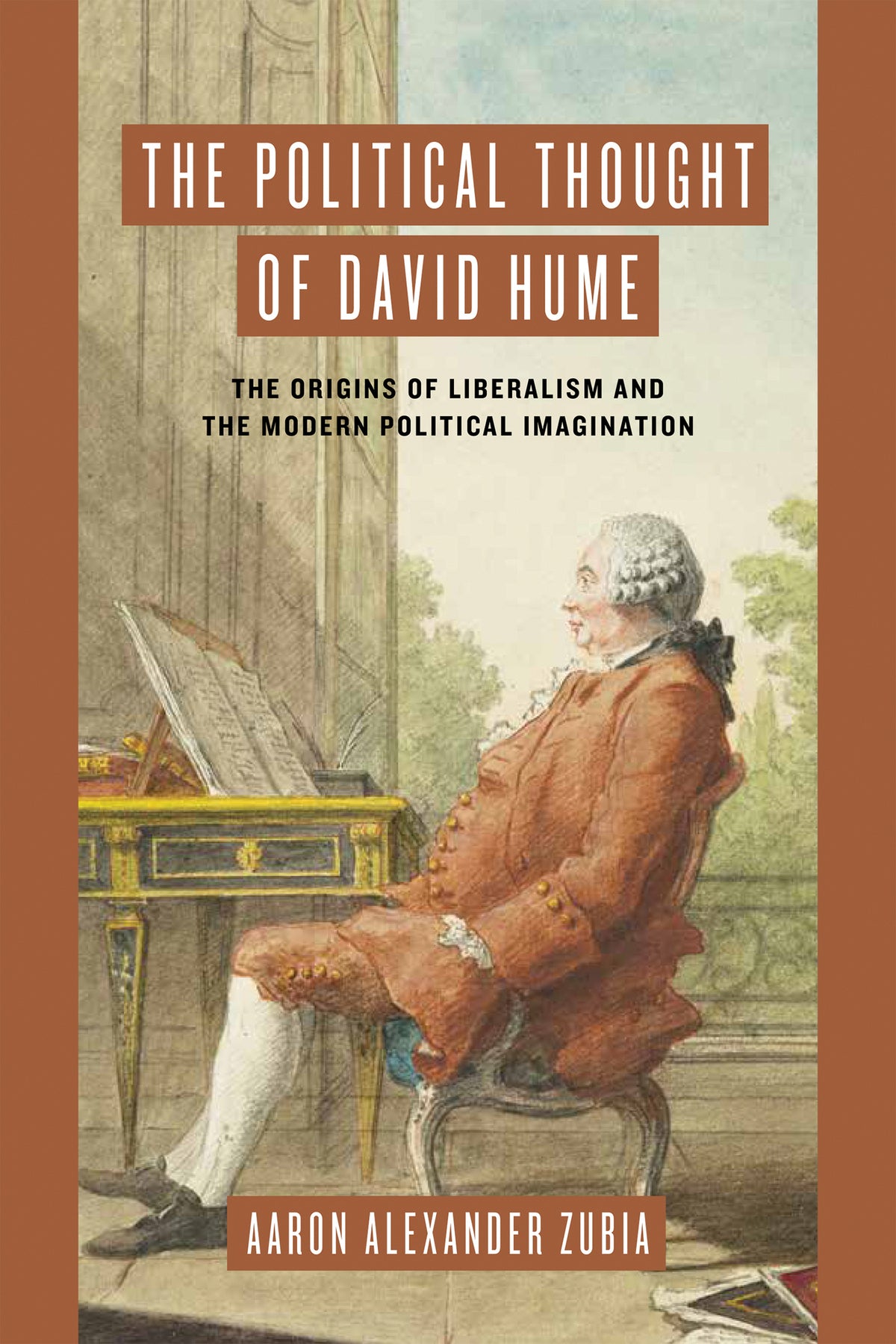
Aaron Alexander Zubia argues that the Epicurean roots of David Hume’s philosophy gave rise to liberalism’s unrelenting grip on the modern political imagination.
Eighteenth-century Scottish philosopher David Hume has had an outsized impact on the political thinkers who came after him, from the nineteenth-century British Utilitarians to modern American social contract theorists. In this thorough and thoughtful new work, Aaron Alexander Zubia examines the forces that shaped Hume’s thinking within the broad context of intellectual history, with particular focus on the ancient Greek philosopher Epicurus and the skeptical tradition.
Zubia argues that through Hume’s influence, Epicureanism—which elevates utility over moral truth—became the foundation of liberal political philosophy, which continues to dominate and limit political discourse today.

“This book makes a timely and welcome contribution to the literature on Hume’s political philosophy by locating it in the traditions of Epicureanism and social contract thought as well as prospectively within the tradition of liberal political philosophy that flowed from the early modern period.” —Peter S. Fosl, author of Hume’s Scepticism: Pyrrhonian and Academic
Aaron Alexander Zubia is assistant professor of humanities at the University of Florida. His work has appeared in the Wall Street Journal, National Review, Political Theory, Interpretation: A Journal of Political Philosophy, and Law & Liberty.
Introduction: Hume and the Modern Political Imagination
1. Hume’s Critique of Religion
2. The Epicurean Critique of Religion
3. Hobbes, Mandeville, and the New Political Science
4. Hume and the Making of Liberal Mythology
5. Making Men Moral: A Humean Approach
6. Spreading the Faith: Hume and the Miracle of Modernity
7. Hume, Epicureanism, and Contractarianism
Conclusion: Return to the Rule of Honestum
A Note on Citations
Bibliography