


Some error occured while loading the Quick View. Please close the Quick View and try reloading the page.
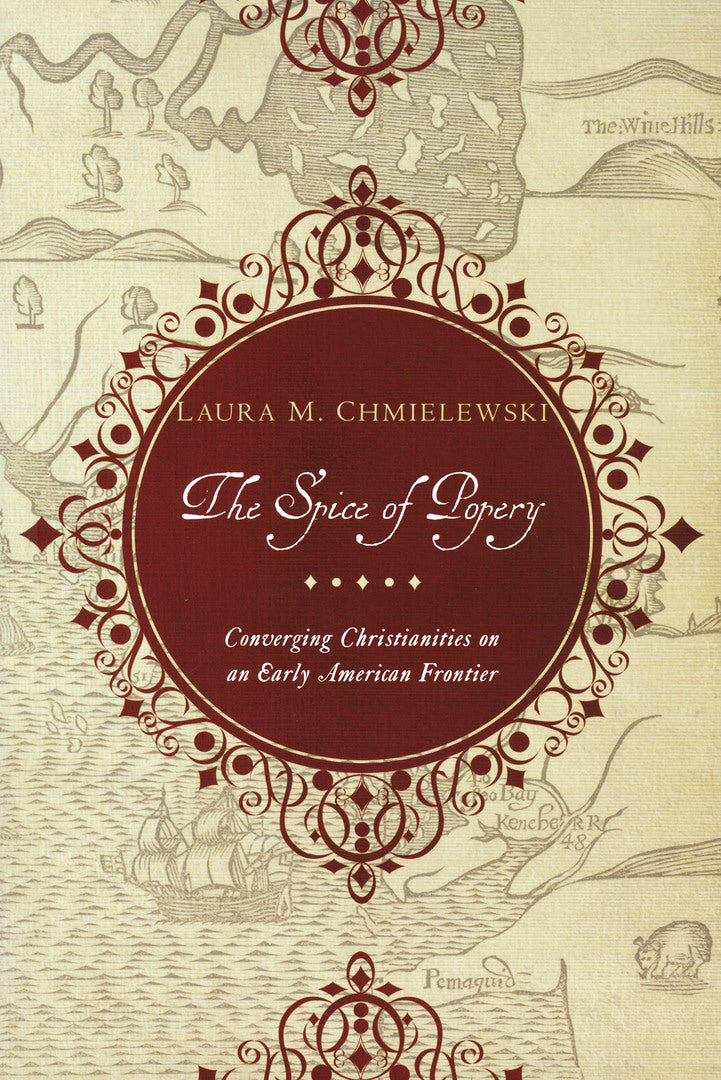
The title for this work comes from the Puritan minister Increase Mather, who used the colorful metaphor to express his concern about the state of English Protestantism. Like many New Englanders, Mather’s fears about the creeping influence of French Catholicism stemmed from English conflicts with France that spilled over into the colonial frontiers from French Canada. The most consistently fragile of these frontiers was the Province of Maine, notorious for attracting settlers who had “one foot out the door” of New England Puritanism. It was there that English Protestants and French Catholics came into frequent contact. The Spice of Popery: Converging Christianities on an Early American Frontier shows how, between the volatile years of 1688 to 1727, the persistence of Catholic people and culture in New England's border regions posed consistent challenges to the bodies and souls of frontier Protestants.
Taking a cue from contemporary observers of religious culture, as well as modern scholars of early American religion, social history, material culture, and ethnohistory, Laura M. Chmielewski explores this encounter between opposing Christianities on an early American frontier. She examines the forms of lived religion and religious culture—enacted through gestures, religious spaces, objects, and discreet religious expressions—to elucidate the range of experience of its diverse inhabitants: accused witches, warrior Jesuits, unorthodox ministers, indigenous religious thinkers, voluntary and involuntary converts. Chmielewski offers a nuanced perspective of the structured categories of early American Christian religious life, suggesting that the terms “Protestant” and “Catholic” varied according to location and circumstances and that the assumptions accompanying their use had long-term consequences for generations of New Englanders.

“This study offers a meticulously researched account of religion as it was lived on New England’s eastern frontier in the late seventeenth and early eighteenth centuries. . . . In the author’s view, poverty, war, distance from Boston, and proximity to Wabanaki and French settlements made it difficult to sustain a religious life that was coherent, let alone orthodox.” —The Historian
Laura M. Chmielewski is assistant professor of history at Purchase College, State University of New York.