


Some error occured while loading the Quick View. Please close the Quick View and try reloading the page.
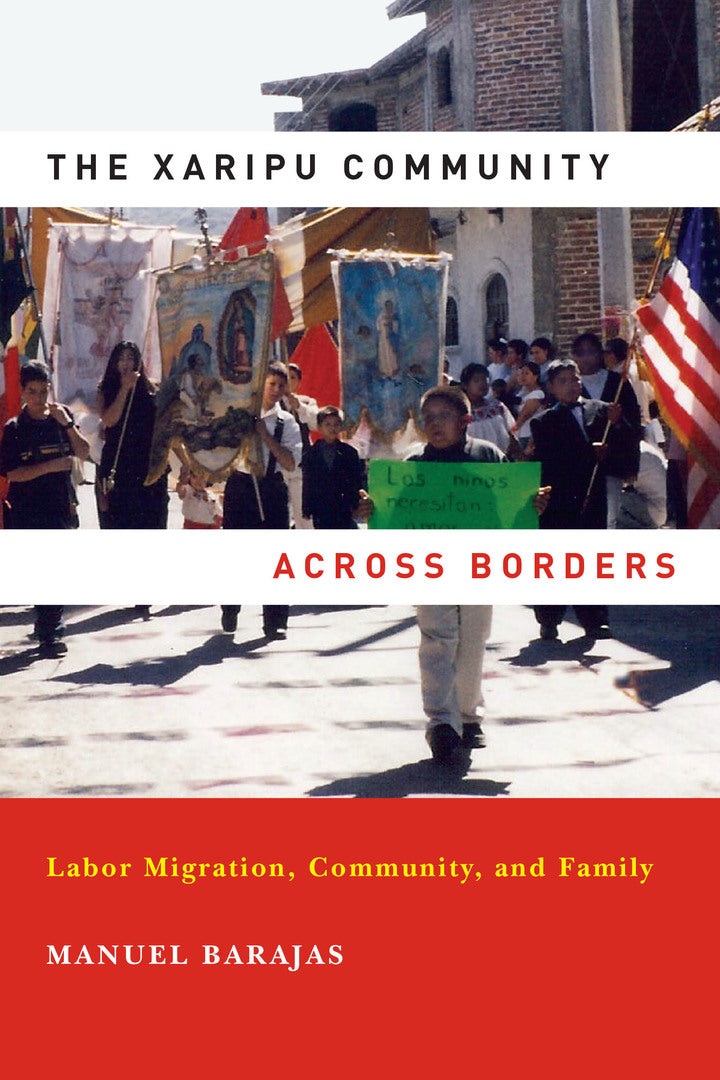
During the past three decades there have been many studies of transnational migration. Most of the scholarship has focused on one side of the border, one area of labor incorporation, one generation of migrants, and one gender. In this path-breaking book, Manuel Barajas presents the first cross-national, comparative study to examine a Mexican-origin community’s experience with international migration and transnationalism. He presents an extended case study of the Xaripu community, with home bases in both Xaripu, Michoacán, and Stockton, California, and elaborates how various forms of colonialism, institutional biases, and emergent forms of domination have shaped Xaripu labor migration, community formation, and family experiences across the Mexican/U.S. border for over a century.
Of special interest are Barajas’s formal and informal interviews within the community, his examination of oral histories, and his participant observation in several locations. Barajas asks, What historical events have shaped the Xaripus’ migration experiences? How have Xaripus been incorporated into the U.S. labor market? How have national inequalities affected their ability to form a community across borders? And how have migration, settlement, and employment experiences affected the family, especially gender relationships, on both sides of the border?

". . . a major contribution of the book, besides the analysis of Xaripu migration to the United States, is that it offers ethnographic materials that help differentiate indigenous from mestizo migration. It is a useful book for advanced undergraduate and graduate studies in migration." —Social Forces
Manuel Barajas is associate professor of sociology at California State University, Sacramento.