


Some error occured while loading the Quick View. Please close the Quick View and try reloading the page.
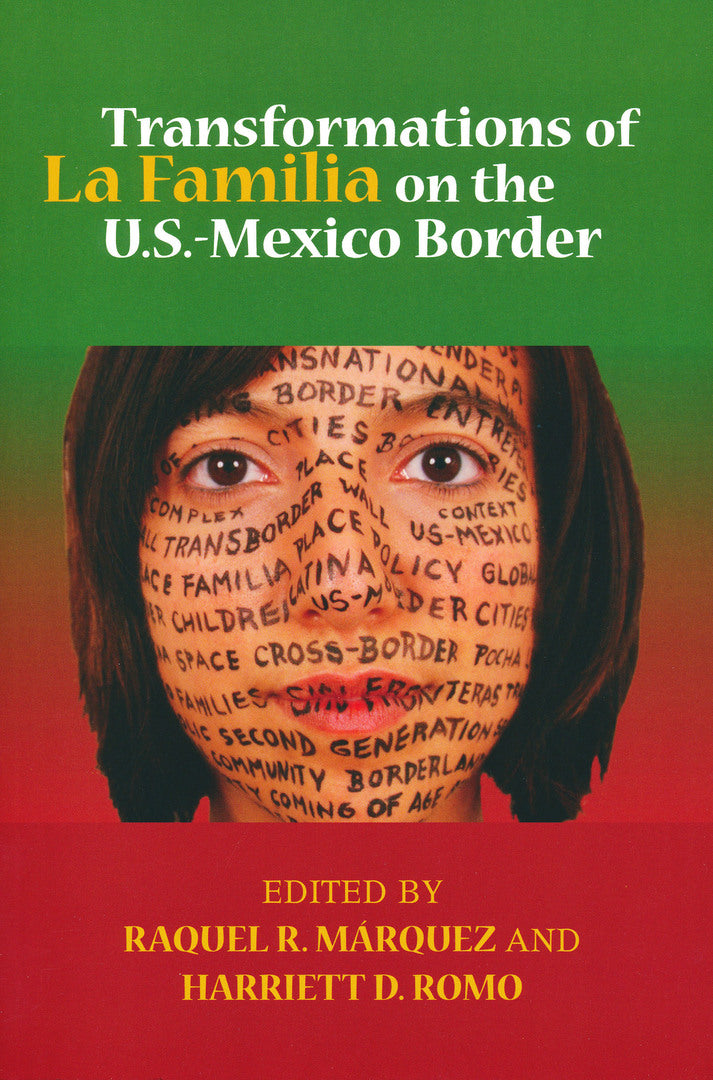
No international relationship of the United States is as encumbered by history, geography, culture, language, and economics as the one with Mexico. Given the scale and importance of the flow of commerce and culture across the border, however, surprisingly few studies have examined the micro-level impact of border immigration patterns, economic systems, and policies on families in the region. Recognizing this void, the women scholars represented here—all of whom have studied and lived near la frontera—explore the complexity of border dynamics. They offer a well-rounded portrayal of Latino families and their response to changes at the border.
The authors focus primarily on women and changes within families on the border—in response to women's economic strategies, labor market participation, and interactions with relatives and others. Quantitative chapters provide demographic analyses of population changes in new immigrant areas, the conditions of children and families along the border, and the work patterns of border families and women entrepreneurs. Qualitative chapters provide insights into the rites of passage celebrated across borders and the transnational lives of women and their families. The volume concludes with recommendations for collaborative U.S.-Mexico border policies that support families.

“This is an excellent and highly coherent collection of papers dealing with the impact on Mexican and Mexican origin families of living in the transnational space of the U.S.-Mexico border. It is particularly useful because of its exceptional range of perspectives, combining demography, history, ethnography and public policy analysis. Census and survey data from the U.S. and Mexico, life histories, cross-border social and economic relationships, and the perceptions of border residents bring out in rich detail the complex interdependence of both sides of the border. There are valuable accounts of the ways in which women and youth are socialized into transnational identities on both sides of the borders through family and community rituals and even through the teaching of English in Mexico. The focus on families brings out graphically the particular challenges of poverty and migration for women, who increasingly work outside the home even when married and for migrant children who are vulnerable to school drop-out on both sides of the border. “ —Bryan R. Roberts, C.B. Smith Sr. Chair in U.S.-Mexico Relations, University of Texas at Austin
Harriett D. Romo is associate professor of sociology at the University of Texas at San Antonio.