


Some error occured while loading the Quick View. Please close the Quick View and try reloading the page.
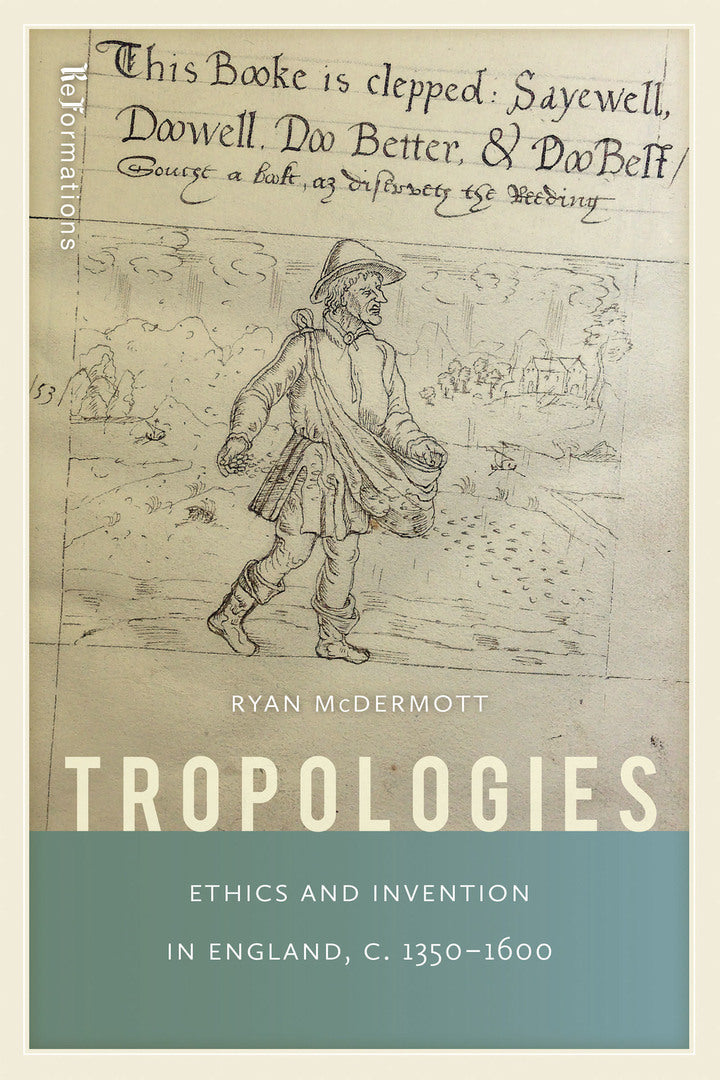
Tropologies is the first book-length study to elaborate the medieval and early modern theory of the tropological, or moral, sense of scripture. Ryan McDermott argues that tropology is not only a way to interpret the Bible but also a theory of literary and ethical invention. The “tropological imperative” demands that words be turned into works—books as well as deeds. Beginning with Augustine, Jerome, and Gregory the Great, then treating monuments of exegesis such as the Glossa ordinaria and Nicholas of Lyra, as well as theorists including Thomas Aquinas, Erasmus, Martin Luther, and others, Tropologies reveals the unwritten history of a major hermeneutical theory and inventive practice. Late medieval and early Reformation writers adapted tropological theory to invent new biblical poetry and drama that would invite readers to participate in salvation history by inventing their own new works. Tropologies reinterprets a wide range of medieval and early modern texts and performances—including the Patience-Poet, Piers Plowman, Chaucer, the York and Coventry cycle plays, and the literary circles of the reformist King Edward VI—to argue that “tropological invention” provided a robust alternative to rhetorical theories of literary production. In this groundbreaking revision of literary history, the Bible and biblical hermeneutics, commonly understood as sources of tumultuous discord, turn out to provide principles of continuity and mutuality across the Reformation’s temporal and confessional rifts. Each chapter pursues an argument about poetic and dramatic form, linking questions of style and aesthetics to exegetical theory and theology. Because Tropologies attends to the flux of exegetical theory and practice across a watershed period of intellectual history, it is able to register subtle shifts in literary production, fine-tuning our sense of how literature and religion mutually and dynamically informed and reformed each other.

“This fascinating book investigates the use of the tropological mode of reading in a range of texts, mostly form the late medieval period. . . . I recommend this book highly, especially to those interested in historical continuities between the medieval and early modern periods, and to those interested in alternatives to rhetorical methods of thinking about the link between words and actions.” —Parergon
Ryan McDermott is assistant professor of English at the University of Pittsburgh.
List of Illustrations
Acknowledgments
Introduction
- Tropological Theory
- How to Invent History: Patience, the Glossa ordinaria, and the Ethics of the Literal Sense
- “Beatus qui verba vertit in opera”: Langland’s Ethical Invention
- Practices of Satisfaction and Piers Plowman’s Dynamic Middle
- Tropology Reformed: Scripture, Salvation, Drama
- Mirror of Scripture: Ethics and Anagogy in the York Doomsday Pageant
Conclusion
Bibliography
Index