


Some error occured while loading the Quick View. Please close the Quick View and try reloading the page.
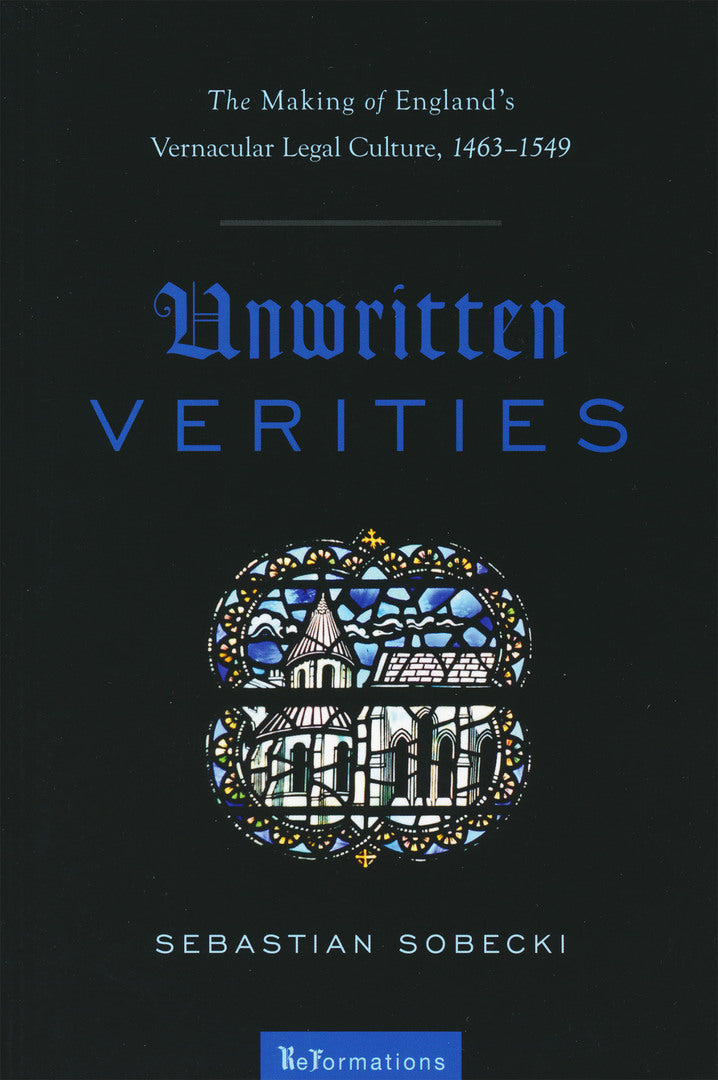
In Unwritten Verities: The Making of England's Vernacular Legal Culture, 1463-1549, Sebastian Sobecki argues that the commitment by English common law to an unwritten tradition, along with its association with Lancastrian political ideas of consensual government, generated a vernacular legal culture on the eve of the Reformation that challenged the centralizing ambitions of Tudor monarchs, the scriptural literalism of ardent Protestants, and the Latinity of English humanists.
Sobecki identifies the widespread dissemination of legal books and William Caxton's printing of the Statutes of Henry VII as crucial events in the creation of a vernacular legal culture. He reveals the impact of medieval concepts of language, governance, and unwritten authority on such sixteenth-century humanists, reformers, playwrights, and legal writers as John Rastell, Thomas Elyot, Christopher St. German, Edmund Dudley, John Heywood, and Thomas Starkey. Unwritten Verities argues that three significant developments contributed to the emergence of a vernacular legal culture in fifteenth-century England: medieval literary theories of translation, a Lancastrian legacy of conciliar government, and an adherence to unwritten tradition. This vernacular legal culture, in turn, challenged the textual practices of English humanism and the early Reformation in the following century. Ultimately, the spread of vernacular law books found a response in the popular rebellions of 1549, at the helm of which often stood petitioners trained in legal writing.
Informed by new developments in medieval literature and early modern social history, Unwritten Verities sheds new light on law printing, John Fortescue's constitutional thought, ideas of the commonwealth, and the role of French in medieval and Tudor England.

“In Unwritten Verities, Sebastian Sobecki provides an engaging, interdisciplinary study of English Common law’s oral tradition. Emerging from this volume is a provocative consideration of the relationship between common law and Anglo-French vernacularity in late mediaeval and early modern England. Importantly, Sobecki’s examination of vernacular legal culture challenges late medieval periodization, connecting the writing of John Fortescue and other English legal thinkers to subsequent ideas about consensual and even socially inclusive government.” —Renaissance and Reformation
Sebastian Sobecki is professor of medieval English literature and culture, University of Groningen, the Netherlands.
Acknowledgments
Introduction: Vernacular Legal Culture
Part 1. FOUNDATIONS
1.Reading and Writing in a Spoken World
2. Between Vernaculars: The Vagaries of Law French
3. John Fortescue and Lancastrian Conciliarism
PArt 2. TRANSFORMATIONS
4. The Unwritten Verities of the Common Law
5. Pleading for English: John Rastell’s Politics of Access
6. States of Exception
Afterword: The Reformation of Legal Culture
Notes
Bibliography
Index