


Some error occured while loading the Quick View. Please close the Quick View and try reloading the page.
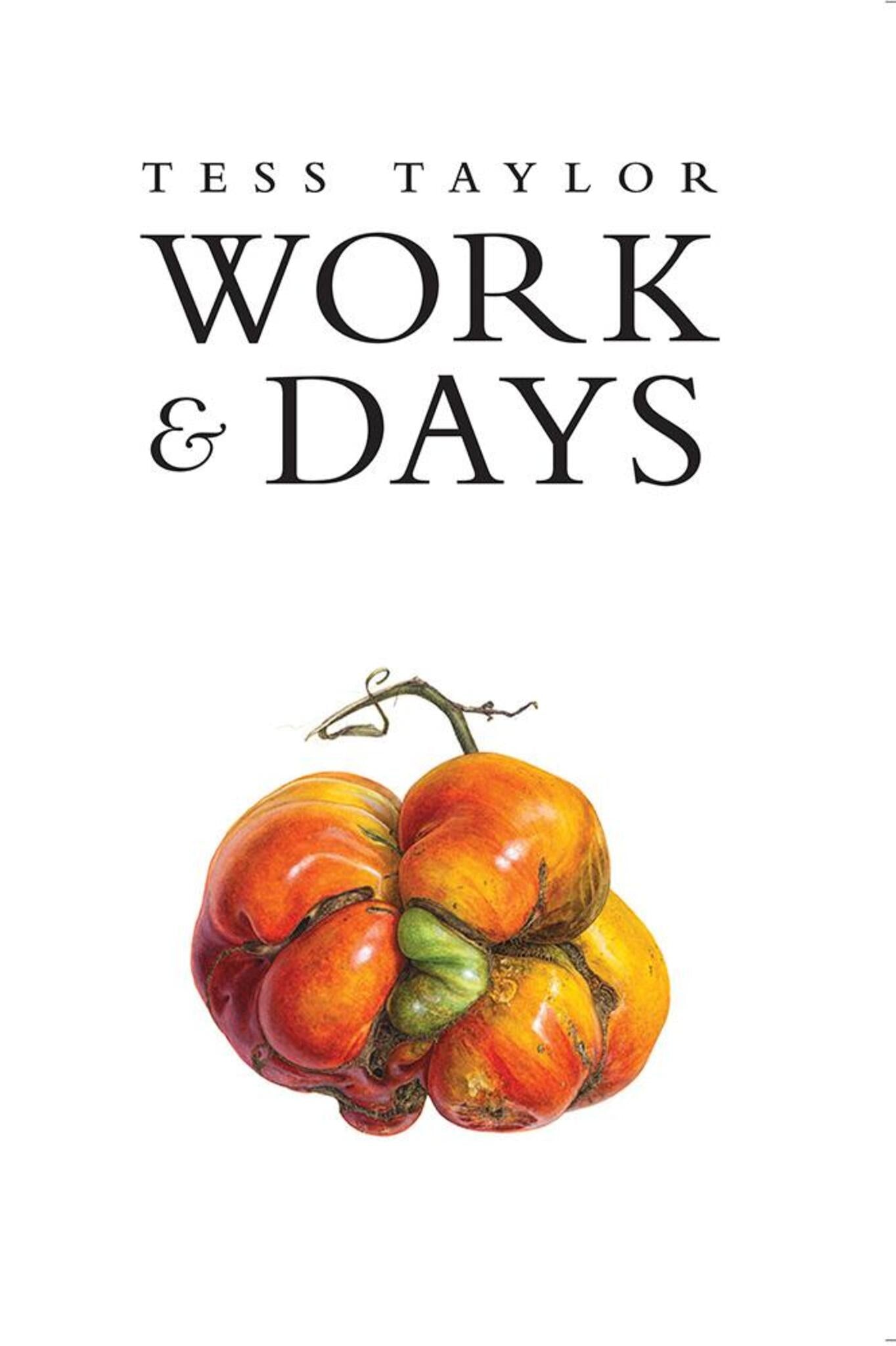
In poems full of bounty, loss and the mysteries of the body, Taylor offers a rich, severe, memorable meditation about what it means to try to connect our bodies and our time on earth.
In 2010, Tess Taylor was awarded the Amy Clampitt Fellowship. Her prize: A rent-free year in a cottage in the Berkshires, where she could finish a first book. But Taylor—outside the city for the first time in nearly a decade, and trying to conceive her first child—found herself alone. To break up her days, she began to intern on a small farm, planting leeks, turning compost, and weeding kale. In this calendric cycle of 28 poems, Taylor describes the work of this year, considering what attending to vegetables on a small field might achieve now. Against a backdrop of drone strikes, "methamphetamine and global economic crisis," these poems embark on a rich exploration of season, self, food, and place. Threading through the farm poets—Hesiod, Virgil, and John Clare—Taylor revisits the project of small scale farming at the troubled beginning of the 21st century.

"It’s wonderfully carnal, that savoring that carries all the way into darkness . . . The opposite of error, here, is not correctness—it’s life, and the hunger for life, for the vegetables that turn dark soil and the day’s light into sweetness . . . and for our own conversions, too . . ."
—Slate.com
"Taylor contemplates the invisible threads that tie the individual body to the numerous bodies scattered across the planet . . . Taylor's engagement with the poetry of agriculture reveals a deep sense of humility and a newfound gratitude for life itself."
—Publishers Weekly
“. . . a book . . . of great immersion, in both landscape and thought.”
—Kirkus Reviews
"(This) lapidary, moving book . . . shows that across thousands of years, these smallest acts—to grow, harvest, mourn—still remain central to lyric utterance. Is such a pastoral sensibility possible in the mediated world of 21st century American life? Taylor’s answer is not only yes, but to focus on the thousands of workers both here and abroad who live a life based on laboring with the earth. These subtle poems, like those that explore her lineage to the Jefferson family in her first book, are not without harder-to-confront agonies. As she draws the world... proximate to touch, the intuited sense of apocalypse—whether ecological disaster, or global political chaos—draws closer . . . (as well.)”
—LitHub's “30 Poets You Should be Reading”
". . . in an era when distraction endlessly beckons from tiny screens in the palms of our hands, [Taylor] says farming can help reconnect us to the world."
—The Salt @ NPR
". . . with [Taylor's] consciousness, evocative and redolent of the hard sensory clarity of the earth, come also intimations of apocalyptic time as much around the world as here at home."
—LitHub
". . . we feel her muscles singing."
—Library Journal
"Tess Taylor’s poetry . . . points to her craft and artifice . . . in preternatural lyrics about the cycle of the seasons (with) austere, resonant and sometimes terrifying subjects . . . formal, darkling poems . . . her project—the wages of war, labor, ecological violence—is revealing yet further urgent contexts for poetry.”
—Barnes & Noble Review