


Some error occured while loading the Quick View. Please close the Quick View and try reloading the page.
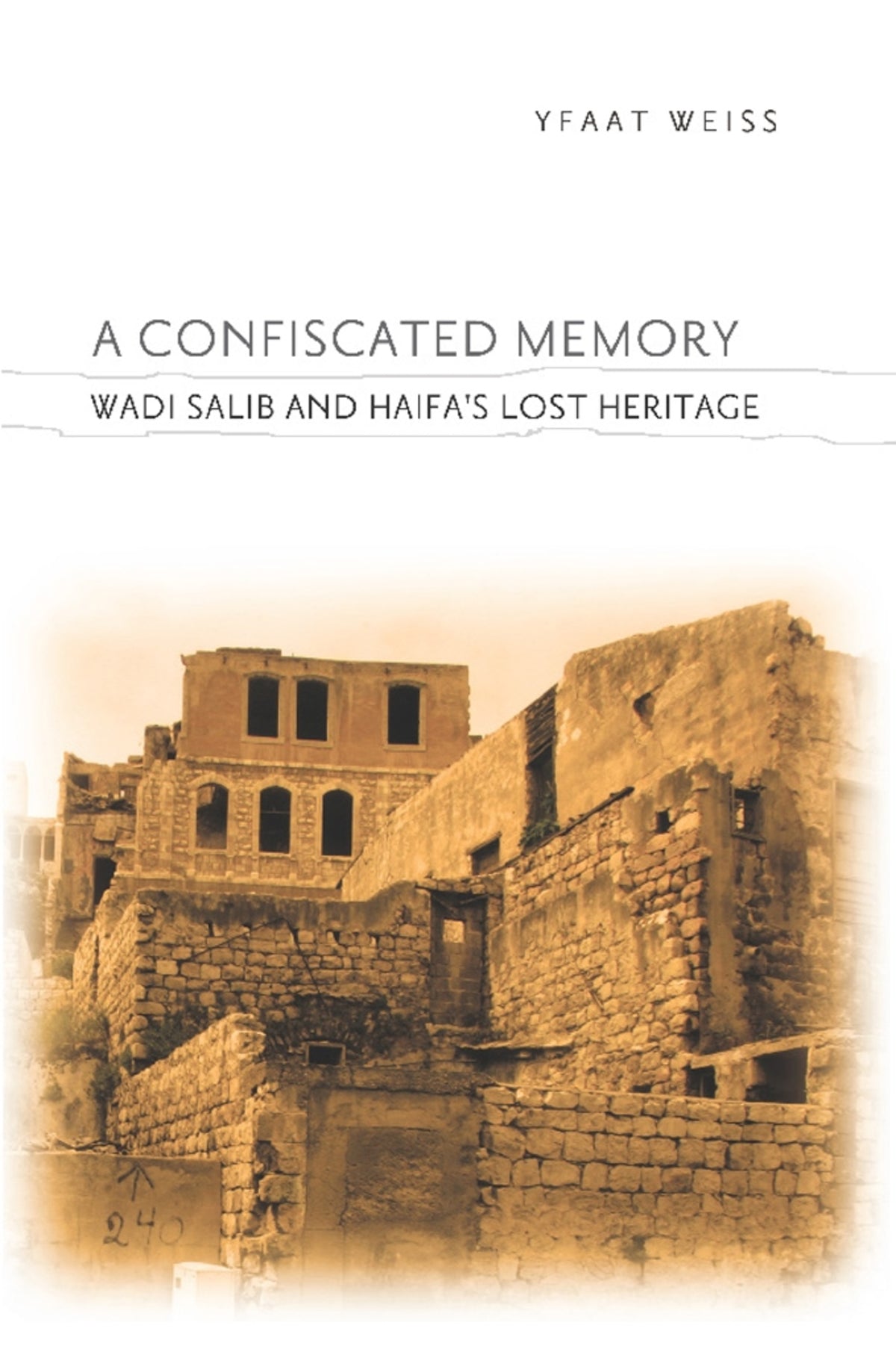
Yfaat Weiss tells the story of an Arab neighborhood in Haifa that later acquired iconic status in Israeli memory. In the summer of 1959, Jewish immigrants from Morocco rioted against local and national Israeli authorities of European origin. The protests of Wadi Salib generated for the first time a kind of political awareness of an existing ethnic discrimination among Israeli Jews. However, before that, Wadi Salib existed as an impoverished Arab neighborhood. The war of 1948 displaced its residents, even though the presence of the absentees and the Arab name still linger.
Weiss investigates the erasure of Wadi Salib's Arab heritage and its emergence as an Israeli site of memory. At the core of her quest lies the concept of property, as she merges the constraints of former Arab ownership with requirements and restrictions pertaining to urban development and the emergence of its entangled memory. Establishing an association between Wadi Salib's Arab refugees and subsequent Moroccan evacuees, Weiss allegorizes the Israeli amnesia about both eventual storiesthat of the former Arab inhabitants and that of the riots of 1959, occurring at different times but in one place. Describing each in detail, Weiss uncovers a complex, multilayered, and hidden history. Through her sensitive reading of events, she offers uncommon perspective on the personal and political making of Israeli belonging.

— Elazar Barkan, professor of international and public affairs and director of the Institute for the Study of Human Rights, Columbia University, and coauthor of No Return, No Refuge: Rites and Rights in Minority Repatriation
Preface
Acknowledgments
Prologue: The Neighbors Who Get Rich on Our Account
1. War: Diachronic Neighbors
2. Commotion: "And I Wanted to Do Something Nice, Like They Have Up in Haddar"
3. Evacuation: City Lights
4. Khirbeh: Altneuland
Epilogue: Iphrat Goshen and His Wife Miriam Move Into Said's House in Hallisa
Notes
Bibliography
Index