


Some error occured while loading the Quick View. Please close the Quick View and try reloading the page.
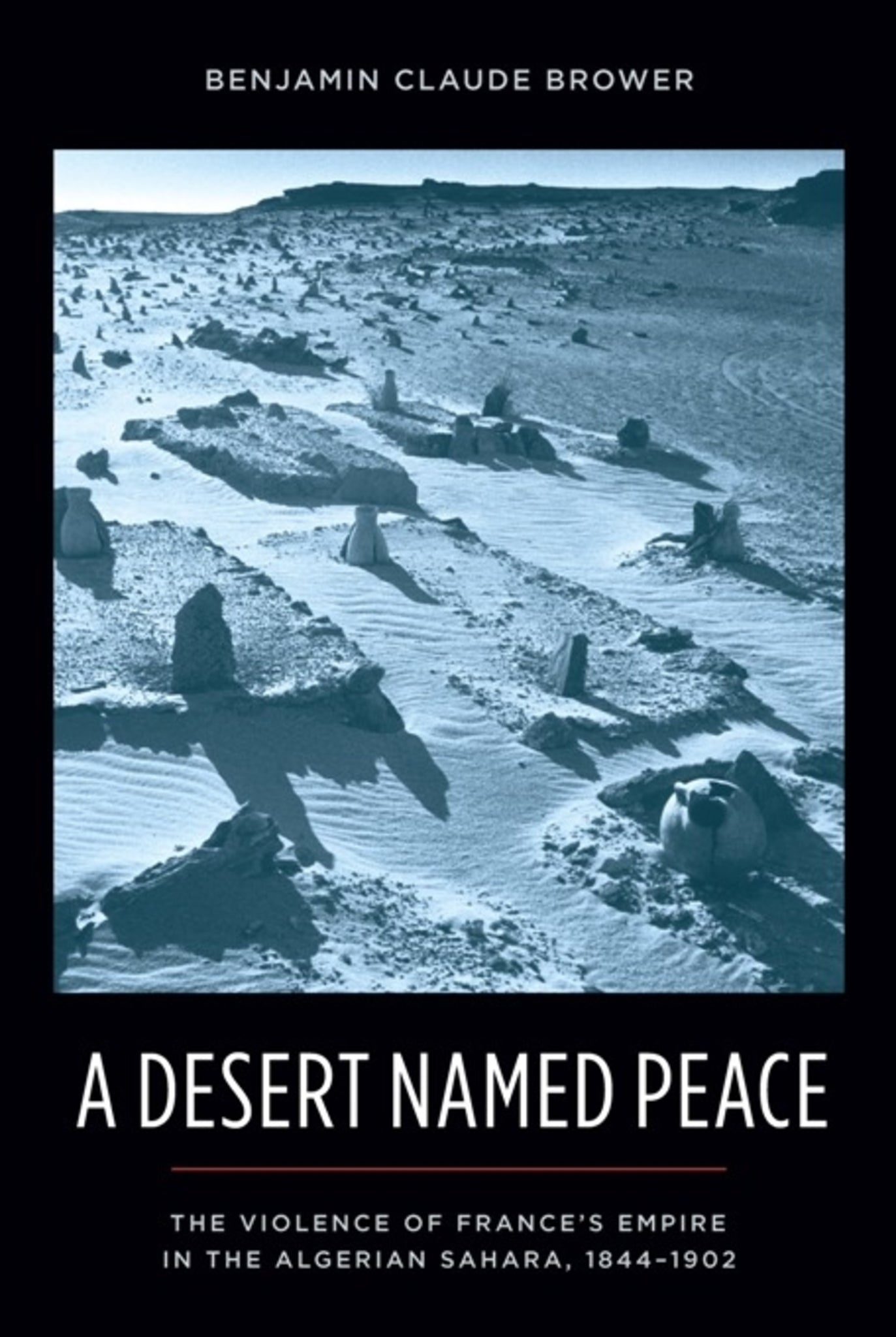
In the mid-nineteenth century, French colonial leaders in Algeria started southward into the Sahara, beginning a fifty-year period of violence. Lying in the shadow of the colonization of northern Algeria, which claimed the lives of over a million people, French empire in the Sahara sought power through physical force as it had elsewhere; yet violence in the Algerian Sahara followed a more complicated logic than the old argument that it was simply a way to get empire on the cheap.
A Desert Named Peace examines colonial violence through multiple stories and across several fields of research. It presents four cases: the military conquests of the French army in the oases and officers' predisposition to use extreme violence in colonial conflicts; a spontaneous nighttime attack made by Algerian pastoralists on a French village, as notable for its brutality as for its obscure causes; the violence of indigenous forms of slavery and the colonial accommodations that preserved it during the era of abolition; and the struggles of French Romantics whose debates about art and politics arrived from Paris with disastrous consequences.
Benjamin Claude Brower uses these different perspectives to reveal the unexpected causes of colonial violence, such as France's troubled revolutionary past and its influence on the military's institutional culture, the aesthetics of the sublime and its impact on colonial thinking, the ecological crises suffered by Saharan pastoralists under colonial rule, and the conflicting paths to authority inherent in Algerian Sufism. Directly engaging a controversial history, A Desert Named Peace offers an important backdrop to understanding the Algerian war for independence (1954-1962) and Algeria's ongoing internal war, begun in 1992, between the government and armed groups that claim to fight for an Islamist revolution.

Preface
Acknowledgments
Note on Transliteration of Arabic
Introduction: Understanding Violence in Colonial Algeria
Part 1: The "Pénétration Pacifique" of the Algerian Sahara, 1844-52
1: The Peaceful Expansion of Total Conquest
2: Theorizing the "Pénétration Pacifique"
3: The "Pénétration Pacifique" in Practice, 1847-52
Part 2: Exterminating the French at Djelfa, 1861
4: The Ouled Naïl and Colonial Rule
5: The Leadership Crisis and Rural Marabouts
6: A Holiday Gone Wrong: The Attack on Djelfa
Part 3: Slavery in the Algerian Sahara Following Abolition
7: Saaba's Journey to Algerian Slavery
8: The Saharan Slave Trade and Abolition
9: Colonial Accomodation
Part 4: Imagining France's Saharan Empire
10: Romanticism and the Saharan Sublime
11: The "Blue Legend": Henri Duveyrier and the Tuareg
Conclusion
Notes
Bibliography
Research Aids and Archival Inventories
Archival Sources
Primary Sources
Secondary Sources
Index