


Some error occured while loading the Quick View. Please close the Quick View and try reloading the page.
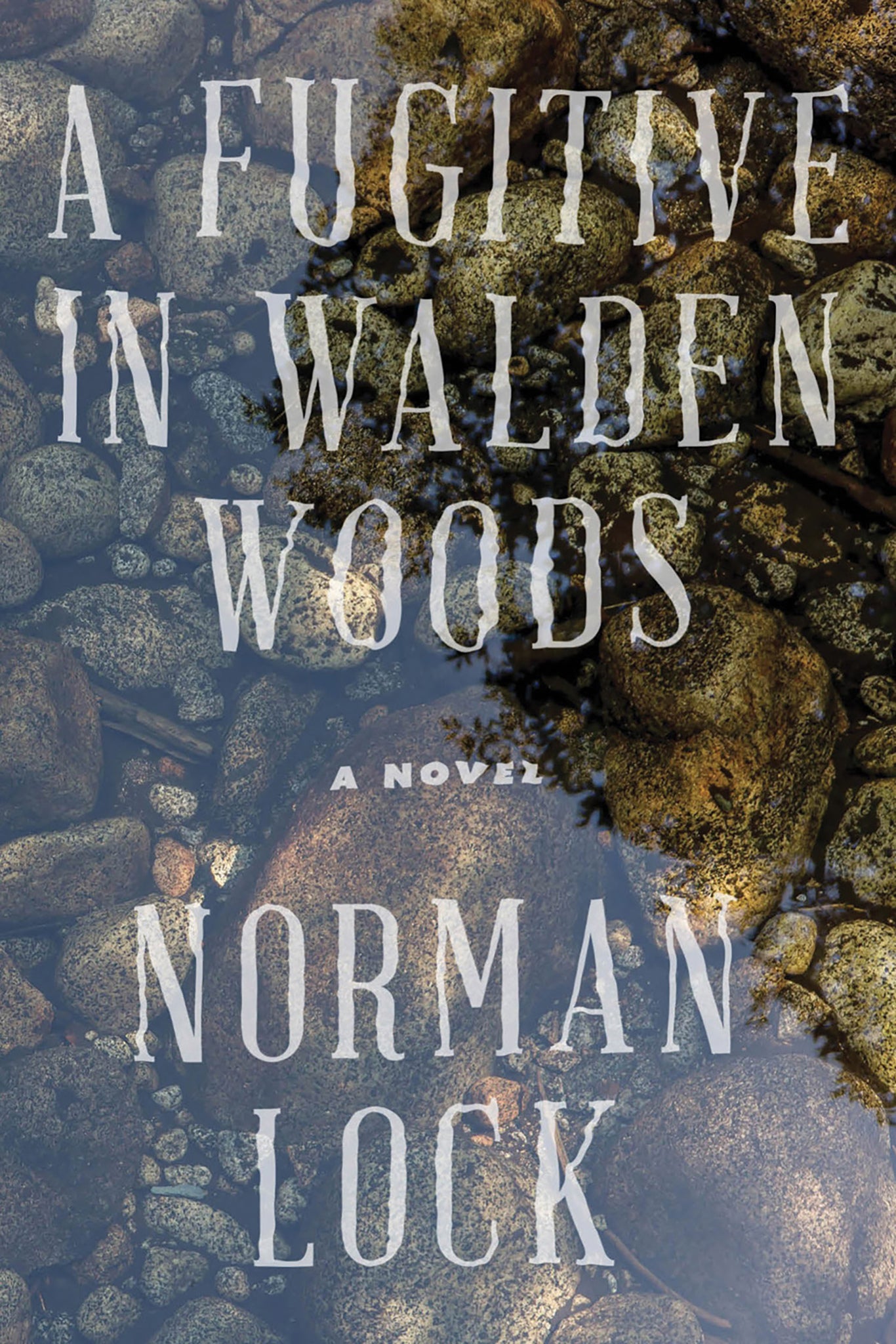
Henry David Thoreau’s principles are tested when a young man escapes from slavery into Walden Woods
In Norman Lock’s fourth stand-alone book of The American Novels series, Samuel Long escapes slavery in Virginia, traveling the Underground Railroad to Walden Woods where he encounters Henry David Thoreau, Ralph Waldo Emerson, Nathaniel Hawthorne, William Lloyd Garrison, and other transcendentalists and abolitionists. While Long will experience his coming-of-age at Walden Pond, his hosts will receive a lesson in human dignity, culminating in a climactic act of civil disobedience.
Against this historical backdrop, Lock’s powerful narrative examines issues that continue to divide the United States: racism, privilege, and what it means to be free in America.

Select Praise for Norman Lock’s The American Novels Series
“Norman Lock has created a memorable portrait gallery of American subjects, in a succession of audaciously imagined, wonderfully original, and beautifully written novels unlike anything in our literature.” —Joyce Carol Oates
“Shimmers with glorious language, fluid rhythms, and complex insights.” —Jane Ciabattari, NPR
“Our national history and literature are Norman Lock’s playground in his dazzling series, The American Novels. . . . [His] supple, elegantly plain-spoken prose captures the generosity of the American spirit in addition to its moral failures, and his passionate engagement with our literary heritage evinces pride in its unique character.” —Wendy Smith, Washington Post
“This is fiction of a high caliber. . . on the cutting edge of history, providing us with a way to grapple with our evolving sense of the past, as we wonder what is next.” —Carl Rollyson, New York Sun
On The Boy in His Winter
“[Lock] is one of the most interesting writers out there. This time, he re-imagines Huck Finn’s journeys, transporting the iconic character deep into America’s past—and future.” —Reader’s Digest
On American Meteor
“[Walt Whitman] hovers over [American Meteor], just as Mark Twain’s spirit pervaded The Boy in His Winter. . . . Like all Mr. Lock’s books, this is an ambitious work, where ideas crowd together on the page like desperate men on a battlefield.” —Wall Street Journal
On The Port-Wine Stain
“Lock’s novel engages not merely with [Edgar Allan Poe and Thomas Dent Mütter] but with decadent fin de siècle art and modernist literature that raised philosophical and moral questions about the metaphysical relations among art, science and human consciousness. The reader is just as spellbound by Lock’s story as [his novel’s narrator] is by Poe’s. . . . Echoes of Wilde’s The Picture of Dorian Gray and Freud’s theory of the uncanny abound in this mesmerizingly twisted, richly layered homage to a pioneer of American Gothic fiction.” —New York Times Book Review
On A Fugitive in Walden Woods
“A Fugitive in Walden Woods manages that special magic of making Thoreau’s time in Walden Woods seem fresh and surprising and necessary right now. . . . This is a patient and perceptive novel, a pleasure to read even as it grapples with issues that affect the United States to this day.” —Victor LaValle, author of Lone Women
On The Wreckage of Eden
“The lively passages of Emily [Dickinson]’s letters are so evocative of her poetry that it becomes easy to see why Robert finds her so captivating. The book also expands and deepens themes of moral hypocrisy around racism and slavery. . . . Lyrically written but unafraid of the ugliness of the time, Lock’s thought-provoking series continues to impress.” —Publishers Weekly
On Feast Day of the Cannibals
“Lock does not merely imitate 19th-century prose; he makes it his own, with verbal flourishes worthy of Melville.” —Gay & Lesbian Review
On American Follies
“Ragtime in a fever dream. . . . When you mix 19th-century racists, feminists, misogynists, freaks, and a flim-flam man, the spectacle that results might bear resemblance to the contemporary United States.” —Library Journal (starred review)
On Tooth of the Covenant
“Splendid. . . . Lock masters the interplay between nineteenth-century Hawthorne and his fictional surrogate, Isaac, as he travels through Puritan New England. The historical details are immersive and meticulous.” —Foreword Reviews (starred review)
On Voices in the Dead House
“Gripping. . . . The legacy of John Brown looms over both Alcott and Whitman [in] a haunting novel that offers candid portraits of literary legends.” —Kirkus Reviews (starred review)
On The Ice Harp
“Lock deftly takes us into the polyphonic swirl of Emerson’s mind at the end of his life, inviting us to meet the man anew even as the philosopher fights to stop forgetting himself. . . . [A] remarkably empathetic and deeply moral novel.” —Matt Bell, author of Appleseed
On The Caricaturist
“Lock successfully mimics Crane’s impressionistic style in his marvelous depictions of late 19th-century America.” —Publishers Weekly
On Eden’s Clock
“Lock’s final title in his resplendent American Novels series . . . poignantly explores the nature of human connection. Rich in period detail and memorable characters, this is a fitting conclusion to the series.” —Booklist
Norman Lock is the author of The Old Man and the Heath: A Novel and Stories, the dozen volumes of The American Novels series, the short story collection Love Among the Particles, and additional novels, short fiction, poetry, and stage and radio plays. Among other honors, he has been longlisted for the Joyce Carol Oates Prize, received a National Endowment for the Arts fellowship, and won The Paris Review Aga Khan Prize for Fiction and Big Other Book Award for Fiction. He lives in Aberdeen, New Jersey.