


Some error occured while loading the Quick View. Please close the Quick View and try reloading the page.
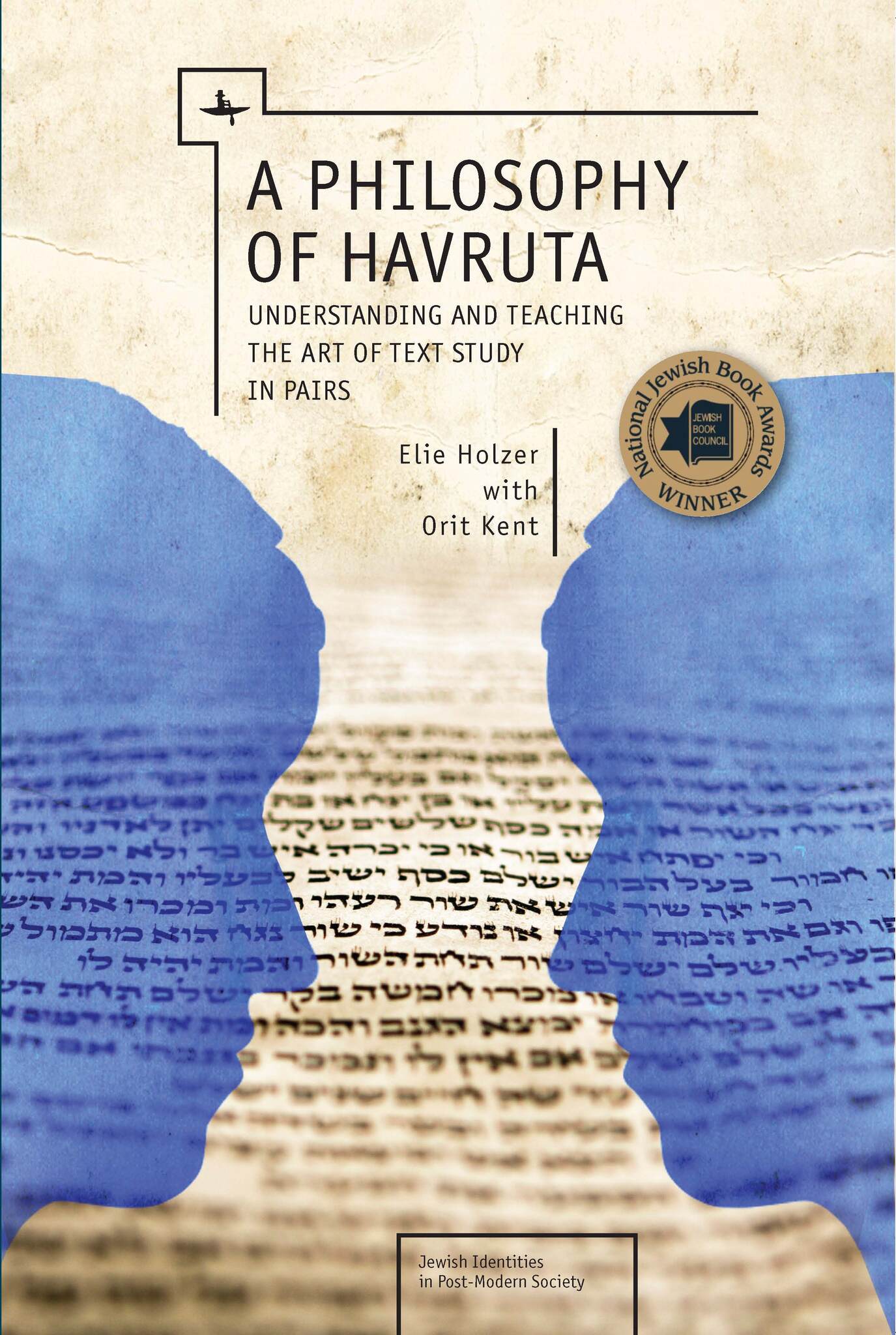
No longer confined to traditional institutions devoted to Talmudic studies, havruta work, or the practice of students studying materials in pairs, has become a relatively widespread phenomenon across denominational and educational settings of Jewish learning. However, until now there has been little discussion of what havruta text study entails and how it might be conceptualized and taught. This book breaks new ground from two perspectives: by offering a model of havruta text study situated in broader theories of interpretation and learning, and by treating havruta text study as composed of textual, interpersonal and intra-personal practices which can be taught and learned. We lay out the conceptual foundations of our approach and provide examples of their pedagogical implementation for the teaching of havruta text study. Included are illustrative lesson plans, teachers' notes and students’ reflections, exercises for students, and other instructional materials for teaching core concepts and practices.

Price: $29.95
Pages: 264
Publisher: Academic Studies Press
Imprint: Academic Studies Press
Series: Jewish Identities in Post-Modern Society
Publication Date:
10 March 2014
Trim Size: 9.21 X 6.14 in
ISBN: 9781618113856
Format: Paperback
BISACs:
Judaism: life and practice
Elie Holzer is a practice-oriented philosopher of Jewish education. His research integrates text based Jewish studies, philosophical hermeneutics, pedagogy and ethical-spiritual traditions. He serves as a Senior Lecturer at the School of Education at Bar-Ilan University in Israel, co-designed the Beit Midrash for Teachers at Brandeis University in the years 2003-2008, and has taught in various academic and vocational institutions in both Israel and the United States. He has published a number of research articles on text based learning and on havruta learning and serves as assistant editor of the International Journal of Jewish Education Research.