


Some error occured while loading the Quick View. Please close the Quick View and try reloading the page.
Honorable Mention, 2025 Outstanding Book Award, Peace, War, and Social Conflict Section of the American Sociological Association
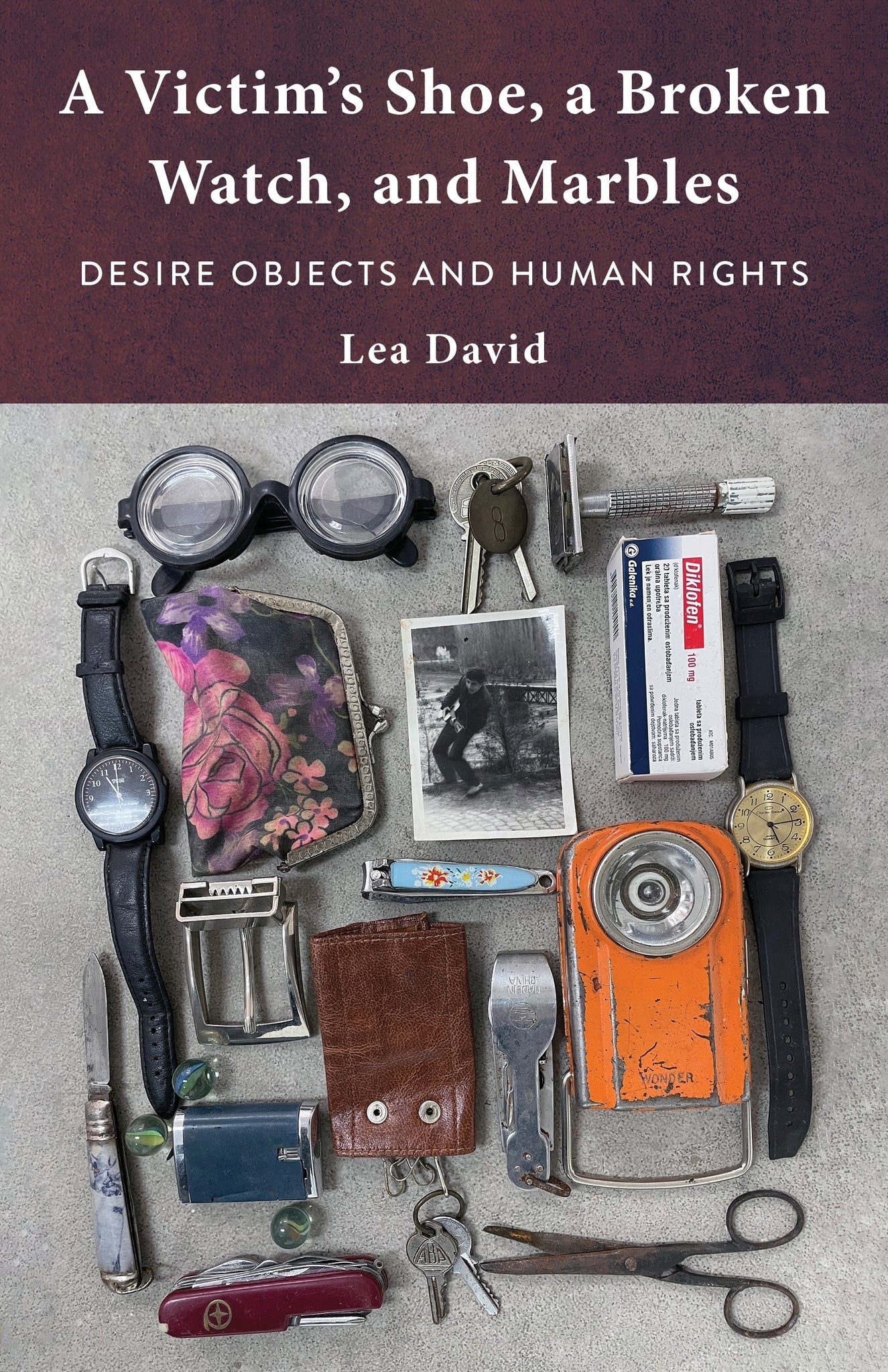
Everyday items found at the sites of atrocities possess a striking emotional force. Victims’ garments, broken glasses, wallets, shoes, and other such personal property that are recovered from places of death including concentration camps, mass graves, and prisons have become staples of memorial museums, exhibited to the public as material testimony in order to evoke sympathy and promote human rights. How do these objects take on such power, and what are the benefits and pitfalls of deploying them for political purposes?
A Victim’s Shoe, a Broken Watch, and Marbles examines how artifacts of atrocities circulate and, in so doing, sheds new light on the institutions and social processes that shape collective memory of human rights abuses. Lea David traces the journeys of what she terms “desire objects”: their rediscovery at the locations of mass atrocities, their use in forensic and legal procedures, their return to the homes of grieving families, their appearance in public spaces such as museums and exhibitions, and their role in political protests. She critically investigates the logic that shapes why and how desire objects gain symbolic power and political significance, showing when and under what circumstances they are used to promote particular worldviews and narratives. Featuring both novel theoretical methods and keen empirical analysis, this book offers important insights into the shortcomings of common assumptions about human rights.

— Jeffrey K. Olick, author of The Politics of Regret: On Collective Memory and Historical Responsibility
Prologue
Introduction: Desire Objects and Human Rights
Part I. The Conceptual Framework
1. Desire Objects
2. A Theoretical Model: Desire Objects and Moral Labor
3. Ideological Coatings: Human Rights and Nationalism
Part II. The Movement and Biographies of Desire Objects
4. The First Circuit: The Survival of Personal Objects After an Atrocity
5. The Second Circuit: Desire Objects in Private Homes
6. The Third Circuit: Public Display, Moral Labor, and the Discursive Value of Desire Objects
Part III. Moral Labor,Political Action, and Human Rights
7. Other Shoes Paved the Way: On the Circulation of Knowledge
8. Desire Objects, Political Action, and Ideology
9. Concluding Remarks: Desire Objects, Moral Labor, Ideologies, and Tacit Memory
Notes
Bibliography
Index