


Some error occured while loading the Quick View. Please close the Quick View and try reloading the page.
“An exhilarating cacophony of conflicting voices . . . The fury of its rhetoric takes on all but irresistible momentum.”—Kirkus Reviews
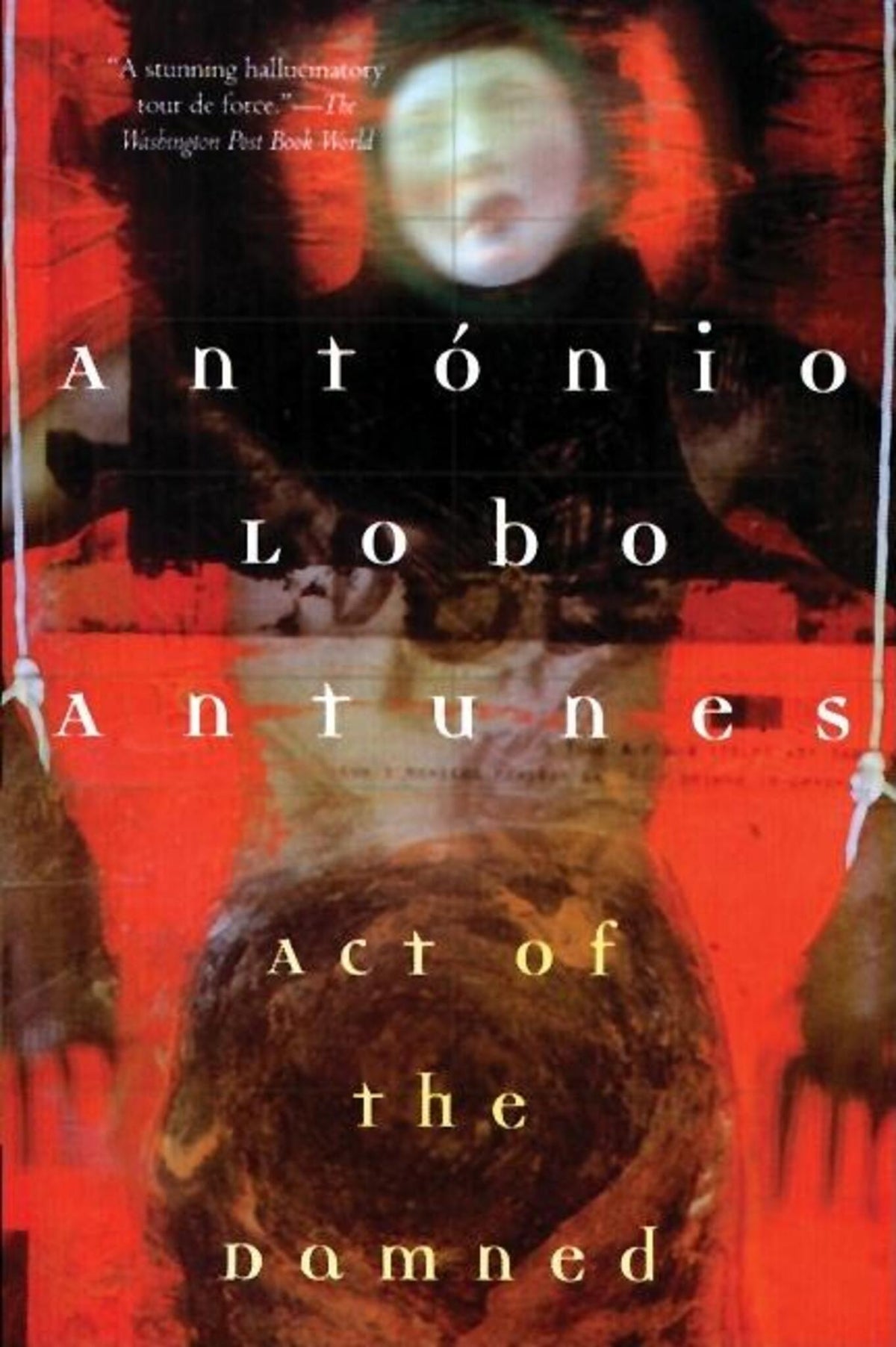
As the socialist revolution closes in, a once-wealthy Portuguese family is accused of "economic sabotage." They must escape across the border to Spain, then on to Brazil -- but the family is bankrupt, financially and spiritually. The patriarch, Diogo, lies dying, while his rapacious offspring rifle through his belongings, searching for his will. He remembers with bitterness and resignation his foolish marriage to his brother's beautiful mistress, who left him with a mongoloid daughter and a simpleminded son, who at sixty is running toy trains past his father's deathbed with the solemn self-importance of a five-year-old.
Told through a rippling overlay of voices, Act of the Damned circles closer and closer to the revelation of the diabolical immorality of Diogo's greedy son-in-law Rodrigo . . . who has fathered a child of his own bastard daughter and who is closing in on Diogo's crumbling estate. In the oppressive autumn heat, the characters' schemes ebb and flow in an atmosphere of decrepit elegance, tarnished silver, and rotting brocade. When the moment of departure finally arrives, the scene shifts from chaos to vacuum and Rodrigo finds himself no longer at the center of the group but firmly, terrifyingly, outside and alone.

Praise for Act of the Damned
“The group of people Lobo Antunes has created here, including the depraved and the retarded, resembles a William Faulkner cast of characters. . . . It ranks among the more powerful and evocative prose fiction volumes published recently.”—The Review of Contemporary Fiction
“António Lobo Antunes’s feverishly wild Act of the Damned reads like what Celine might have done had he been Portugese, and written a novel called “voyage to the end of the family.” The novel . . . is enhanced by the colloquial verve of Richard Zenith’s translation.”—Washington Post Book World
“A varied, surreal portrait of familial dysfunction and possible redemption . . . reminiscent of Garcia Marquez, Rushdie, and even Faulkner.”—Boston Review
“An exhilarating cacophony of conflicting voices . . . The fury of its rhetoric takes on all but irresistible momentum.”—Kirkus Reviews
“Hilarious in its baroque accumulation of detail and stunning for the author’s control.”—Library Journal
“This tale of familial sin and disintegration chillingly mimics the surrounding political climate, as two dictatorships–of Portugal and of this family–perish. . . . Malicious brilliance.”—Publishers Weekly
Praise for António Lobo Antunes
“A master navigator or the human psyche . . . [with] the voice of Nabokov by way of Cortazar, Gogol by way of Dylan.”—Jonathan Levi, Los Angeles Times Book Review
“Perhaps Portugal’s greatest living author . . . A genius.”—Alan Kaufman, San Francisco Chronicle Book Review
António Lobo Antunes, who was called “one of Portugal’s pre-eminent writers” by the New York Times, was born in Lisbon in 1942. The son of a physician, he too became a doctor and then spent four years in the Portuguese army during the Angolan war. His fictional “memoir” of that war, South of Nowhere, was internationally praised and followed by other widely translated and much-honored novels, including Act of the Damned, Fado Alexandrino, Explanation of the Birds, and The Natural Order of Things.