


Some error occured while loading the Quick View. Please close the Quick View and try reloading the page.
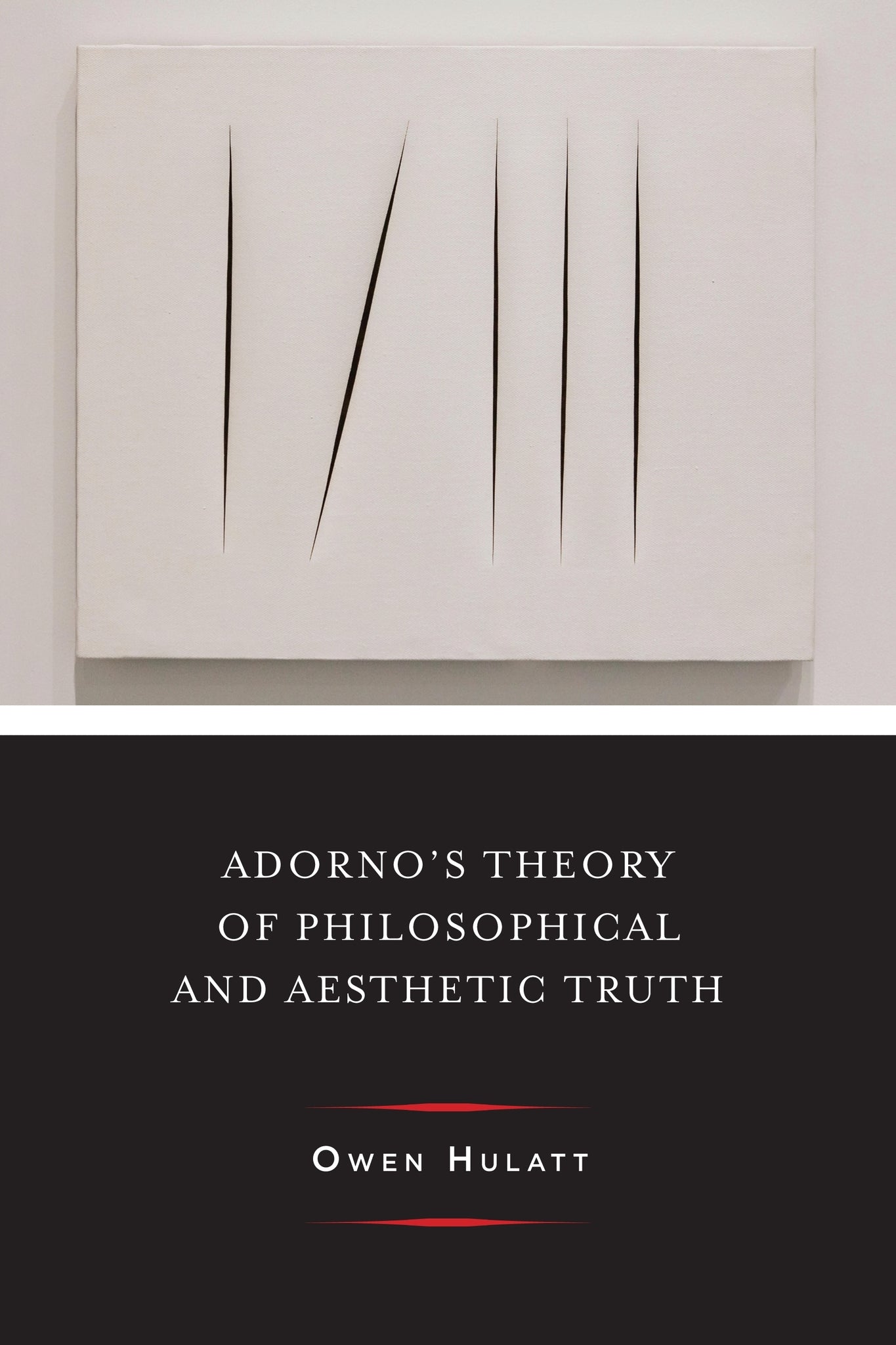
In Adorno's Theory of Philosophical and Aesthetic Truth, Owen Hulatt undertakes an original reading of Theodor W. Adorno's epistemology and its material underpinnings, deepening our understanding of his theories of truth, art, and the nonidentical. Hulatt's novel interpretation casts Adorno's theory of philosophical and aesthetic truth as substantially unified, supporting the thinker's claim that both philosophy and art are capable of being true.
For Adorno, truth is produced when rhetorical "texture" combines with cognitive "performance," leading to the breakdown of concepts that mediate the experience of the consciousness. Both philosophy and art manifest these features, although philosophy enacts these conceptual issues directly, while art does so obliquely. Hulatt builds a robust argument for Adorno's claim that concepts ineluctably misconstrue their objects. He also puts the still influential thinker into conversation with Hegel, Husserl, Frazer, Sohn-Rethel, Benjamin, Strawson, Dahlhaus, Habermas, and Caillois, among many others.

Acknowledgments
Introduction
1. Models of Experience
2. The Interpenetration of Concepts and Society
3. Negativism and Truth
4. Texture, Performativity, and Truth
5. Aesthetic Truth Content and Oblique Second Reflection
6. Beethoven, Proust, and Applying Adorno's Aesthetic Theory
Notes
Bibliography
Index