


Some error occured while loading the Quick View. Please close the Quick View and try reloading the page.
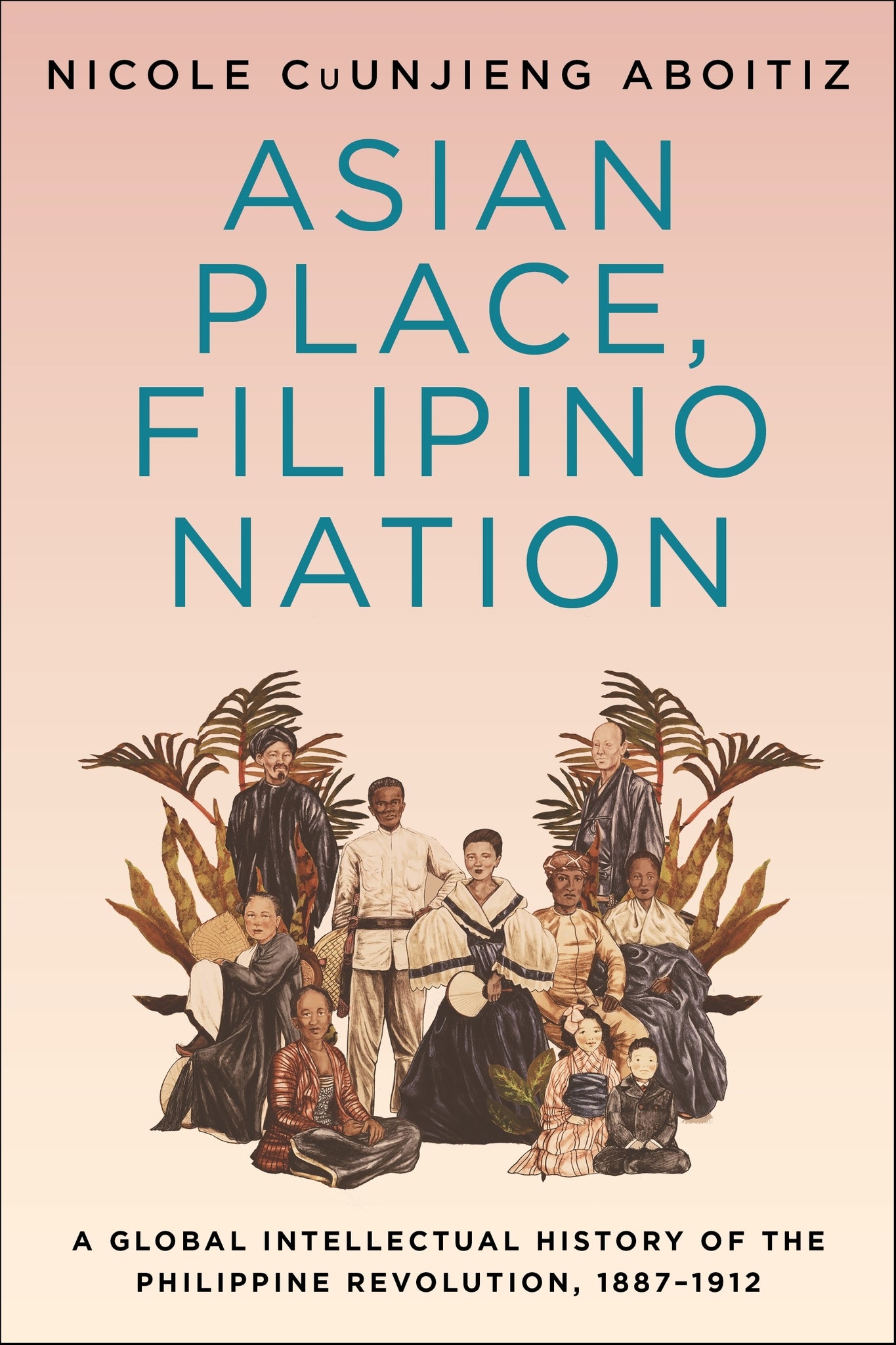
The Philippine Revolution of 1896–1905, which began against Spain and continued against the United States, took place in the context of imperial subjugation and local resistance across Southeast Asia. Yet scholarship on the revolution and the turn of the twentieth century in Asia more broadly has largely approached this pivotal moment in terms of relations with the West, at the expense of understanding the East-East and Global South connections that knit together the region’s experience. Asian Place, Filipino Nation reconnects the Philippine Revolution to the histories of Southeast and East Asia through an innovative consideration of its transnational political setting and regional intellectual foundations.
Nicole CuUnjieng Aboitiz charts turn-of-the-twentieth-century Filipino thinkers’ and revolutionaries’ Asianist political organizing and proto-national thought, scrutinizing how their constructions of the place of Asia connected them to their regional neighbors. She details their material and affective engagement with Pan-Asianism, tracing how colonized peoples in the “periphery” of this imagined Asia—focusing on Filipinos, but with comparison to the Vietnamese—reformulated a political and intellectual project that envisioned anticolonial Asian solidarity with the Asian “center” of Japan. CuUnjieng Aboitiz argues that the revolutionary First Philippine Republic’s harnessing of transnational networks of support, activism, and association represents the crucial first instance of Pan-Asianists lending material aid toward anticolonial revolution against a Western power. Uncovering the Pan-Asianism of the periphery and its critical role in shaping modern Asia, Asian Place, Filipino Nation offers a vital new perspective on the Philippine Revolution’s global context and content.

Acknowledgments
1. A Transnational Turn of the Century in Southeast Asia
2. Constructing Asia and the Malay Race, 1887–1895: Early Attempts to Transnationalize Pan-Asianism
3. The Philippine Revolution Mobilizes Asia, 1892–1898: Spanish Imperial Anxieties, the Vietnamese Đông Du Movement, and a Coming Race War
4. The First Philippine Republic’s Pan-Asian Emissary, 1898–1912: Transnational Cooperation, Affective Relations, and the Pacific Empires
5. The Afterlife of the Philippine Revolution: Reverberations from China to India to Third Worldist Futures
Notes
Bibliography
Index