


Some error occured while loading the Quick View. Please close the Quick View and try reloading the page.
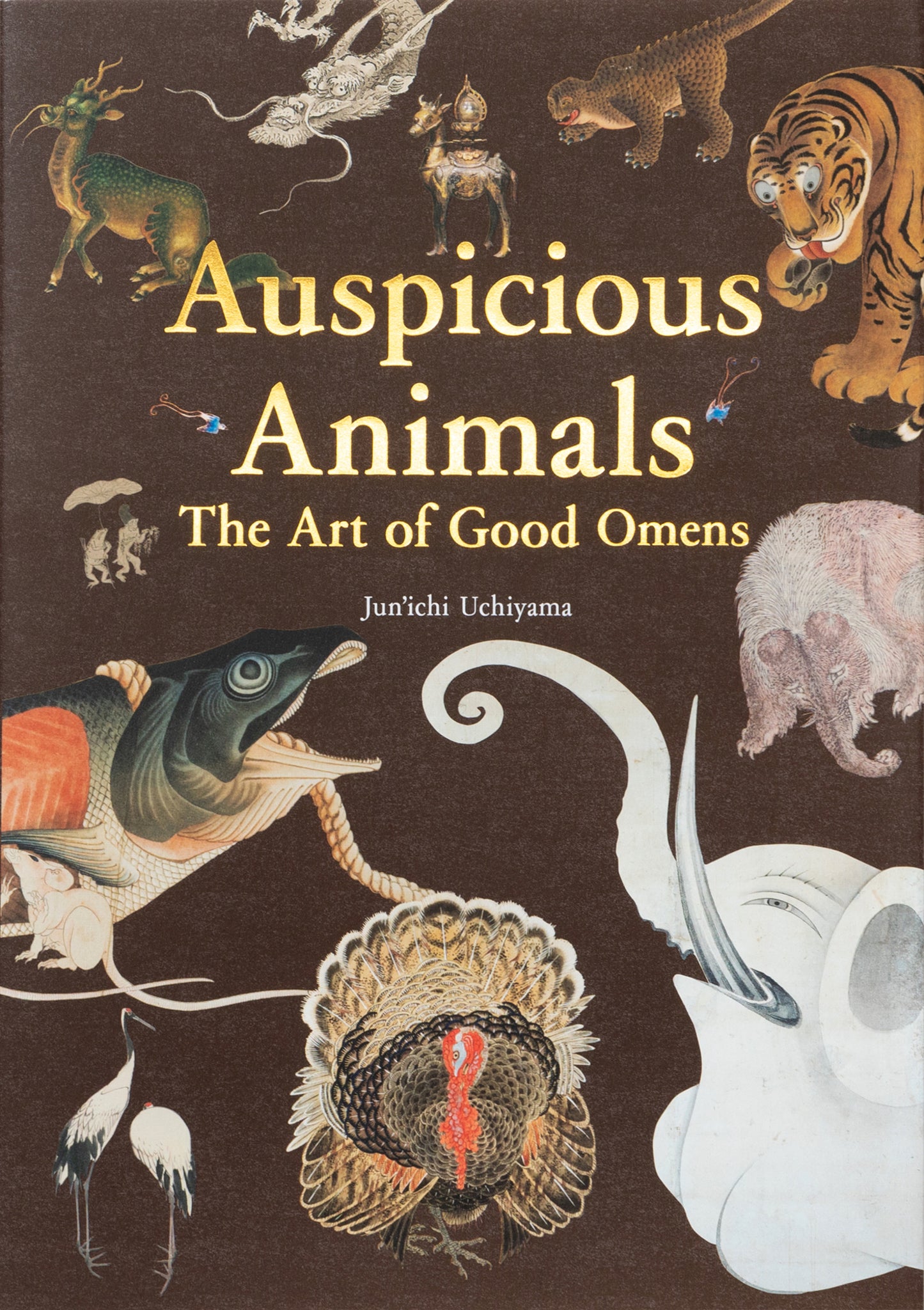
The world of mythical creatures born from human imagination is presented in this beautiful collection of artworks that symbolize good luck.
Many imaginary animals that are believed to be auspicious symbols of good fortune originated in ancient China. The most famous examples are the “Big Four”: the Winged Dragon, the Chinese Phoenix, Qilin (a hooved chimeric creature) and the Spirit Turtle. There are many more featured in this book, however, not only from China, but also from Japan and other regions around the world.
Auspicious Animals showcases illustrated artworks, along with sculptures and applied arts, that represent good omens. The collection, totaling around 240 pieces, is accompanied by rich, enjoyable and approachable text. This gorgeous edition featires metallic gold lamination on the cover and makes a great gift or reference for any art lover.

Chapter Two presents another 30 animals that evolved in Japan.
Chapter Three focuses on 10 rare animals from around the world, including India, Australia, The Netherlands, along with China during the Qing Dynasty and Vietnam under the Han Dynasty. Besides Albino animals, some animals from this chapter are common nowadays, but they were rare to the people in 17-19th centuries Japan. Readers can also enjoy artworks from the Kano school, the Rinpa school, and artists such as Itō Jakuchū and Kawanabe Kyōsai.