


Some error occured while loading the Quick View. Please close the Quick View and try reloading the page.
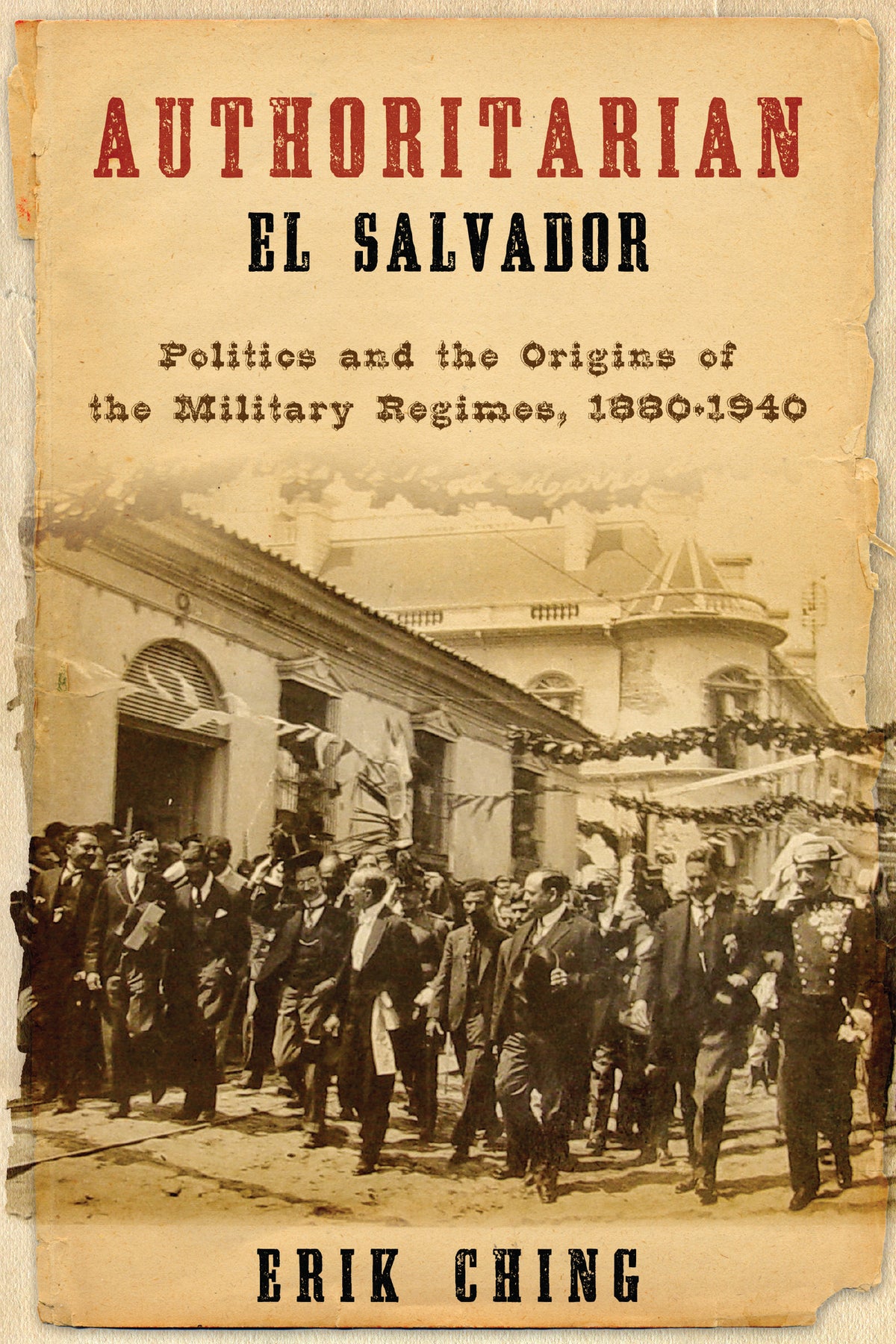
In December 1931, El Salvador’s civilian president, Arturo Araujo, was overthrown in a military coup. Such an event was hardly unique in Salvadoran history, but the 1931 coup proved to be a watershed. Araujo had been the nation’s first democratically elected president, and although no one could have foreseen the result, the coup led to five decades of uninterrupted military rule, the longest run in modern Latin American history. Furthermore, six weeks after coming to power, the new military regime oversaw the crackdown on a peasant rebellion in western El Salvador that is one of the worst episodes of state-sponsored repression in modern Latin American history. Democracy would not return to El Salvador until the 1990s, and only then after a brutal twelve-year civil war.
In Authoritarian El Salvador: Politics and the Origins of the Military Regimes, 1880-1940, Erik Ching seeks to explain the origins of the military regime that came to power in 1931. Based on his comprehensive survey of the extant documentary record in El Salvador’s national archive, Ching argues that El Salvador was typified by a longstanding tradition of authoritarianism dating back to the early- to mid-nineteenth century. The basic structures of that system were based on patron-client relationships that wove local, regional, and national political actors into complex webs of rival patronage networks. Decidedly nondemocratic in practice, the system nevertheless exhibited highly paradoxical traits: it remained steadfastly loyal to elections as the mechanism by which political aspirants acquired office, and it employed a political discourse laden with appeals to liberty and free suffrage. That blending of nondemocratic authoritarianism with populist reformism and rhetoric set the precedent for military rule for the next fifty years.

“Ching is one of the first scholars to systematically document this unprecedented political opening in Salvadoran history. This finding opens up new lines of inquiry for Salvadoran histiography, especially as this brief democratization relates to subsequent events such as the 1932 uprising and massacre. . . Ching once again offers fresh interpretations to another understudied period of Salvadoran history by illustrating how Martínez used a patronage network similar to the PND’s but also incorporated elements of social reform to provide a modicum of legitimacy that later military governments would emulate, often to the extreme dissatisfaction of the landed elites.” —Hispanic American Historical Review
Erik Ching is professor of history at Furman University. He is coauthor with Héctor Lindo Fuentes of Modernizing Minds in El Salvador: Education Reform and the Cold War, 1960–1980.
List of Tables
List of Acronyms and Abbreviations
Acknowledgments
Maps
Introduction
1. The Rules: Formal and Informal
2. National-Level Networks in Conflict in the Nineteenth Century
3. Building Networks at the Local Level
4. Municipal Elections and Municipal Autonomy, ca. 1880–1930
5. The Network of the State: Meléndez-Quiñónez, 1913–1926
6. Facing the Leviathan: Pío Romero Bosque and the Experiment with Democracy, 1927–1931
7. Politics under the Military Regime, 1931–1940
8. Populist Authoritarianism, 1931–1940
Conclusion
Appendix
Notes
Bibliography
Index