Skip to product information
1 of 1

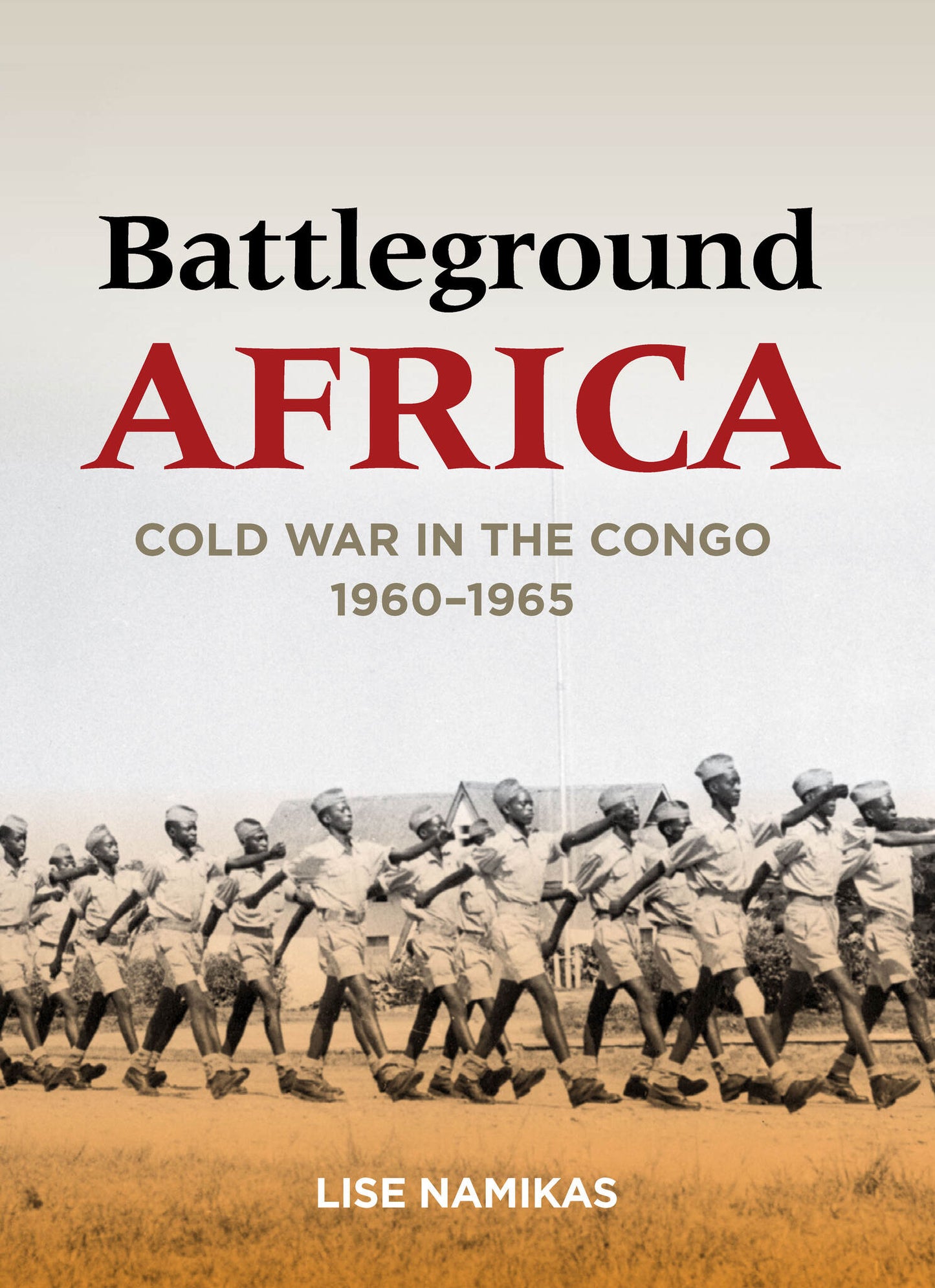
Battleground Africa

Regular price $38.00
Sale price $38.00 Regular price $38.00
Sale Sold out
Winner of the 2013 Choice Award for Outstanding Academic Title Battleground Africa traces the Congo Crisis from post-World War II decolonization efforts through Mobutu's second coup in 1965 from a...
Read More
  • Format:
  • 16 September 2015
View Product Details

Winner of the 2013 Choice Award for Outstanding Academic Title

Battleground Africa traces the Congo Crisis from post-World War II decolonization efforts through Mobutu's second coup in 1965 from a radically new vantage point. Drawing on recently opened archives in Russia and the United States, and to a lesser extent Germany and Belgium, Lisa Namikas addresses the crisis from the perspectives of the two superpowers and explains with superb clarity the complex web of allies, clients, and neutral states influencing U.S.-Soviet competition.

Unlike any other work, Battleground Africa looks at events leading up to independence, then considers the assassination of Patrice Lumumba, the series of U.N.-supported constitutional negotiations, and the crises of 1964 and 1965. Finding that the U.S. and the USSR each wanted to avoid a major confrontation, but also misunderstood its opponent's goals and wanted to avoid looking weak or losing its political standing in Africa, Namikas argues that a series of exaggerations and misjudgements helped to militarize the crisis, and ultimately, helped militarize the Cold War on the continent.

files/i.png Icon
Price: $38.00
Pages: 352
Publisher: Stanford University Press
Imprint: Stanford University Press
Series: Cold War International History Project
Publication Date: 16 September 2015
Trim Size: 9.00 X 6.00 in
ISBN: 9780804796804
Format: Paperback
BISACs:

"Author Lise Namikas provides the reader with a careful examination of the factors—both domestic and international—involved in the confrontations that finally culminated in Joseph Mobutu's seizure of power in 1965 . . . Moreover, she writes in a way that draws the reader into the narrative she is presenting . . . An important factor that separates this excellent volume from other recent studies of aspects of the early years of the Cold War is the author's success in melding her source materials in a way that integrates both the vast documentary material—from U.S., Russian, Belgian, United Nations, and other sources—on which she draws, along with a broad range of important secondary literature, including the often-ignored assessments written at the time of the events under examination."
Lise Namikas is an adjunct instructor at Louisiana State University and helped to organize the Wilson Center's Congo Crisis Oral History Conference in 2004.