Skip to product information
1 of 1

Birth of the Geopolitical Age

Regular price $32.00
Sale price $32.00 Regular price $32.00
Sale Sold out
From the 1850s until the mid-twentieth century, a period marked by global conflicts and anxiety about dwindling resources and closing opportunities after decades of expansion, the frontier became a...
Read More
  • Format:
  • 12 September 2023
View Product Details

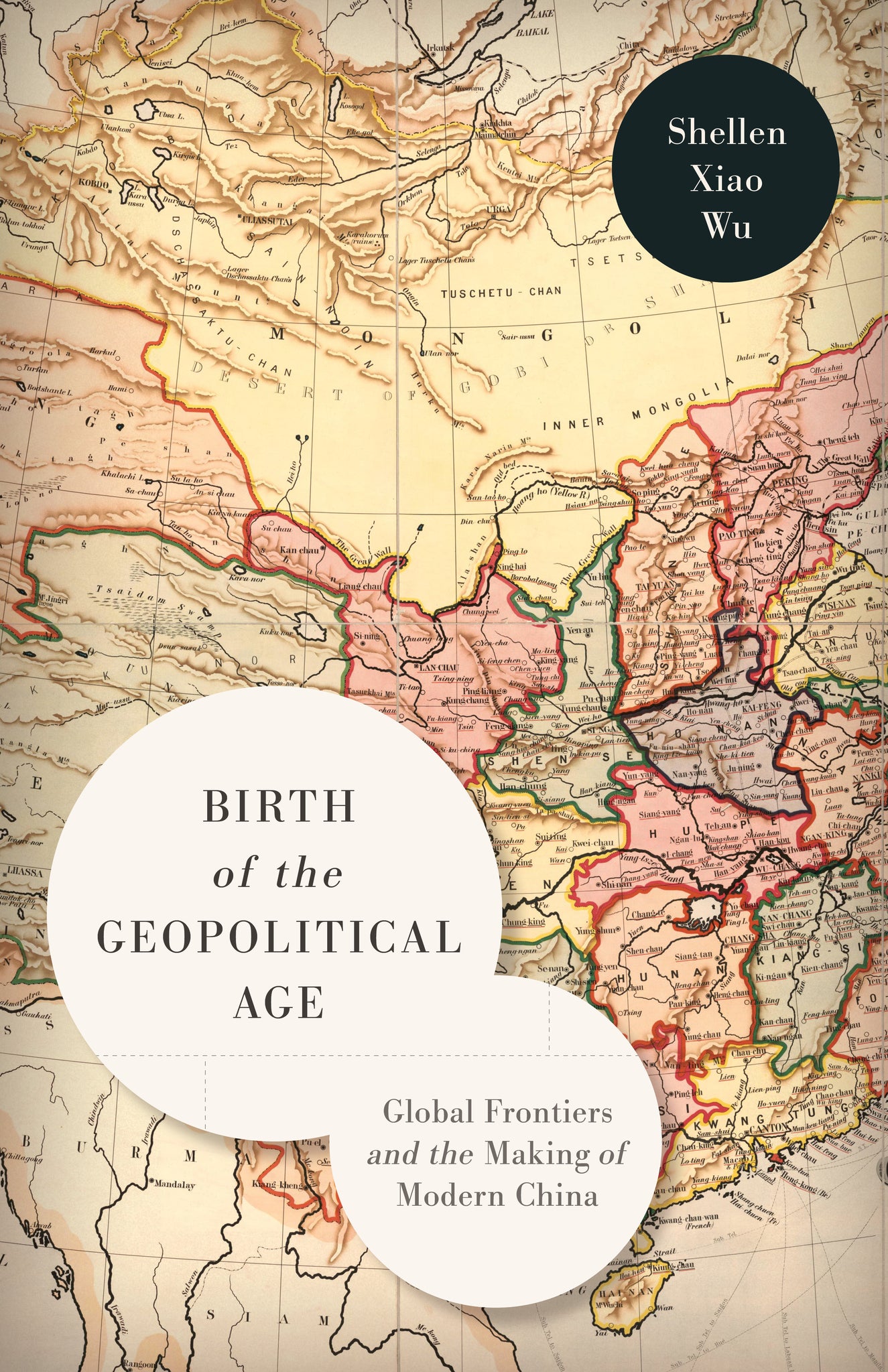
From the 1850s until the mid-twentieth century, a period marked by global conflicts and anxiety about dwindling resources and closing opportunities after decades of expansion, the frontier became a mirror for historically and geographically specific hopes and fears. From Asia to Europe and the Americas, countries around the world engaged with new interpretations of empire and the deployment of science and technology to aid frontier development in extreme environments. Through a century of political turmoil and war, China nevertheless is the only nation to successfully navigate the twentieth century with its imperial territorial expanse largely intact. In Birth of the Geopolitical Age, Shellen Xiao Wu demonstrates how global examples of frontier settlements refracted through China's unique history and informed the making of the modern Chinese state. Wu weaves a narrative that moves through time and space, the lives of individuals, and empires' rise and fall and rebirth, to show how the subsequent reshaping of Chinese geopolitical ambitions in the twentieth century, and the global transformation of frontiers into colonial laboratories, continues to reorder global power dynamics in East Asia and the wider world to this day.

files/i.png Icon
Price: $32.00
Pages: 328
Publisher: Stanford University Press
Imprint: Stanford University Press
Publication Date: 12 September 2023
Trim Size: 9.00 X 6.00 in
ISBN: 9781503636842
Format: Paperback
BISACs:

"Wu's Birth of the Geopolitical Age is the most exciting study in the history of science, empire, and nation I have read in recent years. The book is brilliantly conceptualized, tracing the circulation and translation of geographical and agricultural sciences among the United States, Germany, Japan, and particularly China. Its central idea, geo-modernity, is an illuminating concept that will be widely referenced. Based on extensive research in multiple languages, Birth of the Geopolitical Age tells a rich narrative about a wide range of historical actors, institutions, and discourses. The book is a marvel of scholarly ambition, erudition, and compression. Despite its impressive scope, the narrative is exceptionally clear and readable. This superb book is a model study in global and comparative history. I can't wait to recommend it to every historian interested in the topic."—Fa-ti Fan, Binghamton University
Shellen Xiao Wu is the Lawrence Gipson Chair of Transnational History at Lehigh University. She is the author of Empires of Coal: Fueling China's Entry into the Modern World Order, 1860–1919 (Stanford, 2015).
Introduction: Why Empires Matter in the Age of the Nation-State
1. 1852 and the Afterlife of Revolutions
2. The Experimental Grounds of New Imperialism
3. In Search of New Frontiers
4. Versailles and the Birth of the Geopolitical Age
5. Rural Development and Its Discontents
6. The Devil's Handwriting
7. Cold War New Empires