


Some error occured while loading the Quick View. Please close the Quick View and try reloading the page.
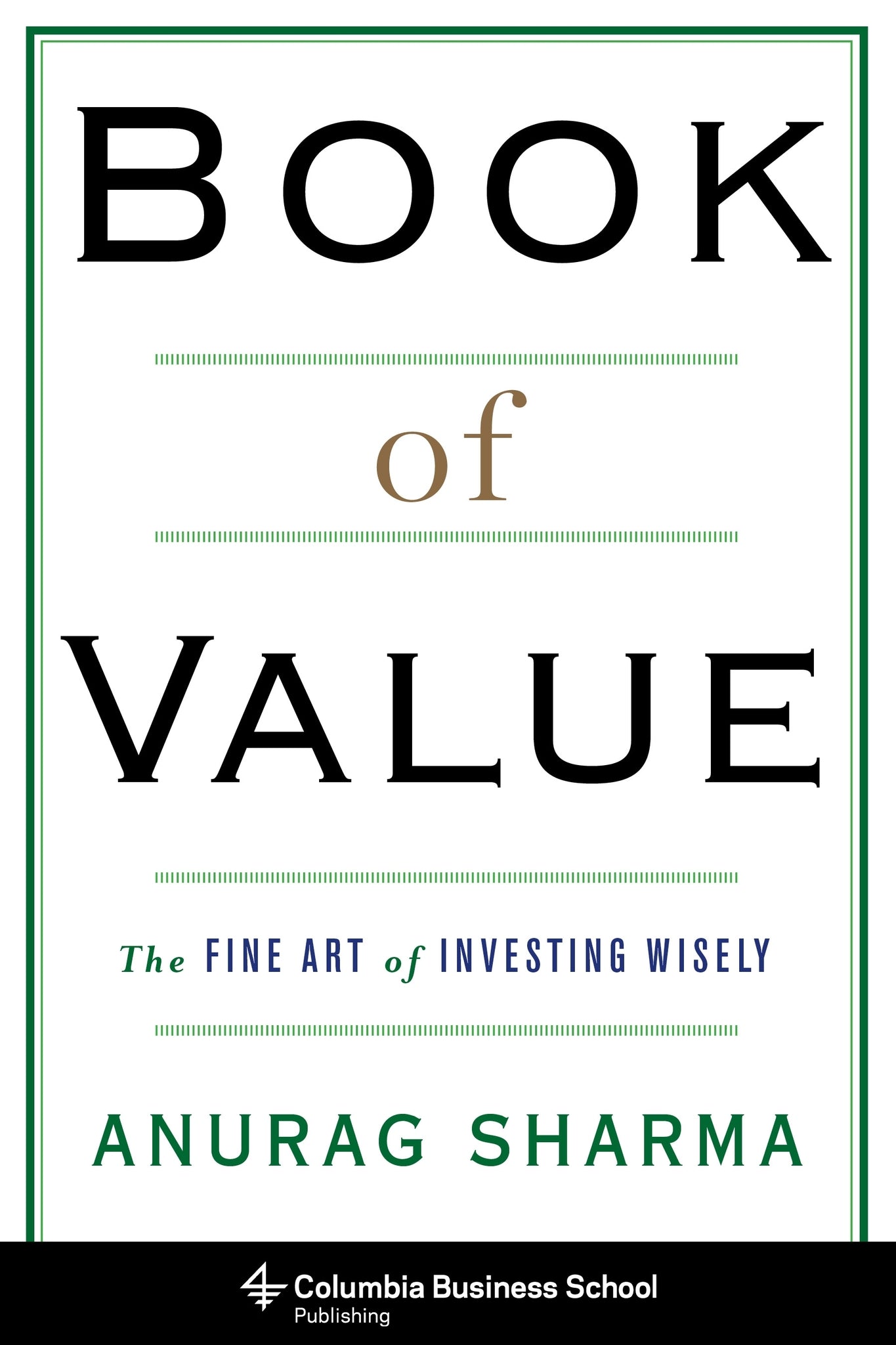
Financial markets are noisy and full of half-baked opinions, innuendo, and misinformation. With deep insights about investor psychology, Book of Value shows how to apply tools of business analysis to sort through the deceptions and self-deceptions in financial markets. Anurag Sharma joins philosophy with practical know-how to launch an integrated approach to building high-performance stock portfolios.
Investors at all skill levels should learn to be mindful of their psychological biases so they may better frame investment choices. Book of Value teaches novices that investing is not a game of luck but a skill—and it teaches the emotional and analytical tools necessary to play it well. Intermediate investors learn how to effectively control emotions when investing and think strategically about their investment program. Advanced investors see the formalization of what they already know intuitively: that the philosopher's methods for seeking truth can be profitably applied to make smart investments. A groundbreaking guide full of lasting value, Book of Value should be on the shelf of anyone who takes investing seriously.

— David Nawrocki, Katherine M. Salisbury and Richard J. Salisbury, Jr. Endowed Professor of Finance, Villanova School of Business
Preface
Acknowledgments
Prologue: A Short History of Investing
Introduction: Noise
Part I: Illusion
1 Opinions and Beliefs
2 Correlation of Errors
3 The Dark Arts
4 Purveyors of the Dark Arts
5 Victims of the Dark Arts
Part II: Verity
6 Logic—Data—Doubt
7 Investing as a Negative Art
8 Shaping the Investment Thesis
9 How to Be a Wise Investor
10 The Art of Looking
Part III: Foundations
11 Price and Value
12 How to Value a Business
13 Risk and Uncertainty
14 The Simple Math of Valuation
15 Yield—Stability—Strength
Part IV: Diligence
16 Depth Analysis
17 Dive for Strength
18 Define Good Business
19 Watch the Game
20 Meet the Managers
Part V: Policy
21 Diversification
22 Another Way to Portfolio
23 Core Holdings
24 Growth
25 The Buffett Portfolio
Conclusion: Noise Control
Notes
Bibliography
Index