


Some error occured while loading the Quick View. Please close the Quick View and try reloading the page.
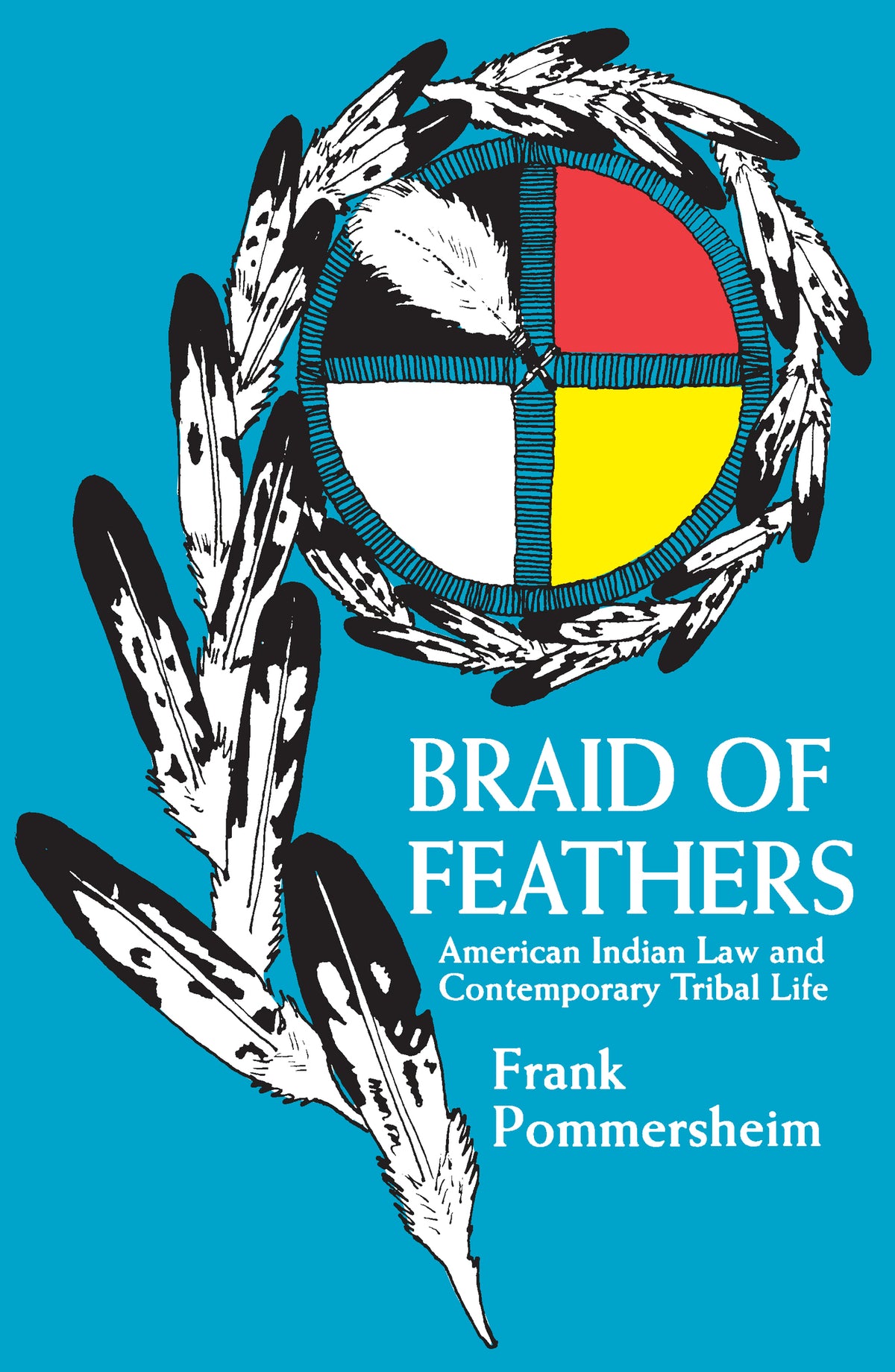
In this ambitious and moving book, Frank Pommersheim, who lived and worked on the Rosebud Sioux Indian Reservation for ten years, challenges the dominant legal history of American Indians and their tribes—a history that concedes far too much power to the laws and courts of the "conqueror." Writing from the perspective of the reservation and contemporary Indian life, Pommersheim makes an urgent call for the advancement of tribal sovereignty and of tribal court systems that are based on Indian culture and values.
Taking as its starting point the cultural, spiritual, and physical nature of the reservation, Braid of Feathers goes on to trace the development of Indian law from the 1770s to the present. Pommersheim considers the meaning of justice from the indigenous point of view. He offers a trenchant analysis of the tribal courts, stressing the importance of language, narrative, and story. He concludes by offering a "geography of hope,"one that lies in the West, where Native Americans control a significant amount of natural resources, and where a new ethic of development and preservation is emerging within the dominant society. Pommersheim challenges both Indians and non-Indians to forge an alliance at the local level based on respect and reciprocity—to create solidarity, not undo difference.
Taking as its starting point the cultural, spiritual, and physical nature of the reservation, Braid of Feathers goes on to trace the development of Indian law from the 1770s to the present. Pommersheim considers the meaning of justice from the indigenous point of view. He offers a trenchant analysis of the tribal courts, stressing the importance of language, narrative, and story. He concludes by offering a "geography of hope,"one that lies in the West, where Native Americans control a significant amount of natural resources, and where a new ethic of development and preservation is emerging within the dominant society. Pommersheim challenges both Indians and non-Indians to forge an alliance at the local level based on respect and reciprocity—to create solidarity, not undo difference.

Price: $31.95
Pages: 280
Publisher: University of California Press
Imprint: University of California Press
Publication Date:
29 March 1997
Trim Size: 9.00 X 6.00 in
ISBN: 9780520208940
Format: Paperback
BISACs:
Frank Pommersheim is Professor of Law at the University of South Dakota School of Law. He also serves as an Associate Justice on the Rosebud and Sioux Tribal Court of Appeals and as Chief Justice on the Cheyenne River Sioux Tribal Court of Appeals.
Acknowledgments
Introduction: Why Indian Tribes and
Indian Law Matter
PART 1. DIFFERENT ROOTS, DIFFERENT
BRANCHES: THE CULTURAL AND
LEGAL SETTING
1. The Reservation as Place
2. The Colonized Context: Federal Indian Law
and Tribal Aspiration
PART 2. JUSTICE, LIBERATION, AND STRUGGLE:
TRIBAL COURTS AND TRIBAL SOVEREIGNTY
3. The Crucible of Sovereignty: Tribal Courts,
Legitimacy, and the Jurisdictional Backdrop
4. Liberation, Dreams, and Hard Work: A View
of Tribal Court Jurisprudence
PART 3. ISSUES IN THE WESTERN LANDSCAPE:
A REGIONAL PERSPECTIVE
5. Tribal-State Relations: Hope for the Future?
6. Economic Development in Indian Country
Conclusion: A Geography of Hope
Notes
Index
Introduction: Why Indian Tribes and
Indian Law Matter
PART 1. DIFFERENT ROOTS, DIFFERENT
BRANCHES: THE CULTURAL AND
LEGAL SETTING
1. The Reservation as Place
2. The Colonized Context: Federal Indian Law
and Tribal Aspiration
PART 2. JUSTICE, LIBERATION, AND STRUGGLE:
TRIBAL COURTS AND TRIBAL SOVEREIGNTY
3. The Crucible of Sovereignty: Tribal Courts,
Legitimacy, and the Jurisdictional Backdrop
4. Liberation, Dreams, and Hard Work: A View
of Tribal Court Jurisprudence
PART 3. ISSUES IN THE WESTERN LANDSCAPE:
A REGIONAL PERSPECTIVE
5. Tribal-State Relations: Hope for the Future?
6. Economic Development in Indian Country
Conclusion: A Geography of Hope
Notes
Index