


Some error occured while loading the Quick View. Please close the Quick View and try reloading the page.
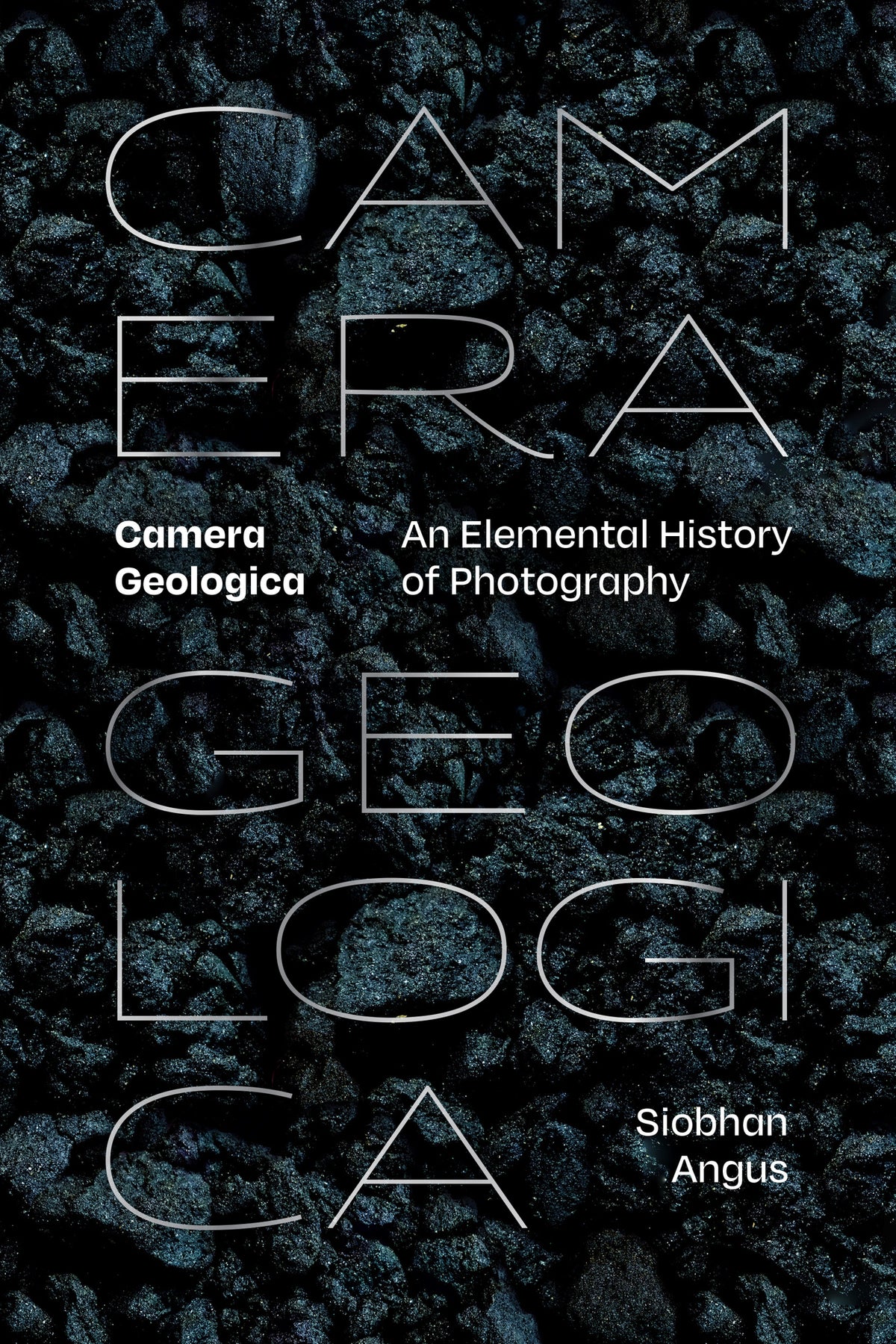
In Camera Geologica Siobhan Angus tells the history of photography through the minerals upon which the medium depends. Challenging the emphasis on immateriality in discourses on photography, Angus focuses on the inextricable links between image-making and resource extraction, revealing how the mining of bitumen, silver, platinum, iron, uranium, and rare earth elements is a precondition of photography. Photography, Angus contends, begins underground and, in photographs of mines and mining, frequently returns there. Through a materials-driven analysis of visual culture, she illustrates histories of colonization, labor, and environmental degradation to expose the ways in which photography is enmeshed within and enables global extractive capitalism. Angus places nineteenth-century photography in dialogue with digital photography and its own entangled economies of extraction, demonstrating the importance of understanding photography’s complicity in the economic, geopolitical, and social systems that order the world.

Price: $28.95
Pages: 328
Publisher: Duke University Press
Imprint: Duke University Press
Publication Date:
22 March 2024
Trim Size: 9.00 X 6.00 in
ISBN: 9781478030188
Format: Paperback
BISACs:
“A major intervention in the study of materiality, Camera Geologica explains how an understanding of photography’s reliance on mineral extraction can provide fascinating and revelatory insights into the sociopolitical realm of a medium that profoundly shapes people’s sense of their world.”—Rachael Z. DeLue, author of, Arthur Dove: Always Connect
“This innovative and exciting study reorients the history of photography to account for the materiality of the medium through its focus on mining and extraction. Siobhan Angus’s geology of photography makes a profound contribution to the history of photography and will be welcomed by labor historians and scholars in the environmental humanities as well.”—Shawn Michelle Smith, author of, Photographic Returns: Racial Justice and the Time of Photography
“A remarkable achievement. Unfolding across a wonderful selection of well-known and unfamiliar photographic works, Camera Geologica is an original, ingenious, and passionate investigation of photography’s mineral materiality and dependency.”—Christopher Pinney, coeditor of, Citizens of Photography: The Camera and the Political Imagination
"Camera Geologica is a thorough investigation of nature's extensive contribution to photography's existence—something that is rarely known about or considered. . . . The book’s message about the human consequences of extraction concerns more than users and makers of photography. Highly recommended for all readers who have any use of, interest in, or connection to photography or with human use of any products derived from the Earth's contents."—C. Chiarenza, Choice
"I’ll say up front that Camera Geologica is excellent and you should read it. It will surprise, alarm, depress, educate and inspire you. As the author states in the opening pages, Camera Geologica belongs in a historical-materialist genealogy, wherein the material world of raw matter, its processing, and its bending into infrastructure, institutions and ideologies explains the power imbalances common among humans."—Christy Wampole, European Review of Books
"Camera Geologica promises and delivers an elemental history of photography that unpacks its material and ideo-logical entanglements to date, so we can better imagine and prepare for a desirable future."—Oriana Confente, Public
"Taken together, the book’s six chapters provide a comprehensive and global portrait of the supply chains, labor processes, and environmental despoliations that are formally and materially refracted through the works of these photographers. In so doing, Camera Geologica redefines what photography might mean in the time of the Anthropocene."—John G. Winn, Media-N
“This innovative and exciting study reorients the history of photography to account for the materiality of the medium through its focus on mining and extraction. Siobhan Angus’s geology of photography makes a profound contribution to the history of photography and will be welcomed by labor historians and scholars in the environmental humanities as well.”—Shawn Michelle Smith, author of, Photographic Returns: Racial Justice and the Time of Photography
“A remarkable achievement. Unfolding across a wonderful selection of well-known and unfamiliar photographic works, Camera Geologica is an original, ingenious, and passionate investigation of photography’s mineral materiality and dependency.”—Christopher Pinney, coeditor of, Citizens of Photography: The Camera and the Political Imagination
"Camera Geologica is a thorough investigation of nature's extensive contribution to photography's existence—something that is rarely known about or considered. . . . The book’s message about the human consequences of extraction concerns more than users and makers of photography. Highly recommended for all readers who have any use of, interest in, or connection to photography or with human use of any products derived from the Earth's contents."—C. Chiarenza, Choice
"I’ll say up front that Camera Geologica is excellent and you should read it. It will surprise, alarm, depress, educate and inspire you. As the author states in the opening pages, Camera Geologica belongs in a historical-materialist genealogy, wherein the material world of raw matter, its processing, and its bending into infrastructure, institutions and ideologies explains the power imbalances common among humans."—Christy Wampole, European Review of Books
"Camera Geologica promises and delivers an elemental history of photography that unpacks its material and ideo-logical entanglements to date, so we can better imagine and prepare for a desirable future."—Oriana Confente, Public
"Taken together, the book’s six chapters provide a comprehensive and global portrait of the supply chains, labor processes, and environmental despoliations that are formally and materially refracted through the works of these photographers. In so doing, Camera Geologica redefines what photography might mean in the time of the Anthropocene."—John G. Winn, Media-N
Siobhan Angus is Assistant Professor of Communication and Media Studies at Carleton University.
List of Illustrations vii
Acknowledgments xi
Introduction 1
1. Bitumen and a Reorientation of Vision 30
2. Silver and Scale 67
3. Platinum and Atmosphere 106
4. Iron and Unstable Boundaries 132
5. Uranium and Photography beyond Vision 164
6. Rare Earth Elements and De/Materialization 196
Conclusion. All That Is Solid Melts into Air 22
Notes 231
Bibliography 263
Index 293
Acknowledgments xi
Introduction 1
1. Bitumen and a Reorientation of Vision 30
2. Silver and Scale 67
3. Platinum and Atmosphere 106
4. Iron and Unstable Boundaries 132
5. Uranium and Photography beyond Vision 164
6. Rare Earth Elements and De/Materialization 196
Conclusion. All That Is Solid Melts into Air 22
Notes 231
Bibliography 263
Index 293