


Some error occured while loading the Quick View. Please close the Quick View and try reloading the page.
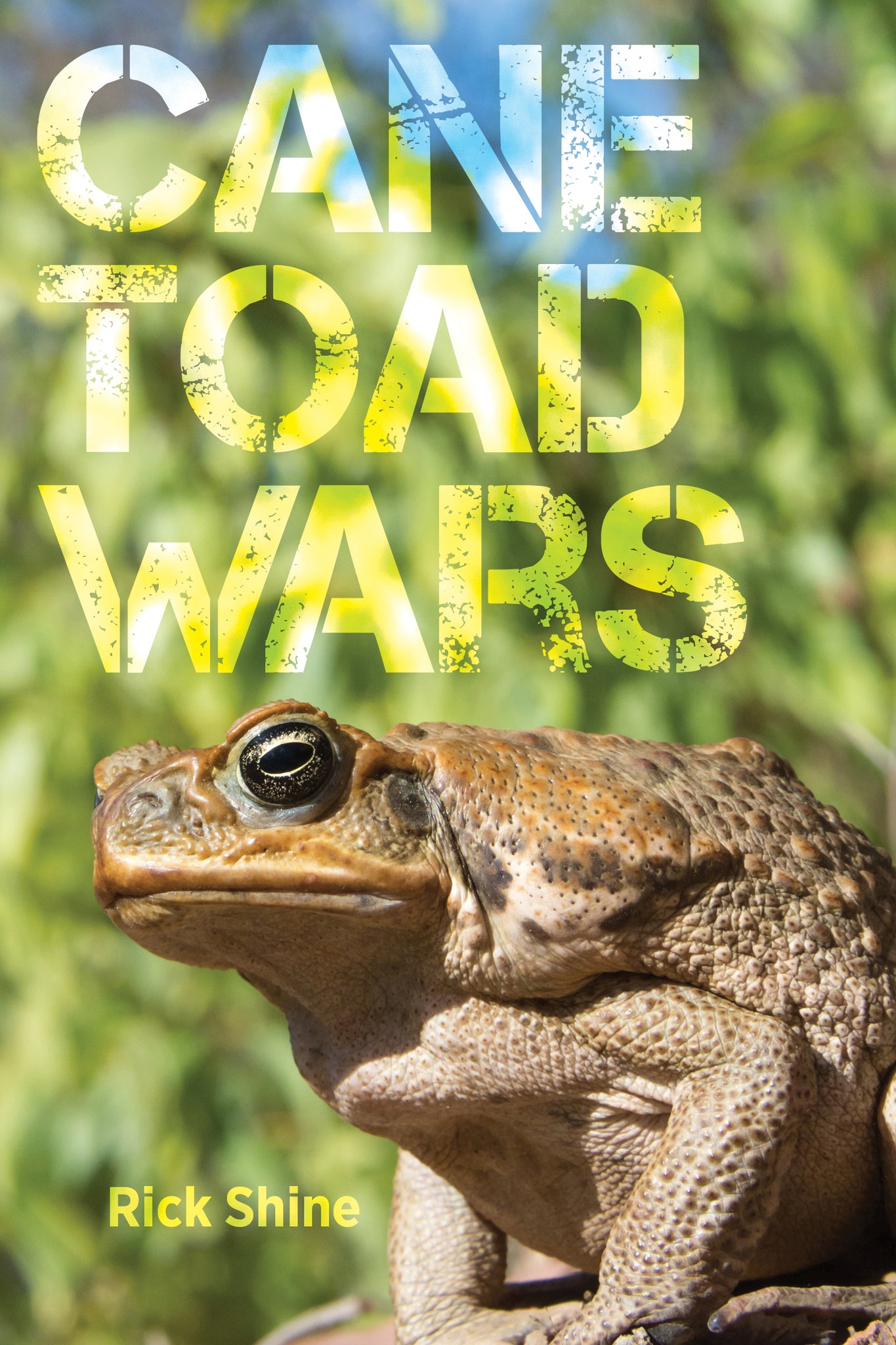
In 1935, an Australian government agency imported 101 specimens of the Central and South American Cane Toad in an attempt to manage insects that were decimating sugar-cane harvests. In Australia the Cane Toad adapted and evolved with abandon, voraciously consuming native wildlife and killing predators with its lethal skin toxin. Today, hundreds of millions of Cane Toads have spread across the northern part of Australia and continue to move westward. The humble Cane Toad has become a national villain.
Cane Toad Wars chronicles the work of intrepid scientist Rick Shine, who has been documenting the toad’s ecological impact in Australia and seeking to buffer it. Despite predictions of devastation in the wake of advancing toad hordes, the author’s research reveals a more complex and nuanced story. A firsthand account of a perplexing ecological problem and an important exploration of how we measure evolutionary change and ecological resilience, this book makes an effective case for the value of long-term natural history research in informing conservation practice.
Cane Toad Wars chronicles the work of intrepid scientist Rick Shine, who has been documenting the toad’s ecological impact in Australia and seeking to buffer it. Despite predictions of devastation in the wake of advancing toad hordes, the author’s research reveals a more complex and nuanced story. A firsthand account of a perplexing ecological problem and an important exploration of how we measure evolutionary change and ecological resilience, this book makes an effective case for the value of long-term natural history research in informing conservation practice.

Price: $34.95
Pages: 288
Publisher: University of California Press
Imprint: University of California Press
Series: Organisms and Environments
Publication Date:
20 March 2018
Trim Size: 9.00 X 6.00 in
ISBN: 9780520295100
Format: Hardcover
BISACs:
"This engaging firsthand account account tells the personal story of Professor Shine’s lifetime of research into cane toads and how rigorous natural history studies can effectively inform conservation policies and practices. Professor Shine also makes a strong argument in support of that (apparently) most quaint of scientific practices: field work."
Rick Shine is Professor of Biology at the University of Sydney. He has published more than a thousand scientific papers on the ecology of reptiles and amphibians, and he has received a host of national and international awards for his research.
Foreword by Harry W. Greene vii
Preface xi
1 • An Ecological Catastrophe 1
2 • How the Cane Toad Came to Australia 13
3 • Arrival of Cane Toads at Fogg Dam 36
4 • How Cane Toads Have Adapted and Dispersed 55
5 • The Impact of Cane Toads on Australian Wildlife 79
6 • How the Ecosystem Has Fought Back 108
7 • Citizens Take On the Toad 130
8 • The Quest for a Way to Control the Toad 155
9 • A New Toolkit for Fighting the Toad 178
10 • Toad Control Moves from the Lab to the Field 203
11 • What We’ve Learned 228
Acknowledgments 245
Appendix 247
Bibliography and Suggested Reading 251
Preface xi
1 • An Ecological Catastrophe 1
2 • How the Cane Toad Came to Australia 13
3 • Arrival of Cane Toads at Fogg Dam 36
4 • How Cane Toads Have Adapted and Dispersed 55
5 • The Impact of Cane Toads on Australian Wildlife 79
6 • How the Ecosystem Has Fought Back 108
7 • Citizens Take On the Toad 130
8 • The Quest for a Way to Control the Toad 155
9 • A New Toolkit for Fighting the Toad 178
10 • Toad Control Moves from the Lab to the Field 203
11 • What We’ve Learned 228
Acknowledgments 245
Appendix 247
Bibliography and Suggested Reading 251