


Some error occured while loading the Quick View. Please close the Quick View and try reloading the page.
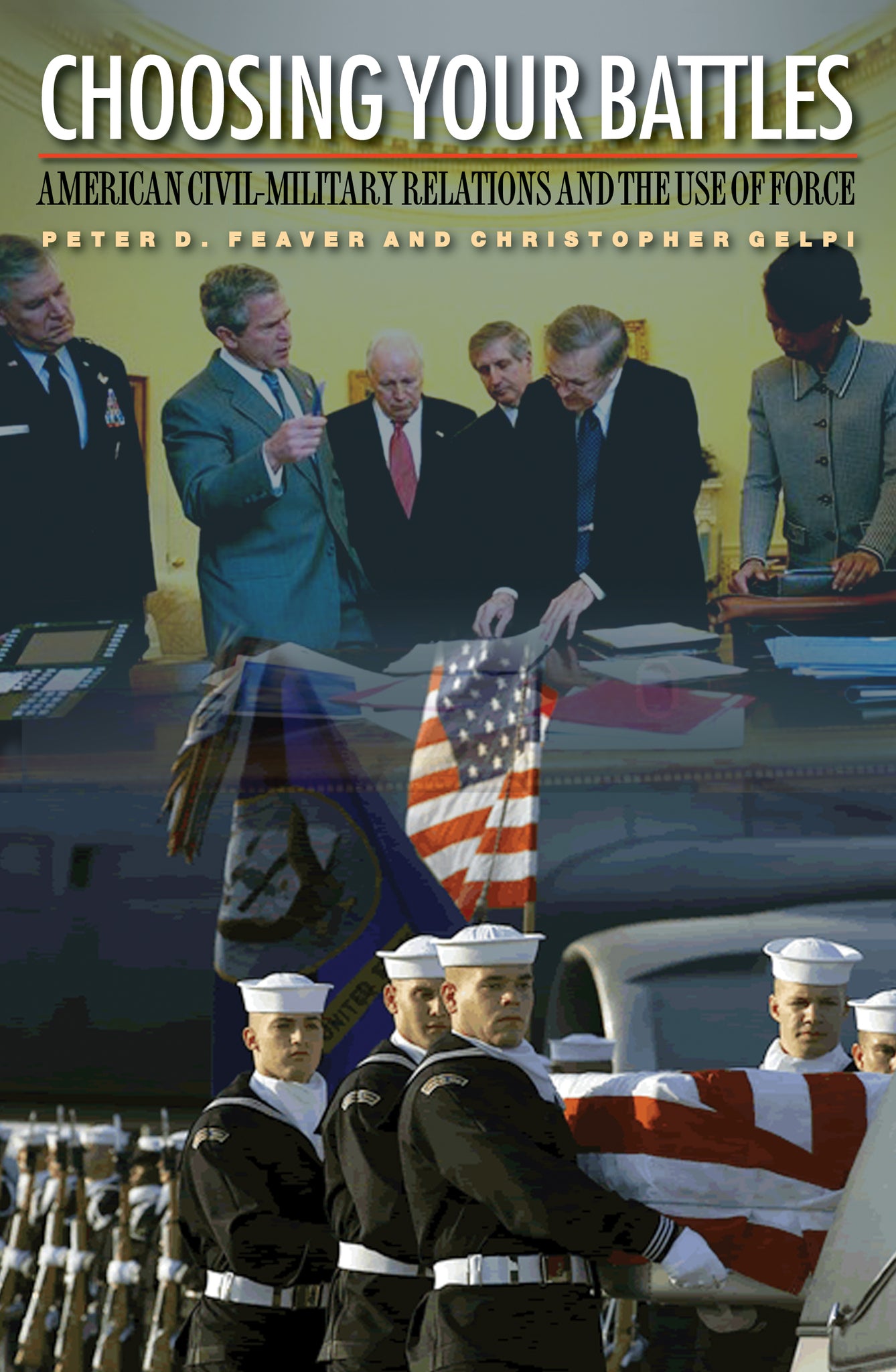
America's debate over whether and how to invade Iraq clustered into civilian versus military camps. Top military officials appeared reluctant to use force, the most hawkish voices in government were civilians who had not served in uniform, and everyone was worried that the American public would not tolerate casualties in war. This book shows that this civilian-military argument--which has characterized earlier debates over Bosnia, Somalia, and Kosovo--is typical, not exceptional. Indeed, the underlying pattern has shaped U.S. foreign policy at least since 1816. The new afterword by Peter Feaver and Christopher Gelpi traces these themes through the first two years of the current Iraq war, showing how civil-military debates and concerns about sensitivity to casualties continue to shape American foreign policy in profound ways.

[A] highly statistical but thankfully lucid study. . . . [The authors] find that non-veteran civilian elites are more likely to advocate the use of force than either military elites or civilian leaders with military
experience. . . . The pattern holds historically. The authors consider a total of 111 instances from 1816 to 1992.