


Some error occured while loading the Quick View. Please close the Quick View and try reloading the page.
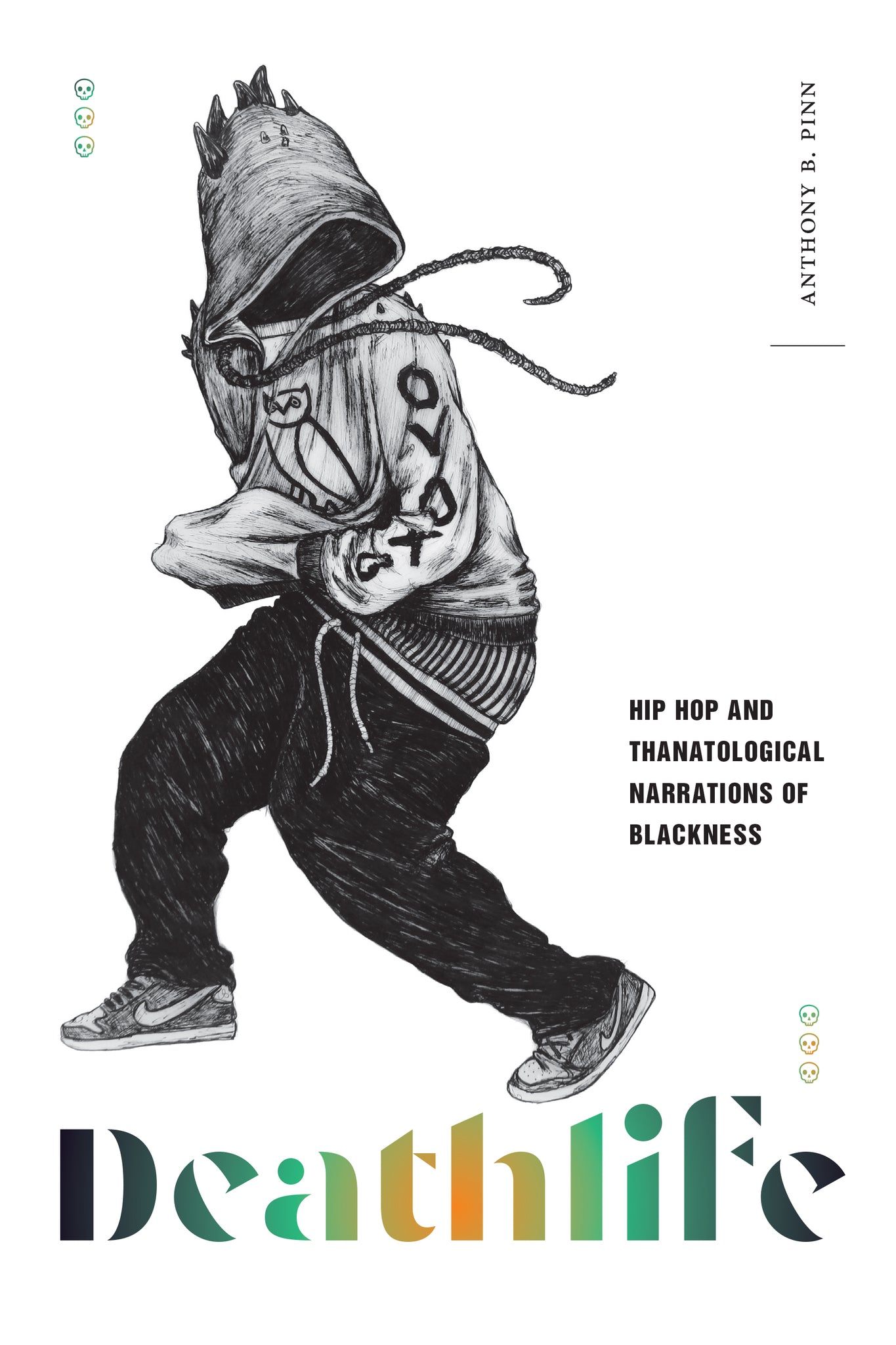
In Deathlife, Anthony B. Pinn analyzes hip hop to explore how Blackness serves as a framework for defining and guiding the relationship between life and death in the United States. Pinn argues that white supremacy and white privilege operate based on the right to distinguish death from life. This distinction is produced and maintained through the construction of Blackness as deathlife. Drawing on Afropessimism and Black moralism, Pinn theorizes deathlife as a technology of whiteness that projects whites’ anxieties about the end of their lives onto the Black other. Examining the music of Jay-Z; Kendrick Lamar; Tyler, the Creator; and others, Pinn shows how hip hop configures the interconnection and dependence between death and life in such a way that death and life become indistinguishable. In so doing, Pinn demonstrates that hip hop presents an alternative to deathlife that challenges the white supremacist definitions of Blackness and anti-Blackness more generally.

Price: $26.95
Pages: 240
Publisher: Duke University Press
Imprint: Duke University Press
Publication Date:
12 January 2024
Trim Size: 9.00 X 6.00 in
ISBN: 9781478025412
Format: Paperback
BISACs:
“Not since Orlando Patterson’s magisterial exploration of social death have we had as monumental an engagement with the ideas of life, death, and Blackness as Anthony Pinn delivers in his groundbreaking book Deathlife. Pinn uses hip hop’s struggles between life and death, and with life as death, to illumine both the white quest for immortality through slaying Blackness, and the Black hunger for meaning by staring nothingness in the eye. Deathlife captures the way that Blackness and being, and Blackness and nonbeing, have had no useful distinction in the lexicon of white supremacy, while brilliantly arguing for a rationale of Black existence that sees no value in separating life from death. A transcendent work of astonishing originality.”—Michael Eric Dyson
“Anthony B. Pinn shows how Black critical theory’s focus on the antagonism between the human and Blackness can be heard in hip hop and popular culture. His concept of deathlife—the merging together of death and life—underscores how the sphere of the (white) human relies on the fantasy of cordoning off life from death. Whiteness, Pinn argues, needs Black deathlife in order to understand life and death.”—Joseph R. Winters, author of, Hope Draped in Black: Race, Melancholy, and the Agony of Progress
"Sections of this book would be valuable additions to any Black Studies, Hip Hop or even Minority Studies course or courses on Colonialism at the university level – or to readers who want to understand power imbalances and configurations of power and the symbiotic agency enacted against Black culture in the United States – and creative agentive responses to it."—Miranda Crowdus, Ethnic and Racial Studies
"Deathlife is a critical and creative addition to Anthony Pinn’s extensive and ongoing engagement with the meaning of life and death in Black thought and culture under the epistemological dictates of modernity and the political dominance of American empire"—Corey D.B Walker, Journal of Religion
“Anthony B. Pinn shows how Black critical theory’s focus on the antagonism between the human and Blackness can be heard in hip hop and popular culture. His concept of deathlife—the merging together of death and life—underscores how the sphere of the (white) human relies on the fantasy of cordoning off life from death. Whiteness, Pinn argues, needs Black deathlife in order to understand life and death.”—Joseph R. Winters, author of, Hope Draped in Black: Race, Melancholy, and the Agony of Progress
"Sections of this book would be valuable additions to any Black Studies, Hip Hop or even Minority Studies course or courses on Colonialism at the university level – or to readers who want to understand power imbalances and configurations of power and the symbiotic agency enacted against Black culture in the United States – and creative agentive responses to it."—Miranda Crowdus, Ethnic and Racial Studies
"Deathlife is a critical and creative addition to Anthony Pinn’s extensive and ongoing engagement with the meaning of life and death in Black thought and culture under the epistemological dictates of modernity and the political dominance of American empire"—Corey D.B Walker, Journal of Religion
Anthony B. Pinn is Agnes Cullen Arnold Distinguished Professor of Humanities and Professor of Religion at Rice University. He is the author of numerous books, most recently, Interplay of Things: Religion, Art, and Presence Together, also published by Duke University Press.
Acknowledgments ix
Introduction. Paradigms of Death (or Life) and Deathlife 1
Part I. Signifying Deathlife
1. The Orphic Hustler 45
2. The Anithero 73
Part II. Consuming Deathlife
3. Bacchic Intent 97
4. Zombic Hunger 125
Epilogue. Two Types of Melancholia 149
Notes 165
Discography 201
Bibliography 207
Index 223
Introduction. Paradigms of Death (or Life) and Deathlife 1
Part I. Signifying Deathlife
1. The Orphic Hustler 45
2. The Anithero 73
Part II. Consuming Deathlife
3. Bacchic Intent 97
4. Zombic Hunger 125
Epilogue. Two Types of Melancholia 149
Notes 165
Discography 201
Bibliography 207
Index 223