


Some error occured while loading the Quick View. Please close the Quick View and try reloading the page.
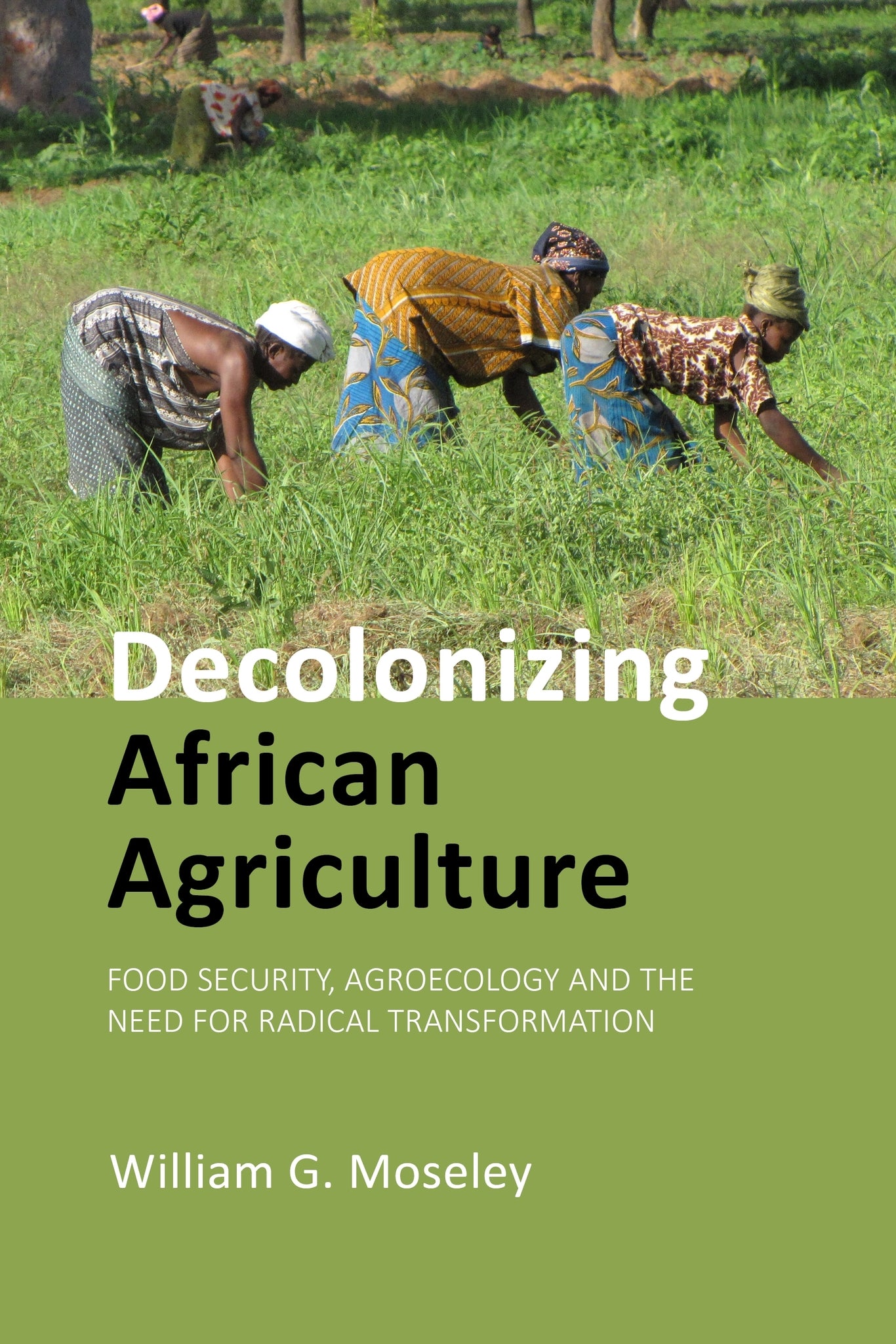
Why have so many approaches to farming and food policy failed in Sub-Saharan Africa? Because, argues William Moseley in this compelling analysis, of the shortcomings of a prevailing western, colonial agricultural science that is infused with power and politics. To tackle food security successfully, the book argues, we need a non-colonial, indigenous agronomy that creates the social innovation needed to support the livelihoods of small-scale farmers.
The book is organized in four sections: Part 1 provides a broad conceptual introduction emphasizing political agronomy, political ecology and agroecology. Part 2 evaluates past food security and agricultural development experiences in four countries where Moseley has undertaken extensive field research over several decades: Mali, Burkina Faso, South Africa and Botswana. Part 3 examines successful efforts in each of these countries and outlines future directions that emphasize the application of ecological principles to agricultural systems. In Part 4, Moseley advocates building more resilient food systems and a different kind of development that supports agroecology, vibrant rurality and networks of smaller cities. Achieving this transformation will require institutional reform at the global level, of those multilateral and bilateral agencies involved with farming and food policy.
Written for an academic and policy readership, as well those interested in international food security, the book is suitable for courses on food politics, agroecology and sustainable development.

— Judith A. Carney, Professor of Geography, University of California, Los Angeles
Part I: The Big Picture
1. Introduction: decolonizing African agriculture
2. A brief history of African food security and agricultural development policies
3. Conceptualizing change
Part II: Country Studies of Failed Agricultural Development in the Colonial and Postcolonial Periods
4. Mali: from West African bread-basket to malnutrition and the cotton commodity trap
5. Planned and unplanned agricultural calamities in Burkina Faso: the new green revolution for Africa and proliferating herbicides
6. Problems with the Ricardian food security dream: Botswana’s challenge of growth with hunger
7. Big agriculture’s take-over of South Africa’s land redistribution programme
Part III: Reimagining African Food Systems
8. Farmer and consumer agency in Mali: food sovereignty and agroecology amidst global food price fluctuations and conflict
9. Burkina Faso: privileging food systems thinking
10. Gender matters: women farmers, water and climate change in Botswana
11. Agrarian justice in South Africa’s Western Cape
Part IV: African Agriculture and Global Political Economy
12. Feeding the fire or dousing the embers: interrogating the regional and international institutional architecture shaping African agriculture, food security and agroecology
13. Conclusion: aiding and abetting radical transformation