


Some error occured while loading the Quick View. Please close the Quick View and try reloading the page.
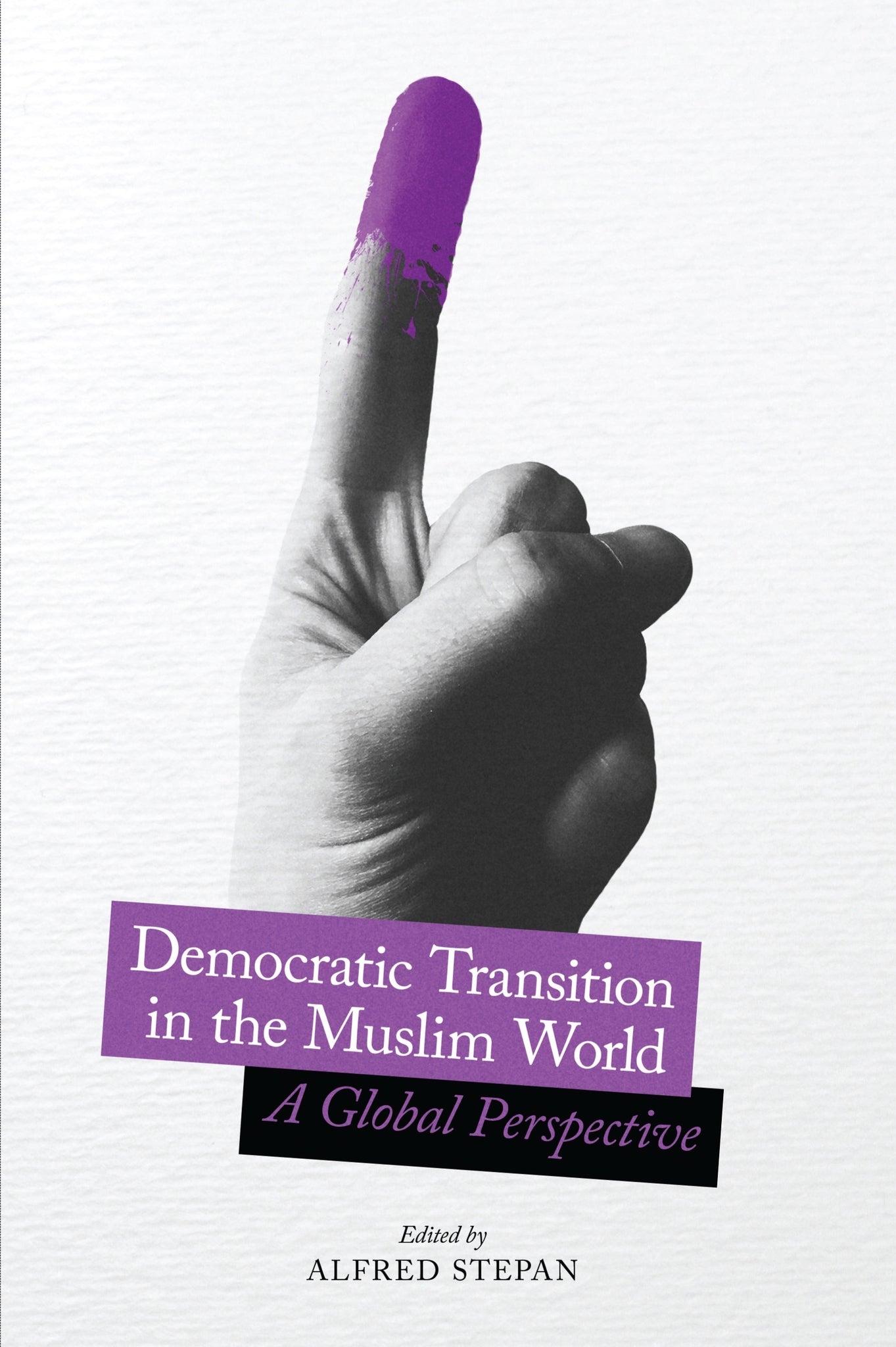
In early 2011, widespread protests ousted dictatorial regimes in both Tunisia and Egypt. Within a few years, Tunisia successfully held parliamentary and presidential elections and witnessed a peaceful transition of power, while the Egyptian military went on to seize power and institute authoritarian control. What explains the success and failure of transitions to democracy in these two countries, and how might they speak to democratic transition attempts in other Muslim-majority countries?
Democratic Transition in the Muslim World convenes leading scholars to consider the implications of democratic success in Tunisia and failure in Egypt in comparative perspective. Alongside case studies of Indonesia, Senegal, and India, contributors analyze similarities and differences among democratizing countries with large Muslim populations, considering universal challenges as well as each nation’s particular obstacles. A central theme is the need to understand the conditions under which it becomes possible to craft pro-democratic coalitions among secularists and Islamists. Essays discuss the dynamics of secularist fears of Islamist electoral success, the role of secular constituencies in authoritarian regimes’ resilience, and the prospects for moderation among both secularist and Islamist political actors. They delve into topics such as the role of the army and foreign military aid, Middle Eastern constitutions, and the role of the Muslim Brotherhood. The book also includes an essay by the founder and president of Tunisia’s Ennadha Party, Rachid Ghannouchi, who discusses the political strategies his party chose to pursue.

Foreword by Monica Marks
Acknowledgments
Introduction by Alfred Stepan
Part I. Why Different Democratization Outcomes in Tunisia and Egypt? Cross-Ideological Accommodations, Constitutions, Militaries, and the Content of International Assistance
1. Ennahda’s Democratic Commitments and Capabilities: Major Evolutionary Moments and Choices, by Rached Ghannouchi
2. The Challenges of Democratization in the Arab World: Some Reflections on the Egyptian Case, by Carrie Rosefsky Wickham
3. Mutual Accommodation: Islamic and Secular Parties and Tunisia’s Democratic Transition, by Alfred Stepan
4. The Roots of Egypt’s Constitutional Catastrophe: The Necessity of Marrying an Analysis of Context, Process, and Text, by Nathan J. Brown
5. Purists and Pluralists: Cross-Ideological Coalition Building in Tunisia’s Democratic Transition, by Monica Marks
6. Patterns of Civil-Military Relations and Their Legacies for Democratization: Egypt Versus Tunisia, by Hicham Bou Nassif
7. The Failure of the International Community to Support Tunisia, by Radwan Masmoudi
Part II. Rethinking Other Democracies with Large Muslim Populations: What Policies Helped in Indonesia and India?
8. Crafting Indonesian Democracy: Inclusion-Moderation and the Sacralizing of the Postcolonial State, by Jeremy Menchik
9. Indian Democracy and the World’s Largest Muslim Minority, by Hilal Ahmed and Sudipta Kaviraj
Selected Bibliography
Contributors
Index