


Some error occured while loading the Quick View. Please close the Quick View and try reloading the page.
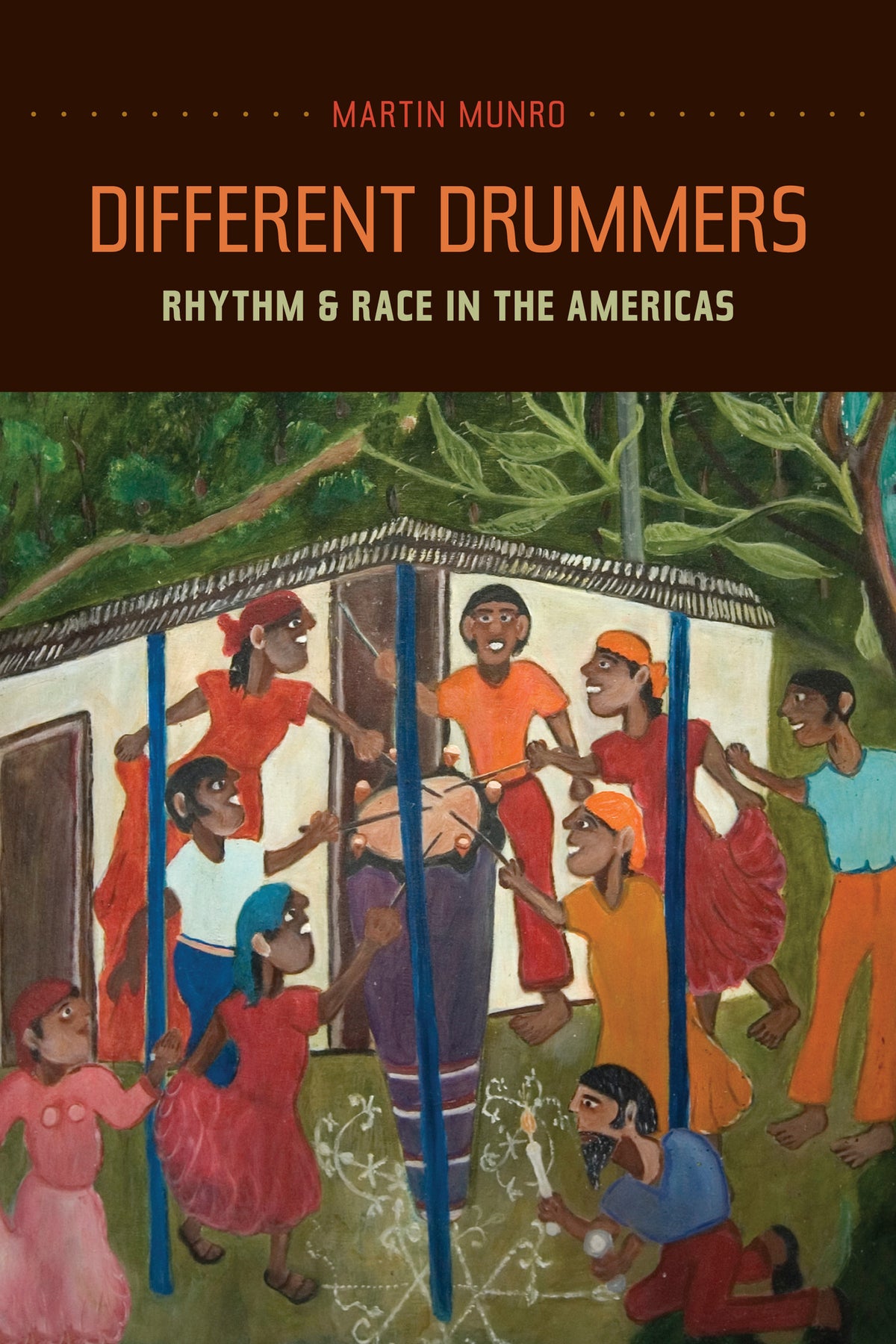
Long a taboo subject among critics, rhythm finally takes center stage in this book's dazzling, wide-ranging examination of diverse black cultures across the New World. Martin Munro’s groundbreaking work traces the central—and contested—role of music in shaping identities, politics, social history, and artistic expression. Starting with enslaved African musicians, Munro takes us to Haiti, Trinidad, the French Caribbean, and to the civil rights era in the United States. Along the way, he highlights such figures as Toussaint Louverture, Jacques Roumain, Jean Price-Mars, The Mighty Sparrow, Aimé Césaire, Edouard Glissant, Joseph Zobel, Daniel Maximin, James Brown, and Amiri Baraka. Bringing to light new connections among black cultures, Munro shows how rhythm has been both a persistent marker of race as well as a dynamic force for change at virtually every major turning point in black New World history.

Price: $75.00
Pages: 296
Publisher: University of California Press
Imprint: University of California Press
Series: Music of the African Diaspora
Publication Date:
16 July 2010
Trim Size: 9.00 X 6.00 in
ISBN: 9780520262829
Format: Hardcover
BISACs:
“A compelling interdisciplinary exploration of rhythm and sound in the circum-Caribbean.”
— Kaima L. Glover
Martin Munro is Associate Professor of French and Francophone Literatures at Florida State University.
Contents
Acknowledgments
Introduction: Slaves to the Rhythm
1. Beating Back Darkness: Rhythm and Revolution in Haiti
2. Rhythm, Creolization, and Conflict in Trinidad
3. Rhythm, Music, and Literature in the French Caribbean
4. James Brown, Rhythm, and Black Power
Conclusion: Listening to New World History
Notes
References
Index
Acknowledgments
Introduction: Slaves to the Rhythm
1. Beating Back Darkness: Rhythm and Revolution in Haiti
2. Rhythm, Creolization, and Conflict in Trinidad
3. Rhythm, Music, and Literature in the French Caribbean
4. James Brown, Rhythm, and Black Power
Conclusion: Listening to New World History
Notes
References
Index