


Some error occured while loading the Quick View. Please close the Quick View and try reloading the page.
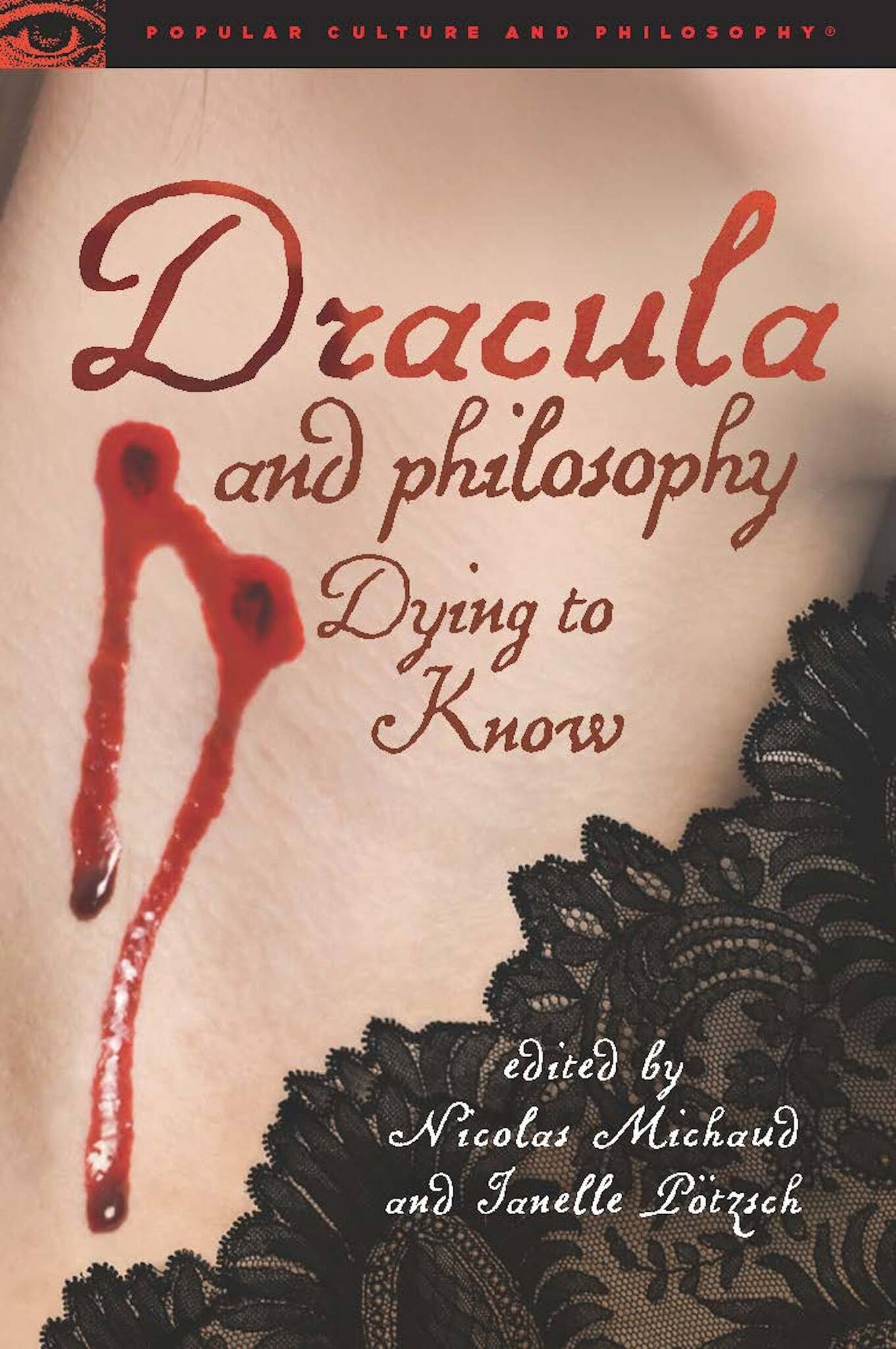
In Dracula and Philosophy 24 nocturnal philosophers stake out and vivisect Dracula from many angles.
John C. Altmann decides whether Dracula can really be blamed for his crimes, since it’s his nature as a vampire to behave a certain way. Robert Arp argues that Dracula’s addiction to live human blood dooms him to perpetual frustration and misery. John V. Karavitis sees Dracula as a Randian individual pitted against the Marxist collective. Greg Littmann maintains that if we disapprove of Dracula’s behavior, we ought to be vegetarians. James Edwin Mahon uses the example of Dracula to resolve nagging problems about the desirability of immortality. Adam Barkman and Michael Versteeg ponder what it would really feel like to be Dracula, and thereby shed some light on the nature of consciousness. Robert Vuckovich looks at the sexual morality of Dracula and other characters in the Dracula saga. Ariane de Waal explains that “Dragula” is scary because every time this being appears, it causes “gender trouble.” And Cari Callis demonstrates that the Count is really the Jungian Shadow archetype — with added Shapeshifter elements — in the journey of Mina Harker, heroine/victim of Stoker's novel, from silly girl to empowered woman.
John C. Altmann decides whether Dracula can really be blamed for his crimes, since it’s his nature as a vampire to behave a certain way. Robert Arp argues that Dracula’s addiction to live human blood dooms him to perpetual frustration and misery. John V. Karavitis sees Dracula as a Randian individual pitted against the Marxist collective. Greg Littmann maintains that if we disapprove of Dracula’s behavior, we ought to be vegetarians. James Edwin Mahon uses the example of Dracula to resolve nagging problems about the desirability of immortality. Adam Barkman and Michael Versteeg ponder what it would really feel like to be Dracula, and thereby shed some light on the nature of consciousness. Robert Vuckovich looks at the sexual morality of Dracula and other characters in the Dracula saga. Ariane de Waal explains that “Dragula” is scary because every time this being appears, it causes “gender trouble.” And Cari Callis demonstrates that the Count is really the Jungian Shadow archetype — with added Shapeshifter elements — in the journey of Mina Harker, heroine/victim of Stoker's novel, from silly girl to empowered woman.

Price: $19.95
Pages: 288
Publisher: Open Court
Imprint: Open Court
Series: Popular Culture and Philosophy
Publication Date:
25 August 2015
Trim Size: 9.00 X 6.00 in
ISBN: 9780812698909
Format: Paperback
BISACs:
Nicolas Michaud is an assistant professor of philosophy at Florida State College, Jacksonville. He is the editor of Jurassic Park and Philosophy (2014), Frankenstein and Philosophy (2013), and Hunger Games and Philosophy (2012). Dr. Michaud regularly appears on WJCT Jacksonville radio discussing film and philosophy. He lives in Jacksonville, FL.
Janelle Pötzsch holds a doctorate in philosophy from Ruhr-Universität Bochum and currently works as a research assistant at the Institut für Philosophie. She lives in Bochum, Germany.
Janelle Pötzsch holds a doctorate in philosophy from Ruhr-Universität Bochum and currently works as a research assistant at the Institut für Philosophie. She lives in Bochum, Germany.