


Some error occured while loading the Quick View. Please close the Quick View and try reloading the page.
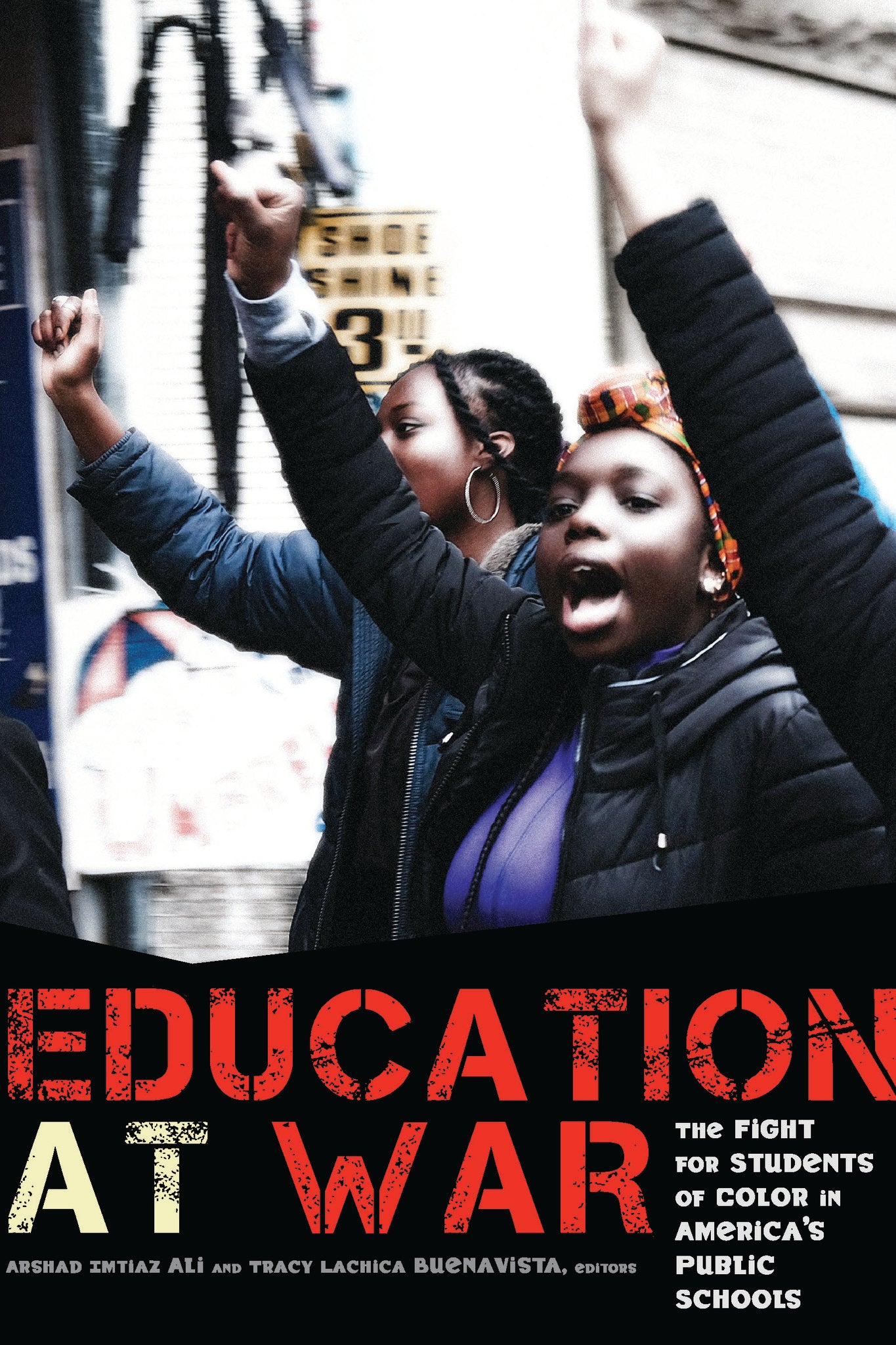
On April 4, 1967, Dr. Martin Luther King, Jr. delivered the anti-war speech, “Beyond Vietnam: A Time to Break Silence,” in New York City at the Riverside Church. At the time, the United States framed its intervention in Vietnam as a mechanism to protect democracy worldwide. While this supposed defense of democracy raged on thousands of miles away, social protests for racial equity, political representation, and an economic livelihood for its most disenfranchised communities spread across the United States. Highlighting this contradiction in his anti-war speech, King presented his doubts regarding the government’s ability to eliminate the materialism, militarism, and racism that built the nation, a plight that continues today. Written from the perspectives of education practitioners and scholars who have personal histories with global war via (settler) colonialism, immigration, and subsequent disenfranchisement in the United States, Education at War addresses the vestiges of war that shape the lives of youth of color.
This thought-provoking collection of essays reveals how the contemporary specter of war has become a central way that racism and materialism are manifested and practiced within education. Education at War asserts that the contemporary neoliberal characterization of education and school-based reform is situated within the global political economy that has facilitated growth in the prison and military industrial complex, and simultaneous divestment from education domestically. Essays examine anti-war projects across the K–20 education continuum with chapters from educators who are from and/or work directly with the communities often pathologized in “damage-centered” educational discourse. The authors do not just frame the conditions faced by our communities as state-mediated but also as collectively resisted.
They place war, surveillance, and carcerality at the center of critical race analysis in education. Each of the chapters include a pedagogical component, including lessons and comments for educators and youth workers. In cultivating this text, the editors have contributed to building a community of educators, activists, teachers, and scholars who collectively explore how resistance can produce the opportunity for rich, diverse, and transformative learning for marginalized students and communities.
Contributors: Suzie M. Abajian, Yousef K. Baker, Dolores Calderon, Edward R. Curammeng, Chandni Desai, Maryam S. Griffin, Heather L. Horsley, David Stovall, Clayton Pierce, Allyson Tintiangco-Cubales, Sepehr Vakil, Shirin Vossoughi,, Connie Wun, Miguel Zavala

Arshad Imtiaz Ali (Edited By)
Arshad Imtiaz Ali is Assistant Professor of Educational Research in the Graduate School of Education and Human Development at George Washington University.
Tracy Lachica Buenavista (Edited By)
Dr. Tracy Lachica Buenavista is Professor of Asian American Studies and a core faculty member in the Educational Leadership doctoral program at California State University, Northridge.
Preface ix
Introduction. Toward an Antiwar Pedagogy: Challenging Materialism, Militarism, and Racism in Education
Arshad Imtiaz Ali and Tracy Lachica Buenavista 1
1. Three Fronts in the Neoliberal Global War: Detroit, Baghdad, and Public Higher Education
Yousef K. Baker 29
2. Kony 2012 as Citizenship Education: A Grassroots Revolution or a Strategy of Warfare?
Chandni Desai 55
3. Reflections on the Perpetual War: School Closings, Public Housing, Law Enforcement, and the Future of Black Life
David Stovall 72
4. Caste Education in Neoliberal Society: Branding ADHD and Value-Added Students through the Tactics of “Population Racism”
Clayton Pierce 85
5. Toward What Ends? A Critical Analysis of Militarism, Equity, and STEM Education
Shirin Vossoughi and Sepehr Vakil 117
6. A Day at the Fair: Marketing Militarism to Students of Color in Elementary Schools
Suzie M. Abajian 141
7. The Paradoxical Implications of Developing Youth in a Chicago Public Military Academy
Heather L. Horsley 162
8. Raza Communities Organizing against a Culture of War: Lessons from the Education Not Arms Coalition (ENAC) Campaign
Miguel Zavala 187
9. Schools as Carceral Sites: A Unidirectional War against Girls of Color
Connie Wun 206
10. Pedagogies of Resistance: Filipina/o “Gestures of Rebellion” against the Inheritance of American Schooling
Allyson Tintiangco-Cubales and Edward R. Curammeng 228
11. Of Boxes and Pen: Forged and Forging Racial Categories at a Wartime U.S. University
Maryam S. Griffin 252
12. War and Occupation
Dolores Calderón 279
Acknowledgments 299
List of Contributors 301
Index 305