


Some error occured while loading the Quick View. Please close the Quick View and try reloading the page.
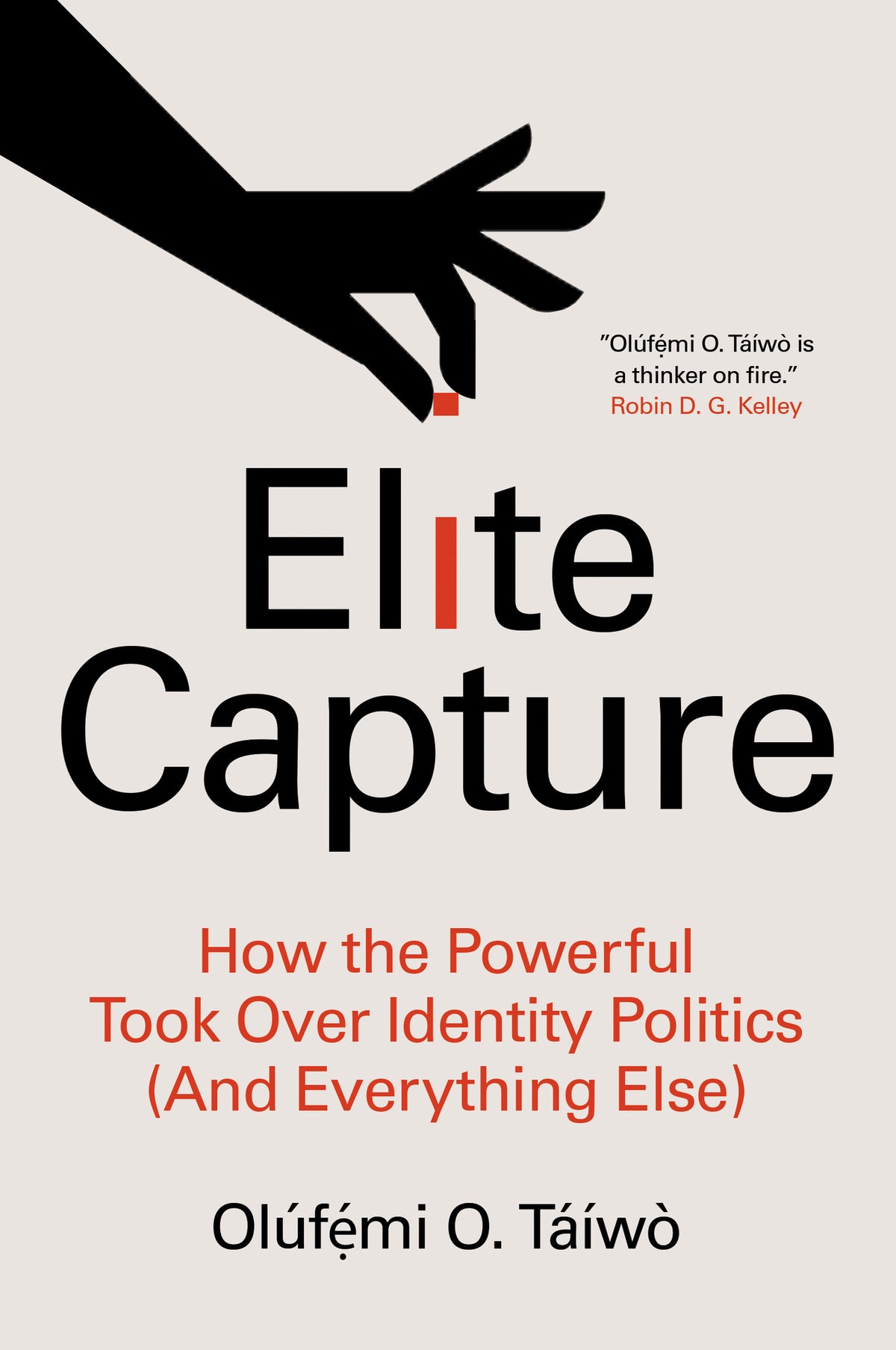
“Identity politics” is everywhere, polarizing discourse from the campaign trail to the classroom and amplifying antagonisms in the media, both online and off. But the compulsively referenced phrase bears little resemblance to the concept as first introduced by the radical Black feminist Combahee River Collective. While the Collective articulated a political viewpoint grounded in their own position as Black lesbians with the explicit aim of building solidarity across lines of difference, identity politics is now frequently weaponized as a means of closing ranks around ever-narrower conceptions of group interests.
But the trouble, Olúfẹ́mi O. Táíwò deftly argues, is not with identity politics itself. Through a substantive engagement with the global Black radical tradition and a critical understanding of racial capitalism, Táíwò identifies the process by which a radical concept can be stripped of its political substance and liberatory potential by becoming the victim of elite capture—deployed by political, social, and economic elites in the service of their own interests.
Táíwò’s crucial intervention both elucidates this complex process and helps us move beyond a binary of “class” vs. “race.” By rejecting elitist identity politics in favor of a constructive politics of radical solidarity, he advances the possibility of organizing across our differences in the urgent struggle for a better world.

“Olúfẹ́mi O. Táíwò is a thinker on fire. He not only calls out empire for shrouding its bloodied hands in the cloth of magical thinking but calls on all of us to do the same. Elite capture, after all, is about turning oppression and its cure into a (neo)liberal commodity exchange where identities become capitalism’s latest currency rather than the grounds for revolutionary transformation. The lesson is clear: only when we think for ourselves and act with each other, together in deep, dynamic, and difficult solidarity, can we begin to remake the world.”
—Robin D. G. Kelley, author of Freedom Dreams: The Black Radical Imagination
“Among the churn of books on ‘wokeness’ and ‘political correctness,’ philosopher Olúfẹ́mi O. Táíwò’s Elite Capture clearly stands out. With calm, clarity, erudition, and authority, Táíwò walks the reader through the morass, deftly explicating the distinction between substantive and worthy critique and weaponized backlash. Understanding the culture wars is essential to US politics right now, and no one has done it better than Táíwò in this book.”
—Jason Stanley, author of How Fascism Works
“With global breath, clarity and precision, Olúfẹ́mi O. Táíwò dissects the causes and consequences of elite capture and charts an alternative constructive politics for our time. The result is an erudite yet accessible book that draws widely on the rich traditions of black and anticolonial political thought.”
—Adom Getachew, author of Worldmaking after Empire: The Rise and Fall of Self-Determination
Olúfẹ́mi O. Táíwò is Assistant Professor of Philosophy at Georgetown University. He is also the author of Reconsidering Reparations.
Chapter One: Identity Politics, 2021
Identity Politics: It’s Not What You Think It Is
Elite Capture: The Bigger Problem
Chapter Two: What is Elite Capture?
E. Franklin Frazier
Who Run the World? Elites
Does Democracy Matter?
Capture at Every Scale
Chapter Three: Reading the Room
Carter G. Woodson
The Ground We Stand On
The Theory of Mis-Education
Elite Capture: Game It Out
Chapter Four: Being in the Room
Introduction
The View from Inside the Room
Better Blueprints
Chapter Five: Building a New House
Changing Rooms: Paulo Freire
Rebuild the House: The PAIGC
We’ve Got This
Getting Out the Hammers
Building a New House
Chapter Six: The Point is to Change It
Andaiye
What the Constructive View Asks of Us