


Some error occured while loading the Quick View. Please close the Quick View and try reloading the page.
The ebook edition of this title is Open Access, thanks to Knowledge Unlatched funding, and freely available to read online.
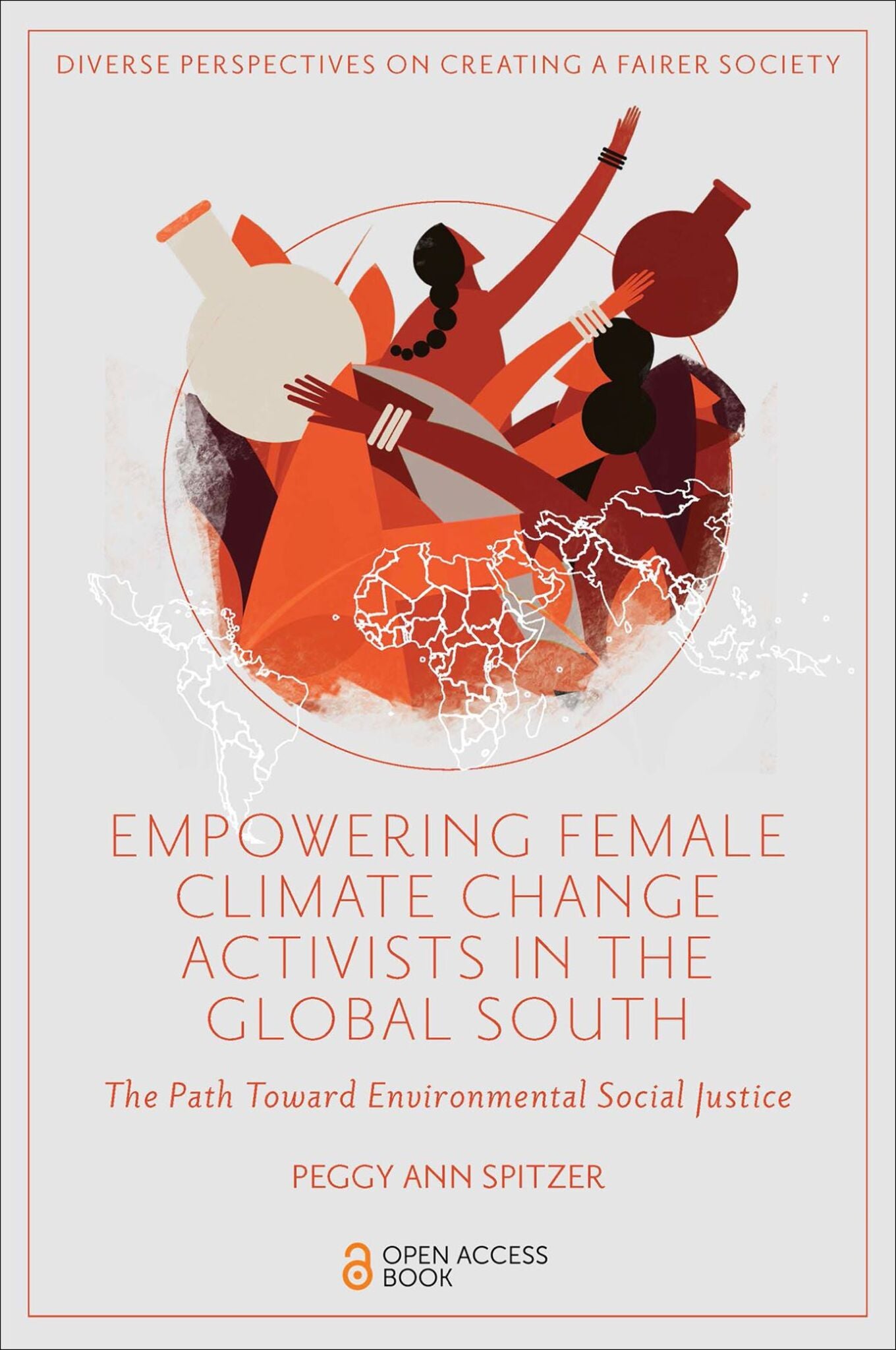
The COP27 climate change conference in Sharm El Sheikh, Egypt made it clear that fighting global warming will require continuing commitment, cooperation, and collaborative action from multiple constituencies around the world. Urging readers from the Global North to rethink their approaches and potential contributions to long-term change, Empowering Female Climate Change Activists in the Global South explains how woman climate change leaders are confronting patriarchal structures to achieve social justice.
Examining the lived experiences of woman climate change activists based in rural areas, Peg Spitzer presents eighty-five original interviews that feature women whose careers in business, education, politics, and the arts have championed women’s rights in Asia, environmental defenders who have established projects in Asia, Africa, and Latin America, and woman farmers in three Indian villages who have faced climate-related droughts and floods. Suggesting ways in which successful climate change amelioration and adaptation led by women in the Global South may be replicated elsewhere, Spitzer also considers how NGOs and other organizations from the Global North can best contribute to facilitating positive changes in the communities where they work by focusing on empathetic cooperation.
Addressing the urgent need to develop gender-just solutions that uplift and empower those who are experiencing environmental degradation in their communities, Empowering Female Climate Change Activists in the Global South uncovers the flaws in current combative structures and strategies and re-examines scholarly research at the nexus of feminism, transnational advocacy, and hierarchies of need.

Inspiring citizens to act to solve the global climate crisis in every situation of their lives is certainly one of the most crucial missions of humanity today. Dr. Peg Spitzer’s wonderful book Empowering Female Climate Change Activists in the Global South: The Path Toward Environmental Social Justice, provides such a galvanizing inspiration, with a wide variety of diverse and stunning true stories. But most importantly, this book reveals the untapped potential of tackling structural gender norms and empowering women to speak up for their rights, to create and to implement relevant and just climate solutions that serve people and the planet. As a university professor, mentor and jury member of the Gender Just Climate Solutions Awards, granted each year during the climate COPs, Dr. Peg Spitzer has had the opportunity to collect numerous oral stories of impressive female and feminist grassroots climate activists from all regions of the world. She offers these life jewels to the reader in a fascinating literary piece.
Peggy Ann Spitzer is Research Professor in the College of Arts and Sciences at the State University of New York at Stony Brook, USA. She holds a bachelor’s degree from the University of Minnesota and master’s and doctoral degrees from American University in Washington, D.C. – all in International Relations. She lectures and conducts workshops on women’s leadership in global climate change adaptation through environmental and gender equity strategies and oral histories.
Peg has co-authored four scholarly articles and four book chapters (two of which won awards) on the social and cultural aspects of climate change; and one case study on the United Nations’ Sustainable Development Goals (SDGs). In addition, she developed two digital oral history projects, one on women in US-Asian relations and the other on the implementation of a women-led irrigation technology in India.
Prior to her work on climate change, Peg wrote a series of short biographies on women leaders in local communities; and served as a program consultant, with a specialty in Asian and Asian American studies, in Washington, D.C. for the Kluge Center for International Scholars (Library of Congress), Freer and Sackler Gallery (Smithsonian), Carnegie Endowment for International Peace, and the East-West Center. Currently, she serves as a jury member for the Gender Just Climate Awards program through the United Nations Framework Convention for Climate Change; and represents Stony Brook University in the Paris Committee on Capacity Building Network.
Introduction
Chapter 1. Why a Female-Centered Approach?
Chapter 2. The Case for Gender Equity
Chapter 3. Reflexive Feminist Methodologies
Chapter 4. Oral Histories from around the World
Chapter 5. Environmental Social Justice in Rural Indian Communities
Chapter 6. Supporting Female Empowerment through Visual Arts and Social Media
Conclusion