


Some error occured while loading the Quick View. Please close the Quick View and try reloading the page.
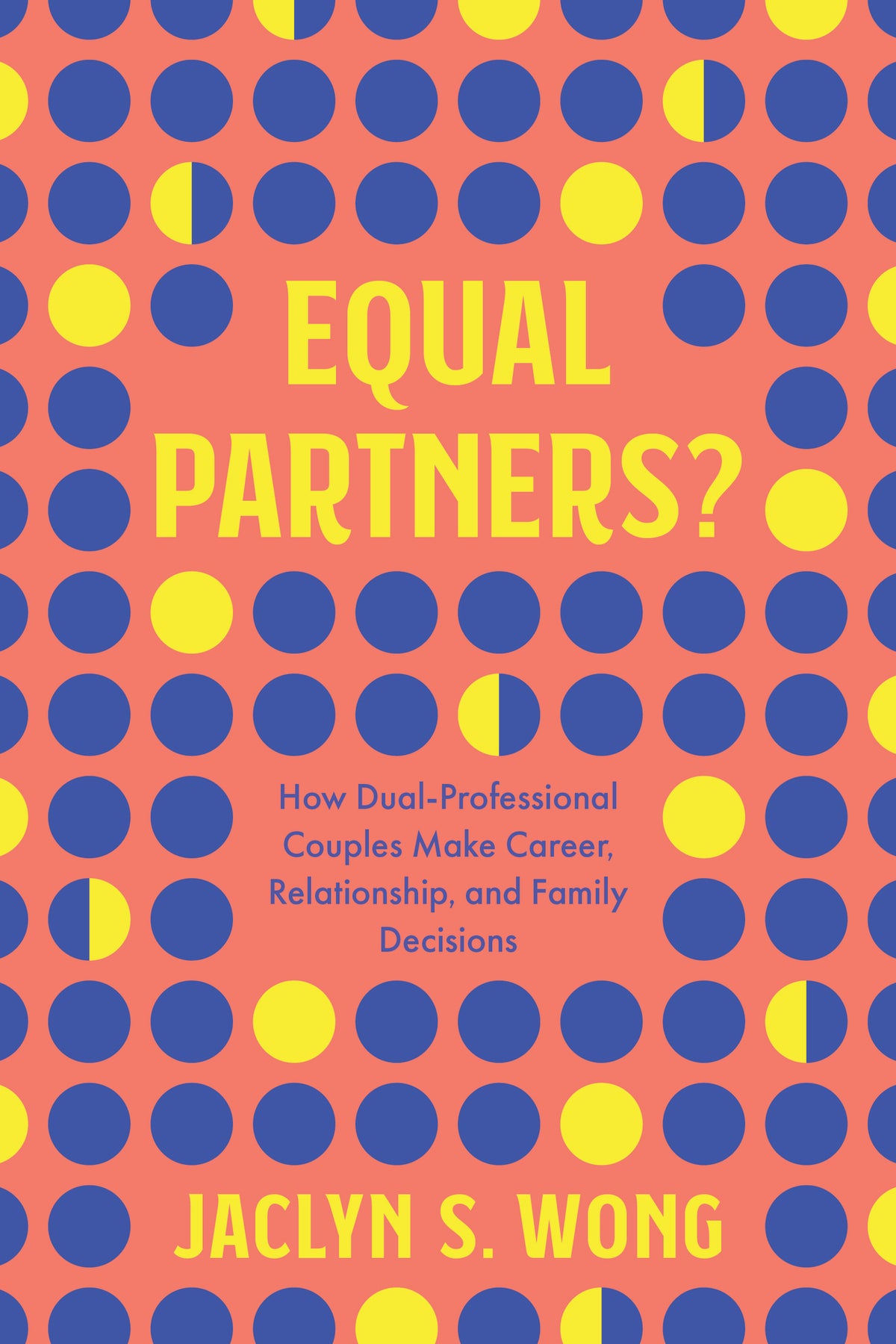
Many young professionals seek egalitarian partnerships in which both partners work for pay and share unpaid housework and childcare. Yet working couples' realities often deviate from this ideal, with women trading off employment for family care. Will contemporary young adults repeat this pattern, or will they come closer to achieving equality in work and family? Equal Partners? seeks to explore this question.
Drawing on six years of interviews with the partners in twenty-one different-gender couples, Jaclyn S. Wong documents how supportive workplaces, partners' steadfast gender-egalitarian attitudes, and partners' jointly coordinated actions all need to come together for couples to experience gender equality in work and family. This book offers a compelling study of the dynamics of couples in ambitious partnerships who aspire to equality as they navigate the external pressures that come with life planning.
Drawing on six years of interviews with the partners in twenty-one different-gender couples, Jaclyn S. Wong documents how supportive workplaces, partners' steadfast gender-egalitarian attitudes, and partners' jointly coordinated actions all need to come together for couples to experience gender equality in work and family. This book offers a compelling study of the dynamics of couples in ambitious partnerships who aspire to equality as they navigate the external pressures that come with life planning.

Price: $29.95
Pages: 208
Publisher: University of California Press
Imprint: University of California Press
Publication Date:
18 April 2023
Trim Size: 9.00 X 6.00 in
ISBN: 9780520384576
Format: Paperback
BISACs:
"This book is also a must-read for anyone wondering how much, if anything, has changed in a critical arena of life—and why. Unsurprisingly, I strongly recommend this book to researchers, policymakers, students, and the public."
Jaclyn S. Wong is Assistant Professor in the Department of Sociology and Faculty Affiliate in the Women's and Gender Studies Program at the University of South Carolina.
Contents
List of Tables
1. Gender, Work, and Family in the Twenty-First Century
2. Consistent Compromisers
3. Autonomous Actors
4. Tending Traditional Couples
5. Comparing Couples
6. Pathways Forward
Epilogue
Acknowledgments
Methodological Appendix
Notes
Bibliography
Index
List of Tables
1. Gender, Work, and Family in the Twenty-First Century
2. Consistent Compromisers
3. Autonomous Actors
4. Tending Traditional Couples
5. Comparing Couples
6. Pathways Forward
Epilogue
Acknowledgments
Methodological Appendix
Notes
Bibliography
Index