


Some error occured while loading the Quick View. Please close the Quick View and try reloading the page.
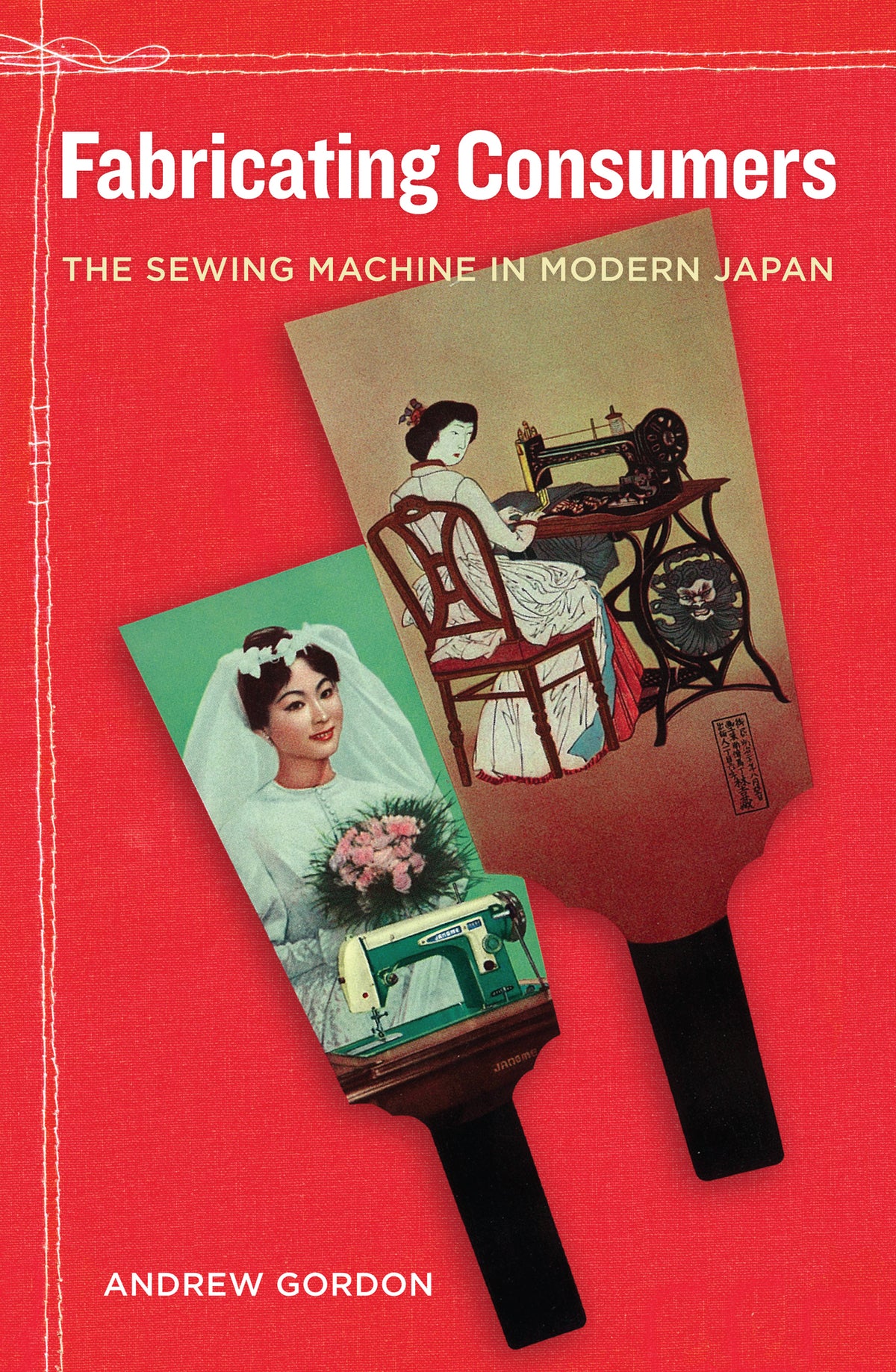
Since its early days of mass production in the 1850s, the sewing machine has been intricately connected with the global development of capitalism. Andrew Gordon traces the machine’s remarkable journey into and throughout Japan, where it not only transformed manners of dress, but also helped change patterns of daily life, class structure, and the role of women. As he explores the selling, buying, and use of the sewing machine in the early to mid-twentieth century, Gordon finds that its history is a lens through which we can examine the modern transformation of daily life in Japan. Both as a tool of production and as an object of consumer desire, the sewing machine is entwined with the emergence and ascendance of the middle class, of the female consumer, and of the professional home manager as defining elements of Japanese modernity.

Price: $85.00
Pages: 304
Publisher: University of California Press
Imprint: University of California Press
Series: Asia: Local Studies / Global Themes
Publication Date:
01 November 2011
Trim Size: 9.00 X 6.00 in
ISBN: 9780520267855
Format: Hardcover
BISACs:
“The book will excite readers interested in material culture, gender and socioeconomic change. . . . A brilliant portrait of modernizing Japan.”
— M. William Steele/International Christian University
Andrew Gordon is Lee and Juliet Folger Fund Professor of History at Harvard University. His previous books include Labor and Imperial Democracy in Japan (UC Press) and A Modern History of Japan.
List of Illustrations
Preface
Introduction
Part One: Singer in Japan
1. Meiji Machines
2. The American Way of Selling
3. Selling and Consuming Modern Life
4. Resisting Yankee Capitalism
Part Two: Sewing Modernity in War and Peace
5. War Machines at Home
6. Mechanical Phoenix
7. A Nation of Dressmakers
Conclusion
Appendix: Some Notes on Time-Use Studies
Notes
Select Bibliography
Index
Preface
Introduction
Part One: Singer in Japan
1. Meiji Machines
2. The American Way of Selling
3. Selling and Consuming Modern Life
4. Resisting Yankee Capitalism
Part Two: Sewing Modernity in War and Peace
5. War Machines at Home
6. Mechanical Phoenix
7. A Nation of Dressmakers
Conclusion
Appendix: Some Notes on Time-Use Studies
Notes
Select Bibliography
Index