


Some error occured while loading the Quick View. Please close the Quick View and try reloading the page.
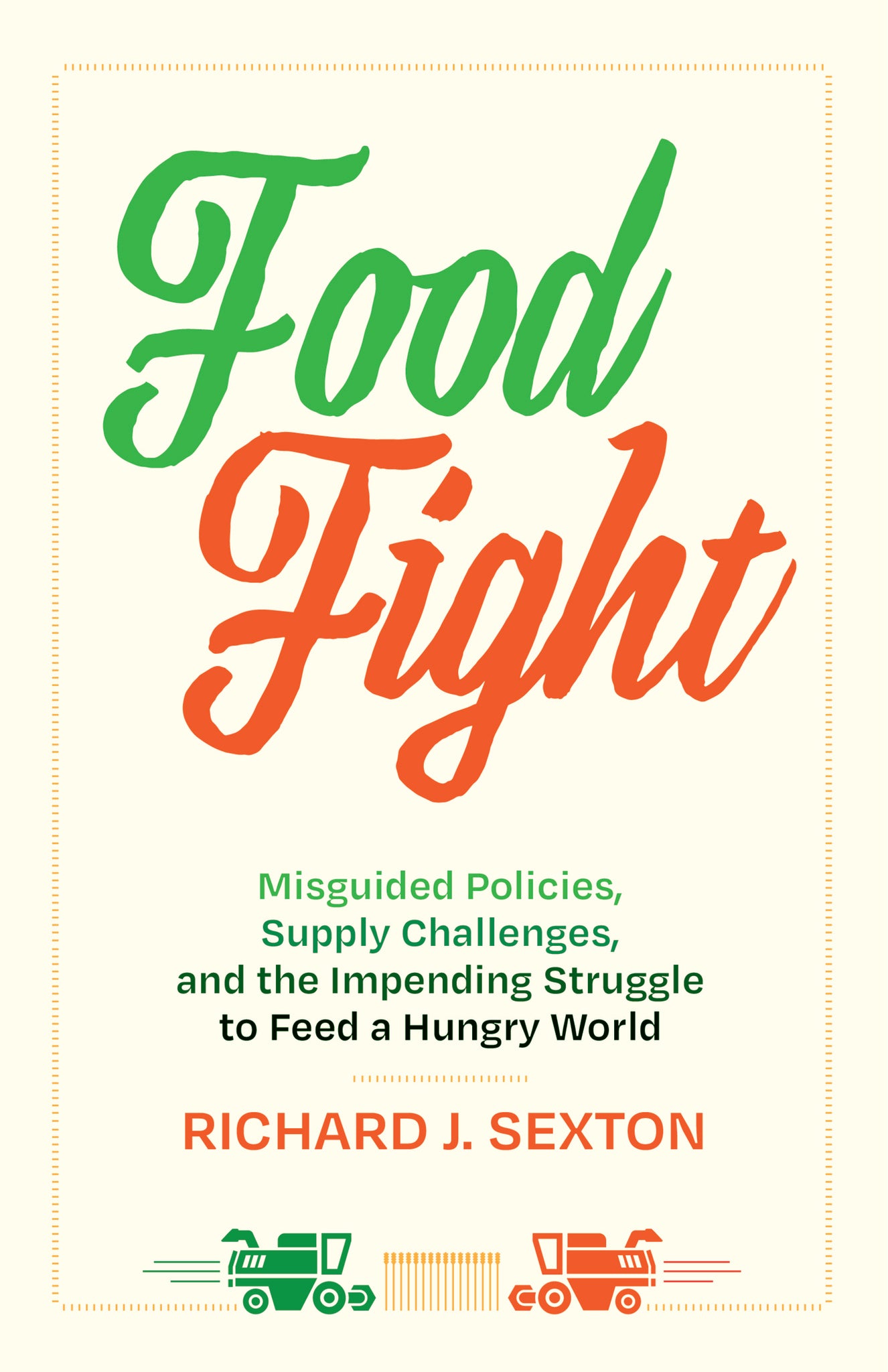
Society's most basic challenge is arguably to produce and distribute enough food for its citizens. In 2023, 733 million people faced hunger and 2.3 billion were moderately or severely food insecure. Feeding a growing world population is becoming more difficult in the face of climate change, pest resistance to traditional treatments, and misguided government policies that limit how much food ends up on our plates. Policies to support biofuels, organic agriculture, local foods, and small farms and to oppose genetically modified foods all reduce food production on existing land. This leads to higher food prices, increased carbon emissions, and less natural habitat as cropland expands. Food Fight documents the challenges to adequately feeding the world in the twenty-first century and illustrates the ways in which contemporary food policies in the United States, Europe, and beyond imperil food security. Richard J. Sexton provides a window into the world of modern agriculture and food supply chains. He separates the wheat from the chaff to distinguish policies that will limit, or expand, the global food supply, and he explains how we can construct a food system that forestalls future hunger and environmental degradation.

Price: $95.00
Pages: 246
Publisher: University of California Press
Imprint: University of California Press
Publication Date:
15 July 2025
Trim Size: 8.50 X 5.50 in
ISBN: 9780520400351
Format: Hardcover
BISACs:
"Food Fight shows how well-meaning regulations, climate pressures, and corporate interests collide, leaving communities vulnerable and hungry. Sexton brings together analysis and human stories and poses a reminder that behind every statistic is a person trying to feed themselves."
Richard J. Sexton is Distinguished Professor of Agricultural and Resource Economics at University of California, Davis. He is founder and coeditor of Agricultural and Resource Economics Update, a University of California magazine devoted to contemporary food and environmental issues. He has published extensively in leading economics and agricultural journals.
Contents
Preface
Acknowledgments
1. Setting the Table: Threats to Food Production amid Rising Demand
Part One. Demand for Agricultural Products in the Twenty-First Century
2. Population and Income Growth and Food Demand in the Twenty-First Century
3. Biofuels: They Once Seemed Like a Good Idea
4. What Will We Eat, and Why Does It Matter?
Part Two. Food Supply and the Challenges to Expanding It
5. Agricultural Productivity Growth: Will It Save Us from Higher Food Prices and Greater Hunger?
6. Producing Food in the Right Places and with the Right Inputs Matters a Lot
7. Climate Change and Pest Resistance Threaten Food Production
8. Foods That Come with Claims and Policies That Support Them
9. Organic Foods: Producing Less with More
10. Genetic Engineering and Gene Editing: Putting the Brakes on Essential Innovations
11. Small Farms: Poor Farms and Poor People
12. Local Foods: Shortchanged by Short Supply Chains
13. Animal Welfare: Good Intentions but Bad Outcomes?
14. Food Manufacturers and Retailers: Villains or Heroes?
Part Three. Good, Bad, and Useless Policies to Increase Food Availability
15. Waste Not, Want Not?
16. Meatless Mondays . . . and Tuesdays and Wednesdays . . . ?
17. Climate-Smart Agriculture: Hope versus Reality
18. Policies and Strategies to Sustainably Expand Food Production
Notes
Recommended Readings
Index
Preface
Acknowledgments
1. Setting the Table: Threats to Food Production amid Rising Demand
Part One. Demand for Agricultural Products in the Twenty-First Century
2. Population and Income Growth and Food Demand in the Twenty-First Century
3. Biofuels: They Once Seemed Like a Good Idea
4. What Will We Eat, and Why Does It Matter?
Part Two. Food Supply and the Challenges to Expanding It
5. Agricultural Productivity Growth: Will It Save Us from Higher Food Prices and Greater Hunger?
6. Producing Food in the Right Places and with the Right Inputs Matters a Lot
7. Climate Change and Pest Resistance Threaten Food Production
8. Foods That Come with Claims and Policies That Support Them
9. Organic Foods: Producing Less with More
10. Genetic Engineering and Gene Editing: Putting the Brakes on Essential Innovations
11. Small Farms: Poor Farms and Poor People
12. Local Foods: Shortchanged by Short Supply Chains
13. Animal Welfare: Good Intentions but Bad Outcomes?
14. Food Manufacturers and Retailers: Villains or Heroes?
Part Three. Good, Bad, and Useless Policies to Increase Food Availability
15. Waste Not, Want Not?
16. Meatless Mondays . . . and Tuesdays and Wednesdays . . . ?
17. Climate-Smart Agriculture: Hope versus Reality
18. Policies and Strategies to Sustainably Expand Food Production
Notes
Recommended Readings
Index