


Some error occured while loading the Quick View. Please close the Quick View and try reloading the page.
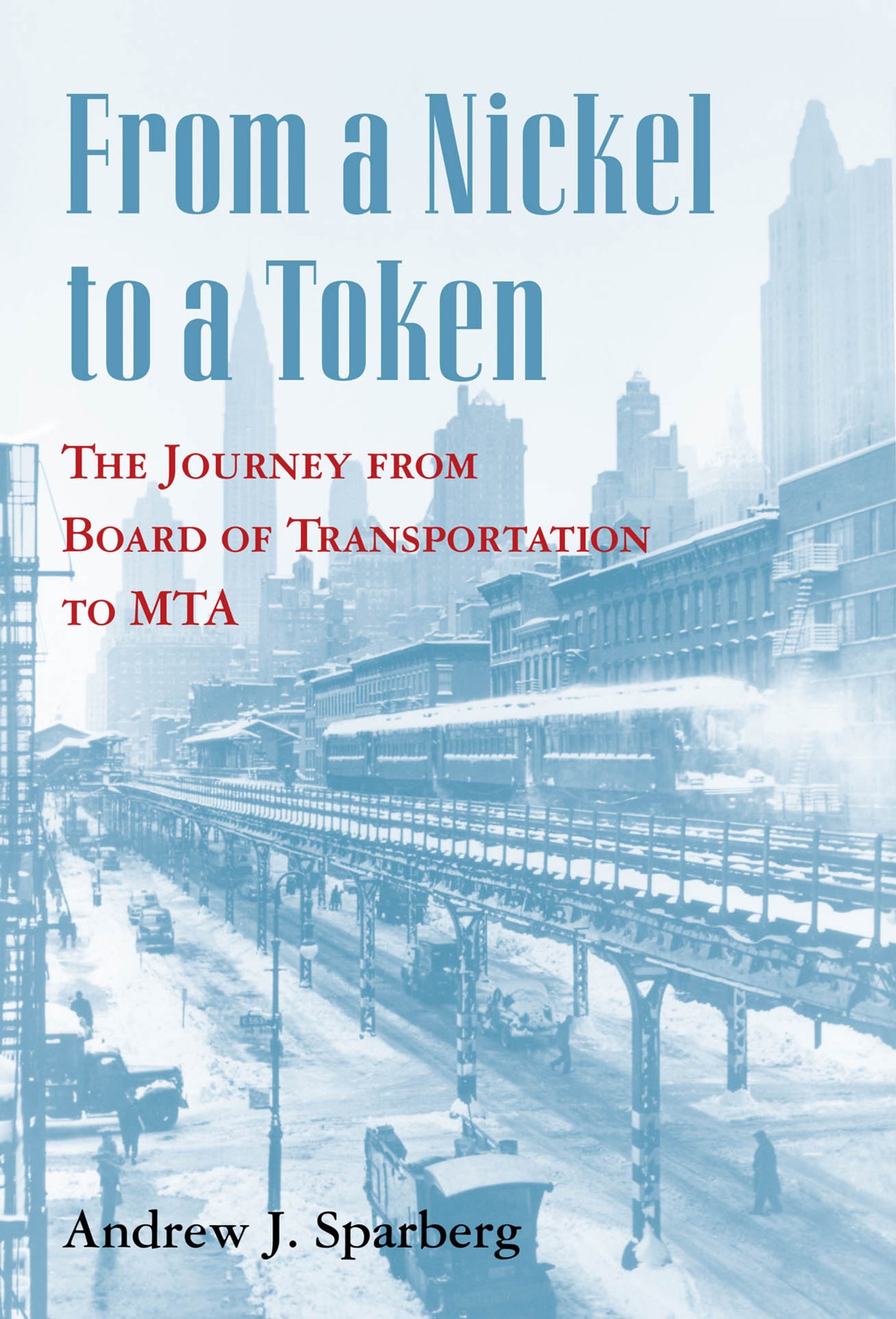
Streetcars “are as dead as sailing ships,” said Mayor Fiorello LaGuardia in a radio speech, two days before Madison Avenue’s streetcars yielded to buses. LaGuardia was determined to eliminate streetcars, demolish pre-1900 elevated lines, and unify the subway system, a goal that became reality in 1940 when the separate IRT, BMT, and IND became one giant system under full public control.
In this fascinating micro-history of New York’s transit system, Andrew Sparberg examines twenty specific events between 1940 and 1968, book ended by subway unification and the MTA’s creation. From a Nickel to a Token depicts a potpourri of well-remembered, partially forgotten, and totally obscure happenings drawn from the historical tapestry of New York mass transit. Sparberg deftly captures five boroughs of grit, chaos, and emotion grappling with a massive and unwieldy transit system.
During these decades, the system morphed into today’s familiar network. The public sector absorbed most private surface lines operating within the five boroughs, and buses completely replaced streetcars. Elevated lines were demolished, replaced by subways or, along Manhattan’s Third Avenue, not at all. Beyond the unification of the IND, IRT, and BMT, strategic track connections were built between lines to allow a more flexible and unified operation. The oldest subway routes received much needed rehabilitation. Thousands of new subway cars and buses were purchased. The sacred nickel fare barrier was broken, and by 1968 a ride cost twenty cents.
From LaGuardia to Lindsay, mayors devoted much energy to solving transit problems, keeping fares low, and appeasing voters, fellow elected officials, transit management, and labor leaders. Simultaneously, American society was experiencing tumultuous times, manifested by labor disputes, economic pressures, and civil rights protests.
Featuring many photos never before published, From a Nickel to a Token is a historical trip back in time to a multitude of important events.
