


Some error occured while loading the Quick View. Please close the Quick View and try reloading the page.
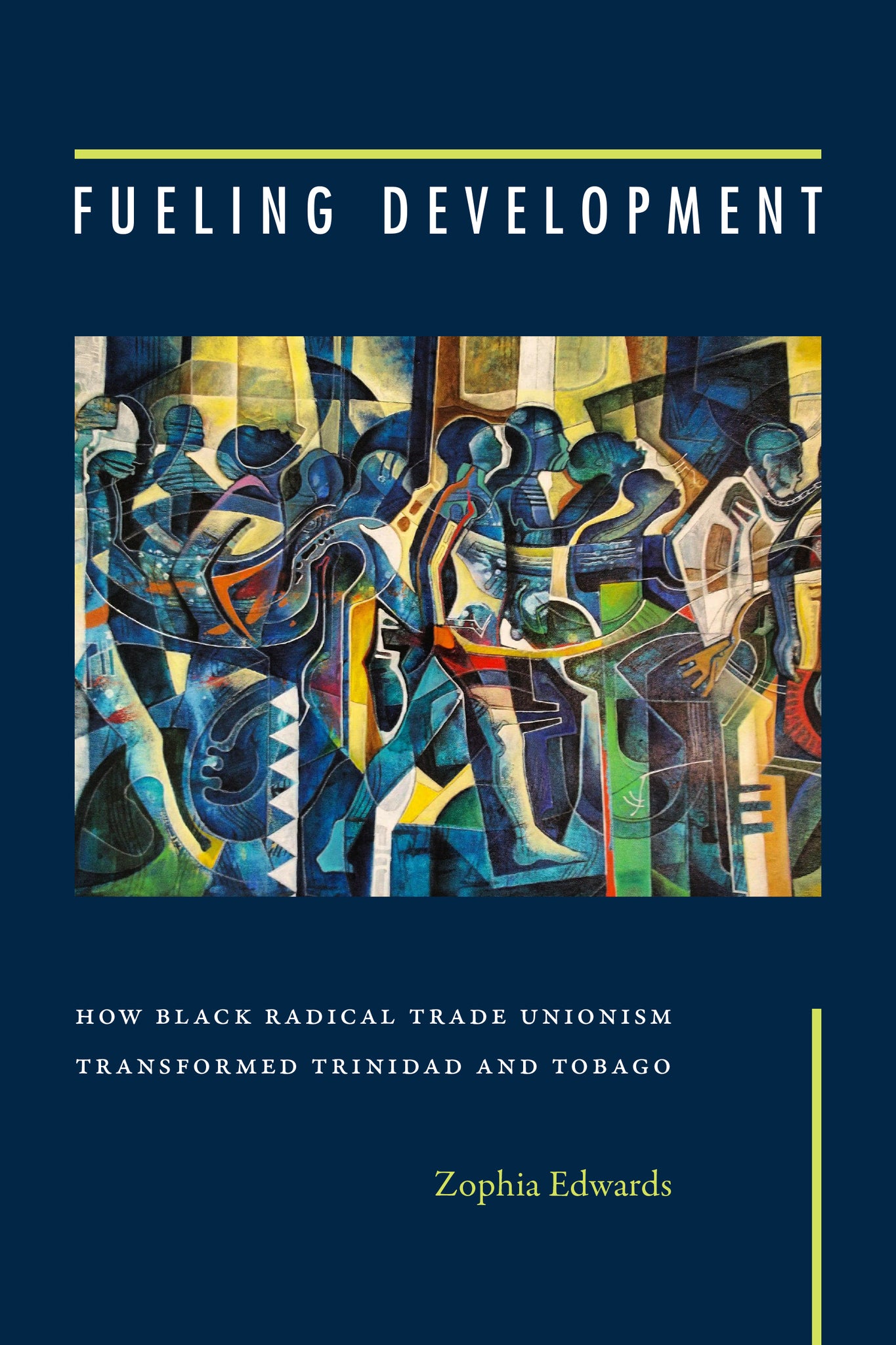
Despite Trinidad and Tobago’s economic dependence on oil and gas production and its history of colonial exploitation of labor and resources, it enjoys relatively high democratic and redistributive development compared to other nations in the global South. In Fueling Development, Zophia Edwards draws on archival data, historical analysis, and Black radical political economic thought to trace Trinidad and Tobago’s success to a specific form of working-class mobilization she calls “liberation unionism.” A Black radical labor tradition, liberation unionism was multiracial, multisectoral, and gender inclusive; and Pan-African, anti-imperial, anticolonial, and diasporic; it advocated not only for workplace issues, but for economic, political, and social transformation. Emerging during the colonial period, liberation unionism forced the colonial state to increase its institutional capacity to promote equitable development. The movement persisted into the post-independence period and further compelled the independent state to channel oil windfalls toward increasing its ability to better serve the needs of the people. By uncovering liberation unionism’s power to create robust social and economic change, Edwards expands understandings of the relationship between development, race, labor, and political economy.

Price: $28.95
Pages: 336
Publisher: Duke University Press
Imprint: Duke University Press
Publication Date:
16 September 2025
Trim Size: 9.00 X 6.00 in
ISBN: 9781478032458
Format: Paperback
BISACs:
“Fueling Development is a timely and important contribution to both Black and Caribbean scholarship. Combining rigorous scholarship and the innovative methodologies of the Black Radical Tradition, Zophia Edwards asks searing questions that offer important insights concerning Trinidad and Tobago’s political economy and the relationship between race and class in Caribbean postcolonies.”—Brian Meeks, author of, After the Postcolonial Caribbean: Memory, Imagination, Hope
“Drawing from and carrying on the Black radical tradition, Zophia Edwards advances the concept of liberation unionism to make sense of seemingly confounding developmental achievements in colonial and postcolonial Trinidad and Tobago. At the heart of her theoretically insightful and meticulously researched history is the agency of working people, compelling and shaping the state to address the needs of the masses. Fueling Development reminds us of what organized labor movements can be: Black-led, broadly inclusive, internationalist, and societally transformative.”—Moon-Kie Jung, author of, Beneath the Surface of White Supremacy: Denaturalizing U.S. Racisms Past and Present
"This is a book that will be read and talked about for many, many years to come."—Yeuran Zhang, European Journal of Sociology
“Drawing from and carrying on the Black radical tradition, Zophia Edwards advances the concept of liberation unionism to make sense of seemingly confounding developmental achievements in colonial and postcolonial Trinidad and Tobago. At the heart of her theoretically insightful and meticulously researched history is the agency of working people, compelling and shaping the state to address the needs of the masses. Fueling Development reminds us of what organized labor movements can be: Black-led, broadly inclusive, internationalist, and societally transformative.”—Moon-Kie Jung, author of, Beneath the Surface of White Supremacy: Denaturalizing U.S. Racisms Past and Present
"This is a book that will be read and talked about for many, many years to come."—Yeuran Zhang, European Journal of Sociology
Zophia Edwards is Assistant Professor of Sociology at Johns Hopkins University and author of Race, Capitalism, and the COVID-19 Pandemic.
List of Abbreviations ix
Acknowledgments xiii
Introduction 1
1. Proletarianization, Race Making, and Capital Accumulation, 1498–1914 19
2. The 1919 Uprising and the Emergence of Liberation Unionism 45
3. The 1937 General Strike and the Deepening of Liberation Unionism 85
4. Decolonization and Fortuitous Failures 113
5. Postindependence Resurgence of Liberation Unionism 143
6. Comparing Worker Movements 181
Conclusion 199
Appendix: Methodology 213
Notes 217
Bibliography 267
Index 305
Acknowledgments xiii
Introduction 1
1. Proletarianization, Race Making, and Capital Accumulation, 1498–1914 19
2. The 1919 Uprising and the Emergence of Liberation Unionism 45
3. The 1937 General Strike and the Deepening of Liberation Unionism 85
4. Decolonization and Fortuitous Failures 113
5. Postindependence Resurgence of Liberation Unionism 143
6. Comparing Worker Movements 181
Conclusion 199
Appendix: Methodology 213
Notes 217
Bibliography 267
Index 305