


Some error occured while loading the Quick View. Please close the Quick View and try reloading the page.
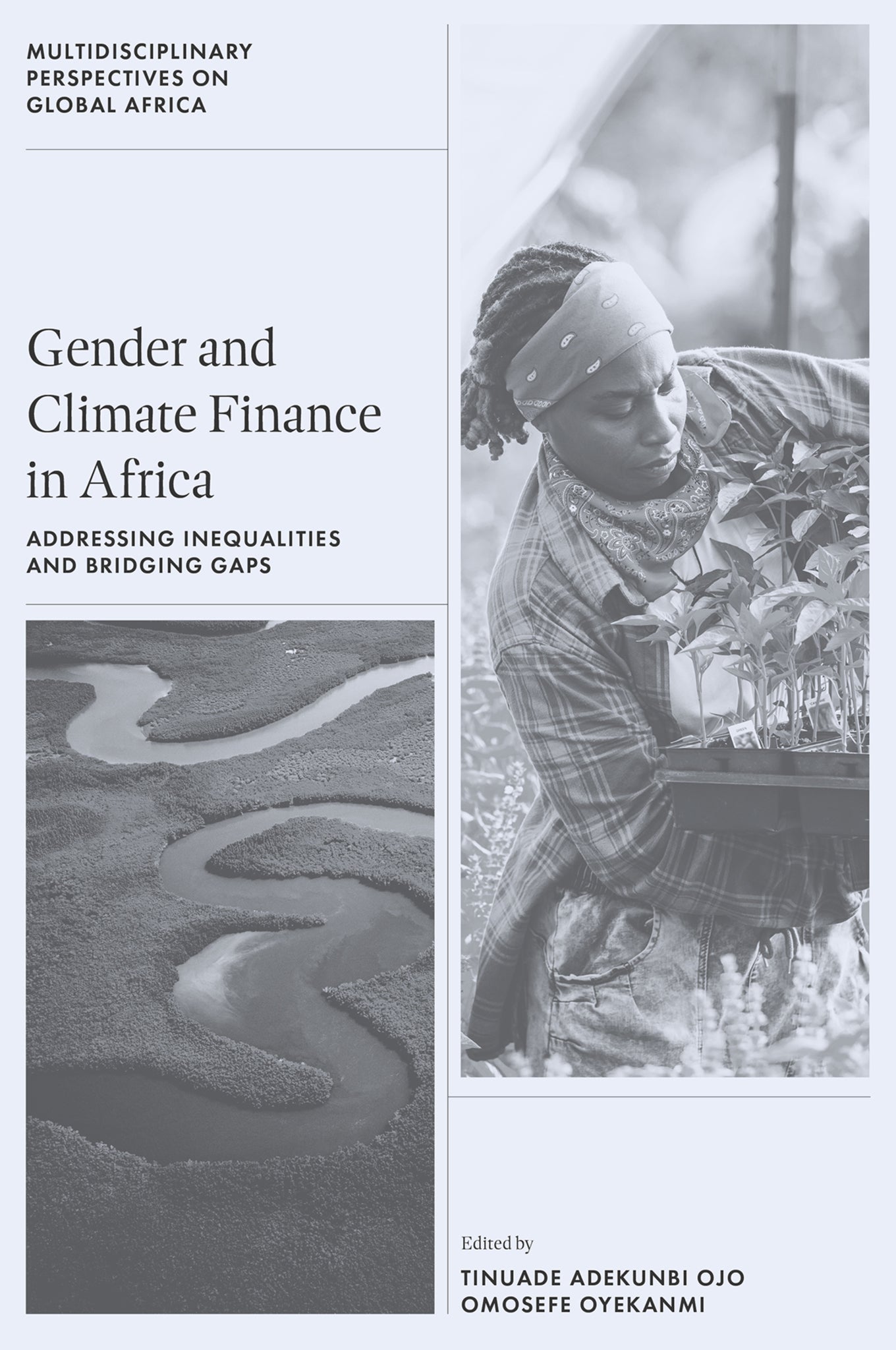
The nexus between gender and climate finance is a crucial yet underexplored dimension in advancing sustainable development in Africa. This collection examines the intersection of gender and climate finance in Africa, highlighting the persistent inequalities in resource access. It provides evidence-based insights and innovative policy recommendations to promote gender-responsive climate finance frameworks and enhance inclusivity in sustainable development.
Offering an in-depth analysis of gender-responsive climate finance in Africa, this volume brings together interdisciplinary perspectives from scholars, policymakers, and practitioners to explore policy frameworks, financial inclusion mechanisms, and gender equity strategies in climate finance. The book addresses crucial themes, including policy and institutional mechanisms, barriers to access, innovative financing models, intersectionality, capacity building, and accountability. Providing a comprehensive understanding of gender-specific climate finance challenges in Africa, the chapters highlight successful gender-inclusive financial models and best practices and offer policy recommendations to drive equitable climate finance governance. Encouraging interdisciplinary discourse and collaboration among academia, government, and development organization, the volume forges a new path for ensuring gender-equitable climate finance access and implementation.
Given the urgency of climate action and the global commitment to gender equality, Gender and Climate Finance in Africa is an essential resource for scholars, policymakers, financial institutions, and development practitioners working towards sustainable and inclusive climate finance solutions in Africa.

Tinuade Adekunbi Ojo is Director of the Center for Race, Gender and Class and Associate Professor of the Department of Politics and International Relations at the University of Johannesburg, where her interdisciplinary work bridges multiple fields to address complex issues related to women and gender.
Omosefe Oyekanmi is a Post-Doctoral Fellow at the Institute for Pan African Thought and Conversation, University of Johannesburg. She is a Research Fellow in the Political and Governance Policy Department, Nigerian Institute of Social and Economic Research, Ibadan, Nigeria.
Foreword; Antonia T. Simbine
Chapter 1. Climate Finance Distribution and Gender Mainstreaming in Africa; Omosefe Oyekanmi and Tinuade Adekunbi Ojo
Chapter 2. Social Norms and Equitable Access to Climate Finance among Women Cassava Producers in Oyo State, Nigeria; Tope I. Omirin and Yetunde A. Aluko
Chapter 3. The Role of Climate Finance in Addressing Contemporary Challenges and Enhancing Prospects for Women in Zimbabwe's Fragile Agricultural Economy; Prince Dzingirayi and Alison Nyaradzo Zuva
Chapter 4. Gender, Climate, and Finance in Africa: Strategies for a More Equitable Future; Anthonia Folasade Ibitoye
Chapter 5. Gender Differentials in Climate Impacts: Experience from Nigeria; Adebukola Yewande Daramola
Chapter 6. Climate-Induced Displacement and Migration in ECOWAS: The Gendered Dimension of Livelihood and Financial Resilience; Akeju Kemi Funlayo and Olalere Sunday Shina
Chapter 7. Vulnerable Women’s Participation in Climate Action and Alternative Financing for Livelihoods in the Northern Region of Ghana; Samson Sambian Konlan and Tanusha Raniga
Chapter 8. Gender Responsive Climate Finance: Policy Frameworks, Barriers and Inclusive Strategies in East and North Africa; Joy Oluwatomi Folorunso
Chapter 9. Climate Finance and Gender Inclusivity in Africa: Lessons from South Africa, Ethiopia, and Senegal; Modinat Mosunmola Adekunle
Chapter 10. Climate Change, Financial Development and Structural Factors: Gendered Impacts on Women’s Agricultural Employment in Nigeria and Kenya; Kafilah Lola Gold