


Some error occured while loading the Quick View. Please close the Quick View and try reloading the page.
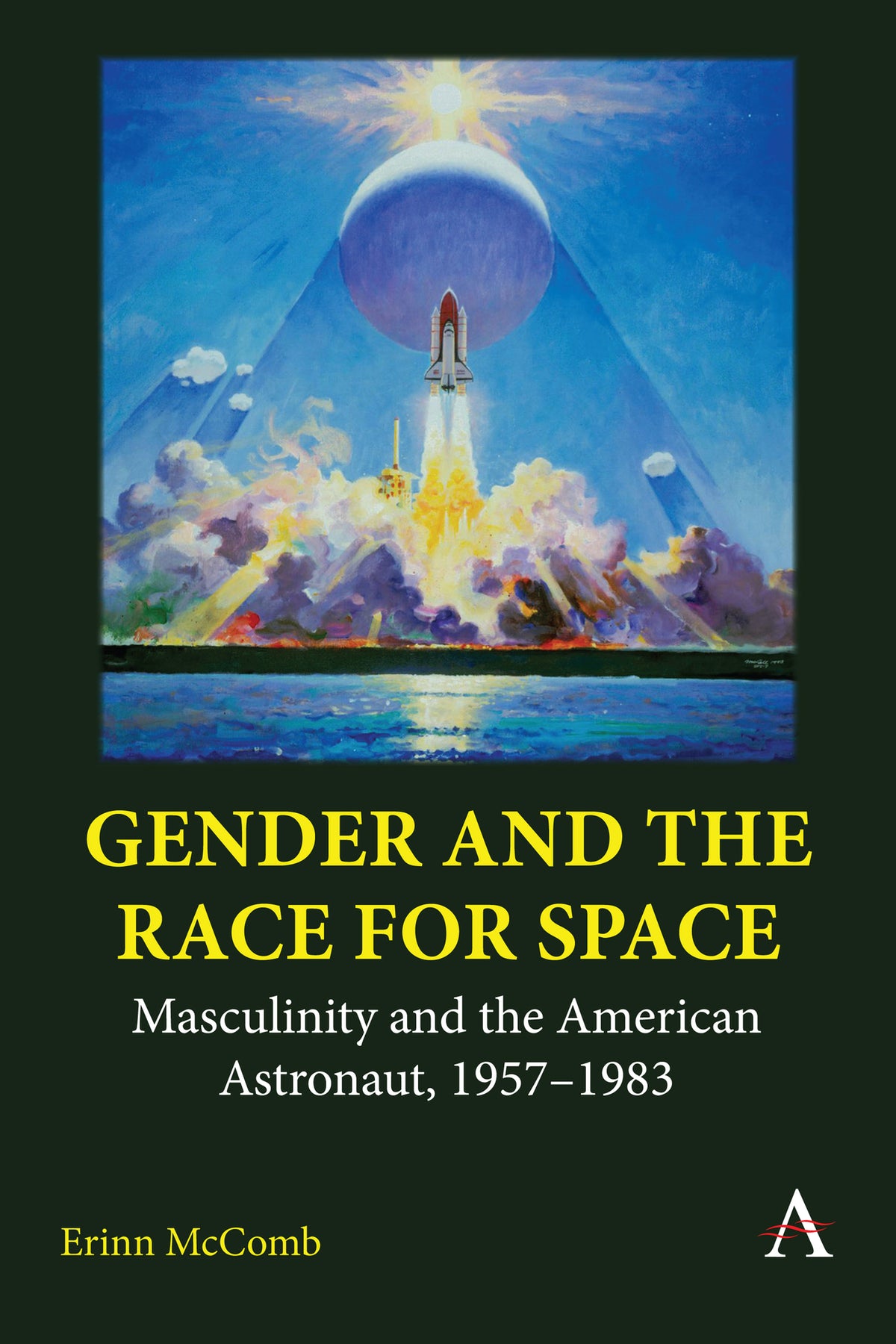
The American astronaut image was informed by early Cold War ideals of masculinity that helped mold a distinctly American (anti-communist) masculinity, which appeared—on the surface anyway—to resolve not only an American “crisis of masculinity” but helped win the Cold War on an ideological and popular level. This American image focused on strict gender binaries of man as the protector, controlling technology and containing communism, while woman was the passive actor with spaceflight technology—left behind in the home waiting for the return of the astronaut husband. Allowing women to fly into space would have represented a lack of individual control with spaceflight technology.

“McComb explores the construction of a masculine U.S. astronaut image based on rugged individuali-ty, self-determination and control as a Cold War counter to Soviet collectivism, even as NASA straddled conservative and progressive understandings of gender roles by allowing women to hold traditionally male jobs as engineers, computer programmers and technicians.” — Alan D. Meyer, author of Week-end Pilots: Technology, Masculinity, and Private Aviation in Postwar America (2015).
“McComb sheds new light on the storied space race and its aftermath through a sharp focus on gender and astronauts. Her historical scholarship traces in vivid detail how a culture of masculinity was estab-lished within U.S. aerospace but challenged by daring women including Jerrie Cobb, Sally Ride and Ei-leen Collins.” — Jordan Bimm, University of Chicago, US
“McComb offers a fresh perspective on how women were publicly accepted as members of the astro-naut corps. Accordingly, technological changes that shifted spaceflight from being viewed as a dan-gerous endeavor to a routine one markedly changed perceptions of who could participate in space-flight.” — Monique Laney, Auburn University, USA
“This exhaustively researched book, prepared by an experienced space studies scholar, is likely to be received enthusiastically by historians of technology, women’s and gender studies scholars, and space history enthusiasts.” —Matthew H. Hersch, JD, PhD, Associate Professor of the History of Science, Harvard University, Cambridge, MA, USA
Erinn McComb's first book foregrounds discussions about masculinity and femininity, elucidating that the early American astronaut's image was constructed in relation to gendered assumptions about piloting, technology, and the larger societal roles of citizens during the Cold War. By centering gendered narratives in the context of spaceflight, Gender and the Race for Space is an imaginative new addition to existing work on gender, technology, and NASA, promoting further historical appreciation for cultural discourses, not just lived experiences... McComb's points about the fluidity of gender add exceptionally fresh perspectives to the literature on NASA by bringing this field into closer conversation with gender and masculinity studies. — Eszter D. Kovács, Technology and Culture
Erinn McComb, PhD, is Associate Professor of History at Del Mar College in Corpus Christi, Texas. She researches the intersection of gender with foreign policy, science, and technology.
Acknowledgments; Introduction: Who Can Fly? Gender and the American Astronaut; 1-Early Cold War Gender Roles in the Public and Private Discourse; 2-Light This Candle: Project Mercury and Cold War Masculinity; 3-The First Lady Astronaut Trainees (FLATs); 4-Refreshingly Human and Winning: Pilot Control and Project Gemini; 5-It’s Hip to Be Square: Democratic Manhood and the Apollo Program; 6-What Made It Possible for Sally to Ride?: The Shuttle’s Domestication and Democratization of Spaceflight; Conclusion: To Infinity and Beyond; Bibliography; Index