


Some error occured while loading the Quick View. Please close the Quick View and try reloading the page.
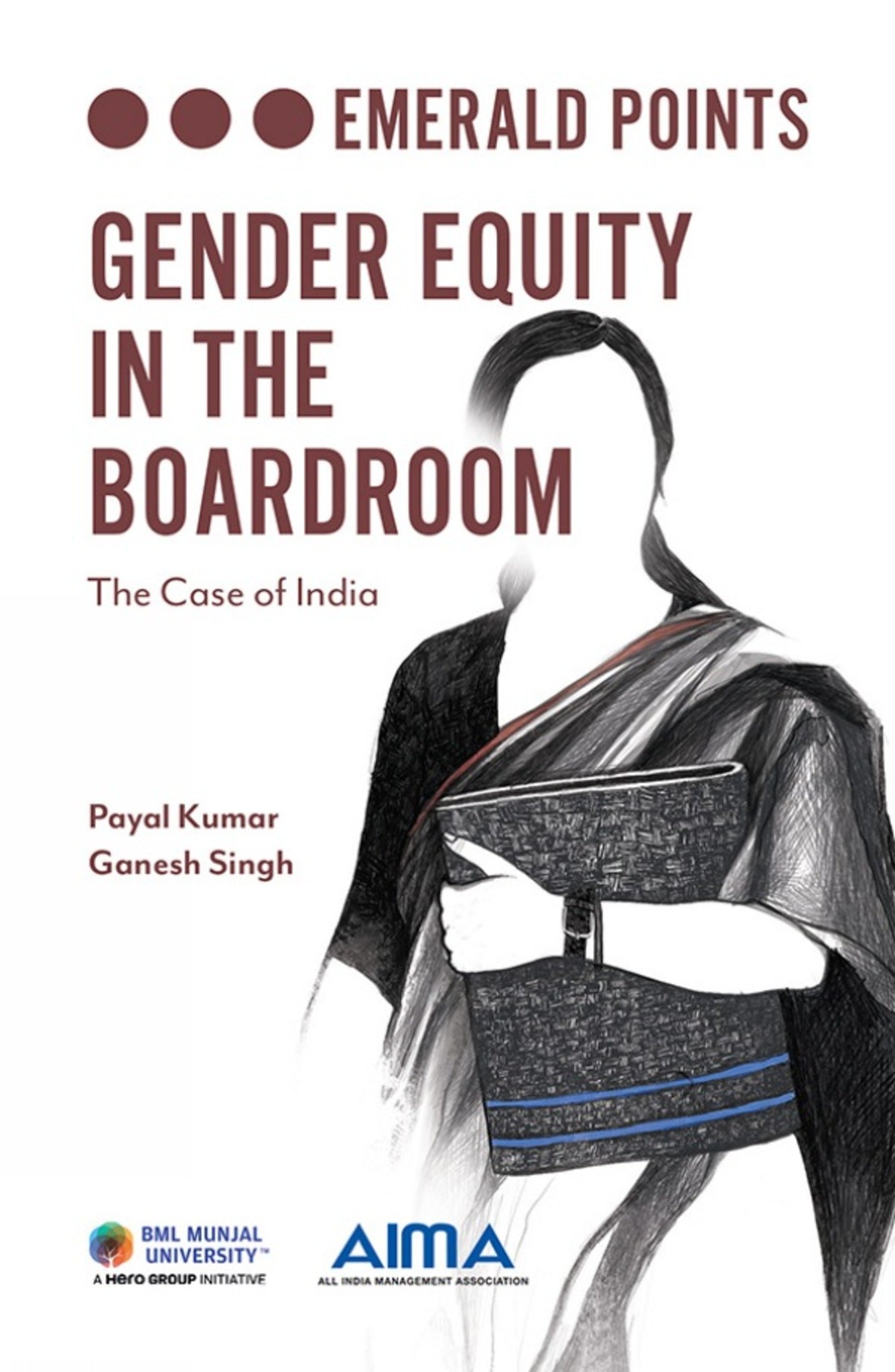
Since 2013, company boards in India have been legally required to have at least one female director. However, gender diversity in boardrooms across India remains below the global average, and a number of the women who do serve on boards were appointed largely because they are related to a founder or owner of a company. Since India is recognised as one of the
world’s fastest growing emerging economies, it is important to study in detail why gender diversity at board level remains so low. Is this a result of workplace bias, a pipeline issue, or due to other reasons?
Gender Equity in the Boardroom: The Case of India offers just this sorely needed study. Drawing upon interviews with board members and executives of both public and private companies, as well as with aspiring female leaders who are currently at mid-management level, and supplementing this with the authors’ own survey of the make-up of 305 Fortune India 500 companies, this book offers incisive insights into questions about board-level gender representation across industries.
Offering both rigorous research and analysis as well as suggestions for practical policy changes, this book is essential reading for HRM and leadership scholars, and is also of keen interest to policymakers throughout the world.
Gender Equity in the Boardroom: The Case of India offers just this sorely needed study. Drawing upon interviews with board members and executives of both public and private companies, as well as with aspiring female leaders who are currently at mid-management level, and supplementing this with the authors’ own survey of the make-up of 305 Fortune India 500 companies, this book offers incisive insights into questions about board-level gender representation across industries.
Offering both rigorous research and analysis as well as suggestions for practical policy changes, this book is essential reading for HRM and leadership scholars, and is also of keen interest to policymakers throughout the world.

Price: $61.99
Pages: 160
Publisher: Emerald Publishing Limited
Imprint: Emerald Publishing Limited
Series: Emerald Points
Publication Date:
04 September 2020
ISBN: 9781839827679
Format: Paperback
Appointing more women with the right personal qualities to private and public sector boards could strengthen corporate governance across India. This timely monograph examines the evidence, explores the barriers and suggests where action is needed. It draws upon interviews with board members, senior officials and others, and presents recommendations for policy makers and current and aspiring directors.
— Prof Colin Coulson-Thomas
— Prof Colin Coulson-Thomas
Payal Kumar is Professor and Chair HR/OB and Associate Dean, International Relations at BML Munjal University, India.
Ganesh Singh is Professor and Programme Director of the Foundation Course for AIMA-AMU’s PhD Programme in Business Administration at the All India Management Association’s Centre for Management Education (AIMA CME), India.
Ganesh Singh is Professor and Programme Director of the Foundation Course for AIMA-AMU’s PhD Programme in Business Administration at the All India Management Association’s Centre for Management Education (AIMA CME), India.
Chapter 1. Literature Review and Study Method
Chapter 2. Thematic Analysis: Interviews of Board Members and Senior Executives
Chapter 3. Thematic Analysis: Aspiring Woman Leaders
Chapter 4. Analysis of Female Representation on the Boards of Fortune India 500 Companies
Chapter 5. Conclusion and Policy Recommendations