


Some error occured while loading the Quick View. Please close the Quick View and try reloading the page.
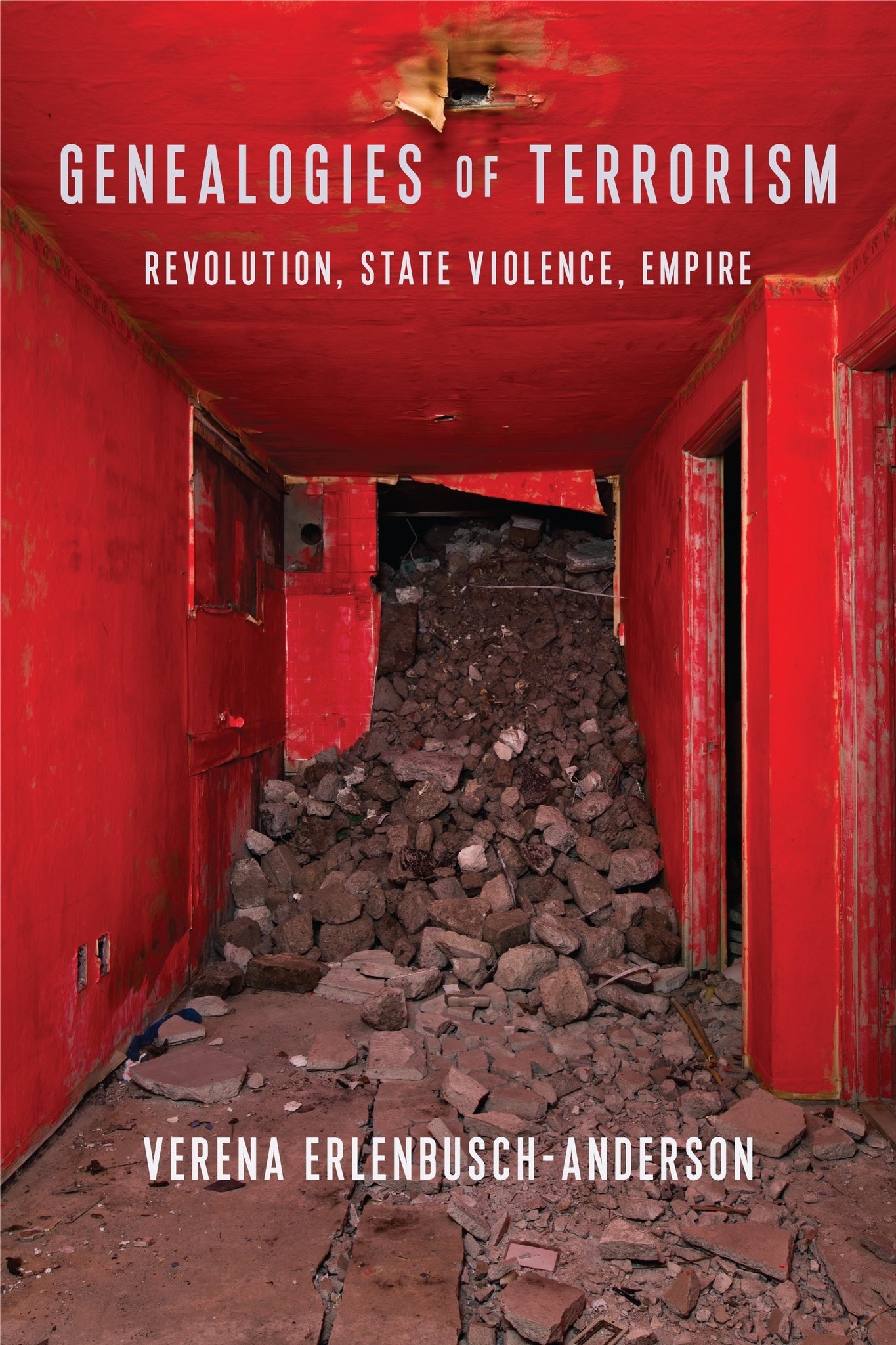
What is terrorism? What ought we to do about it? And why is it wrong? We think we have clear answers to these questions. But acts of violence, like U.S. drone strikes that indiscriminately kill civilians, and mass shootings that become terrorist attacks when suspects are identified as Muslim, suggest that definitions of terrorism are always contested. In Genealogies of Terrorism, Verena Erlenbusch-Anderson rejects attempts to define what terrorism is in favor of a historico-philosophical investigation into the conditions under which uses of this contested term become meaningful. The result is a powerful critique of the power relations that shape how we understand and theorize political violence.
Tracing discourses and practices of terrorism from the French Revolution to late imperial Russia, colonized Algeria, and the post-9/11 United States, Erlenbusch-Anderson examines what we do when we name something terrorism. She offers an important corrective to attempts to develop universal definitions that assure semantic consistency and provide normative certainty, showing that terrorism means many different things and serves a wide range of political purposes. In the tradition of Michel Foucault’s genealogies, Erlenbusch-Anderson excavates the history of conceptual and practical uses of terrorism and maps the historically contingent political and material conditions that shape their emergence. She analyzes the power relations that make different modes of understanding terrorism possible and reveals their complicity in justifying the exercise of sovereign power in the name of defending the nation, class, or humanity against the terrorist enemy. Offering an engaged critique of terrorism and the mechanisms of social and political exclusion that it enables, Genealogies of Terrorism is an empirically grounded and philosophically rigorous critical history with important political implications.

Acknowledgments
1. The Trouble with Terrorism
2. The Emergence of Terrorism
3. State Terrorism Revisited
4. Terrorism and Colonialism
5. Reimagining Terrorism at the End of History
6. Towards a Critical Theory of Terrorism: Genealogy and Normativity
Notes
Bibliography
Index