


Some error occured while loading the Quick View. Please close the Quick View and try reloading the page.
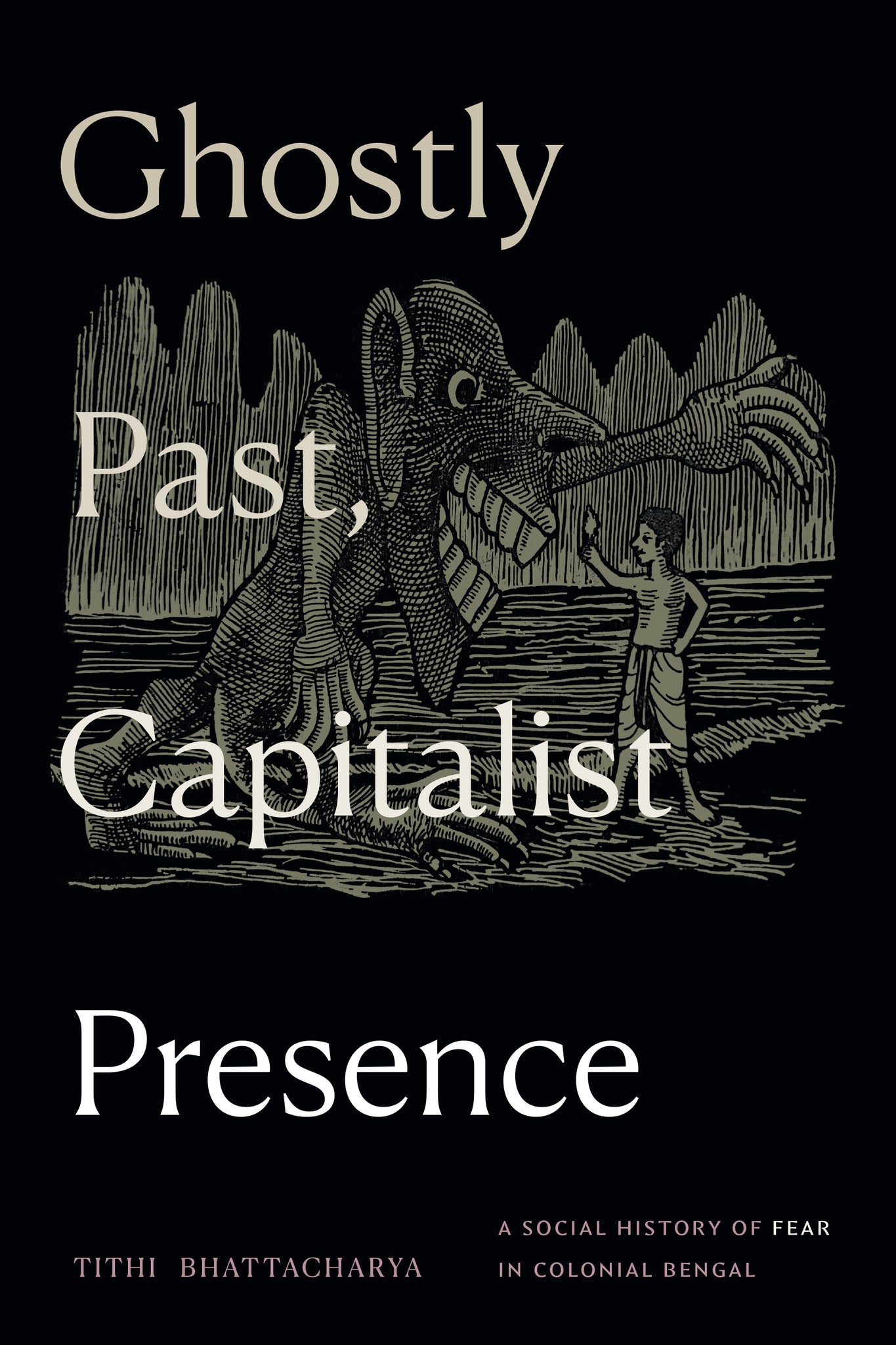
In Ghostly Past, Capitalist Presence, Tithi Bhattacharya maps the role that Bengali ghosts and ghost stories played in constituting the modern Indian nation, and the religious ideas seeded therein, as it emerged in dialogue with European science. Bhattacharya introduces readers to the multifarious habits and personalities of Bengal’s traditional ghosts and investigates and mourns their eventual extermination. For Bhattacharya, British colonization marked a transition from the older, multifaith folk world of traditional ghosts to newer and more frightening specters. These "modern" Bengali ghosts, borne out of a new rationality, were homogeneous specters amenable to "scientific" speculation and invoked at séance sessions in elite drawing rooms. Reading literature alongside the colonial archive, Bhattacharya uncovers a new reordering of science and faith from the middle of the nineteenth century. She argues that these shifts cemented the authority of a rising upper-caste colonial elite who expelled the older ghosts in order to recast Hinduism as the conscience of the Indian nation. In so doing, Bhattacharya reveals how capitalism necessarily reshaped Bengal as part of the global colonial project.

Price: $26.95
Pages: 232
Publisher: Duke University Press
Imprint: Duke University Press
Publication Date:
23 August 2024
Trim Size: 9.00 X 6.00 in
ISBN: 9781478030713
Format: Paperback
BISACs:
“The best account I have yet read of the enchanted and uncanny world of stories and beliefs that Bengalis like myself grew up in.”—Amitav Ghosh
“This strikingly original study returns ghosts, long unjustly neglected, back to their rightful place at the heart of the history of Bengali colonial modernity. By a fascinating series of literary, historical, and theoretical analyses, it reveals colonial reason’s obsession with the irrational and presents the narrative of replacement of decorous magical ghosts of premodernity by new forms of the uncanny and monstrous lodged in the disenchanted structures of capitalist economies and modern nation-states.”—Sudipta Kaviraj, Professor of Middle Eastern, South Asian, and African Studies, Columbia University
"Readers already knowledgeable about this period in Indian history will especially appreciate the sophistication of Bhattacharya’s work. Recommended. Graduate students and faculty."—M. H. Fisher, Choice
“Riveting. . . . Older ghosts survived in the cracks and the shadows, and Ghostly Past, Capitalist Presence is an admirable attempt to make analytical room for their continued presence and whispery speech.”—Amit R. Baishya, H-Asia, H-Net Reviews
"Cultural history at its most inventive. . . . Bhattacharya reveals something profound about the creativity and violence of historical change itself."—Ankush Pal, Scroll
"[Bhattacharya] brings methodological clarity and firmness to the analysis of varied epistemic concerns without losing sight of caste, class and gender."—Aheli Moitra, Religion
“This strikingly original study returns ghosts, long unjustly neglected, back to their rightful place at the heart of the history of Bengali colonial modernity. By a fascinating series of literary, historical, and theoretical analyses, it reveals colonial reason’s obsession with the irrational and presents the narrative of replacement of decorous magical ghosts of premodernity by new forms of the uncanny and monstrous lodged in the disenchanted structures of capitalist economies and modern nation-states.”—Sudipta Kaviraj, Professor of Middle Eastern, South Asian, and African Studies, Columbia University
"Readers already knowledgeable about this period in Indian history will especially appreciate the sophistication of Bhattacharya’s work. Recommended. Graduate students and faculty."—M. H. Fisher, Choice
“Riveting. . . . Older ghosts survived in the cracks and the shadows, and Ghostly Past, Capitalist Presence is an admirable attempt to make analytical room for their continued presence and whispery speech.”—Amit R. Baishya, H-Asia, H-Net Reviews
"Cultural history at its most inventive. . . . Bhattacharya reveals something profound about the creativity and violence of historical change itself."—Ankush Pal, Scroll
"[Bhattacharya] brings methodological clarity and firmness to the analysis of varied epistemic concerns without losing sight of caste, class and gender."—Aheli Moitra, Religion
Tithi Bhattacharya is Associate Professor of History at Purdue University, author of The Sentinels of Culture: Class, Education, and the Colonial Intellectual in Bengal, 1848–1885, and coauthor of Feminism for the 99%: A Manifesto.
A Note on Conventions vii
Acknowledgments ix
Introduction. Uncanny Histories: Ghosts, Fear, and Reason in Colonial Bengal 1
1. “Undisciplined, Playful and Yet Bhadra”: Old Ghosts and Their Advocates in an Age of Enlightenment 22
2. The New Spirits 55
3. Deadly Spaces: Haunted Homes and Haunting Histories 82
4. Enacting Ghosts: New Spirits, New Rituals 97
5. National Ghosts, Ghostly Nations 130
Conclusion. Thinking about Ends and Beginnings 155
Notes 159
Bibliography 187
Index 203
Acknowledgments ix
Introduction. Uncanny Histories: Ghosts, Fear, and Reason in Colonial Bengal 1
1. “Undisciplined, Playful and Yet Bhadra”: Old Ghosts and Their Advocates in an Age of Enlightenment 22
2. The New Spirits 55
3. Deadly Spaces: Haunted Homes and Haunting Histories 82
4. Enacting Ghosts: New Spirits, New Rituals 97
5. National Ghosts, Ghostly Nations 130
Conclusion. Thinking about Ends and Beginnings 155
Notes 159
Bibliography 187
Index 203