


Some error occured while loading the Quick View. Please close the Quick View and try reloading the page.
A free ebook version of this title will be available through Luminos, University of California Press’s Open Access publishing program. Visit www.luminosoa.org to learn more.
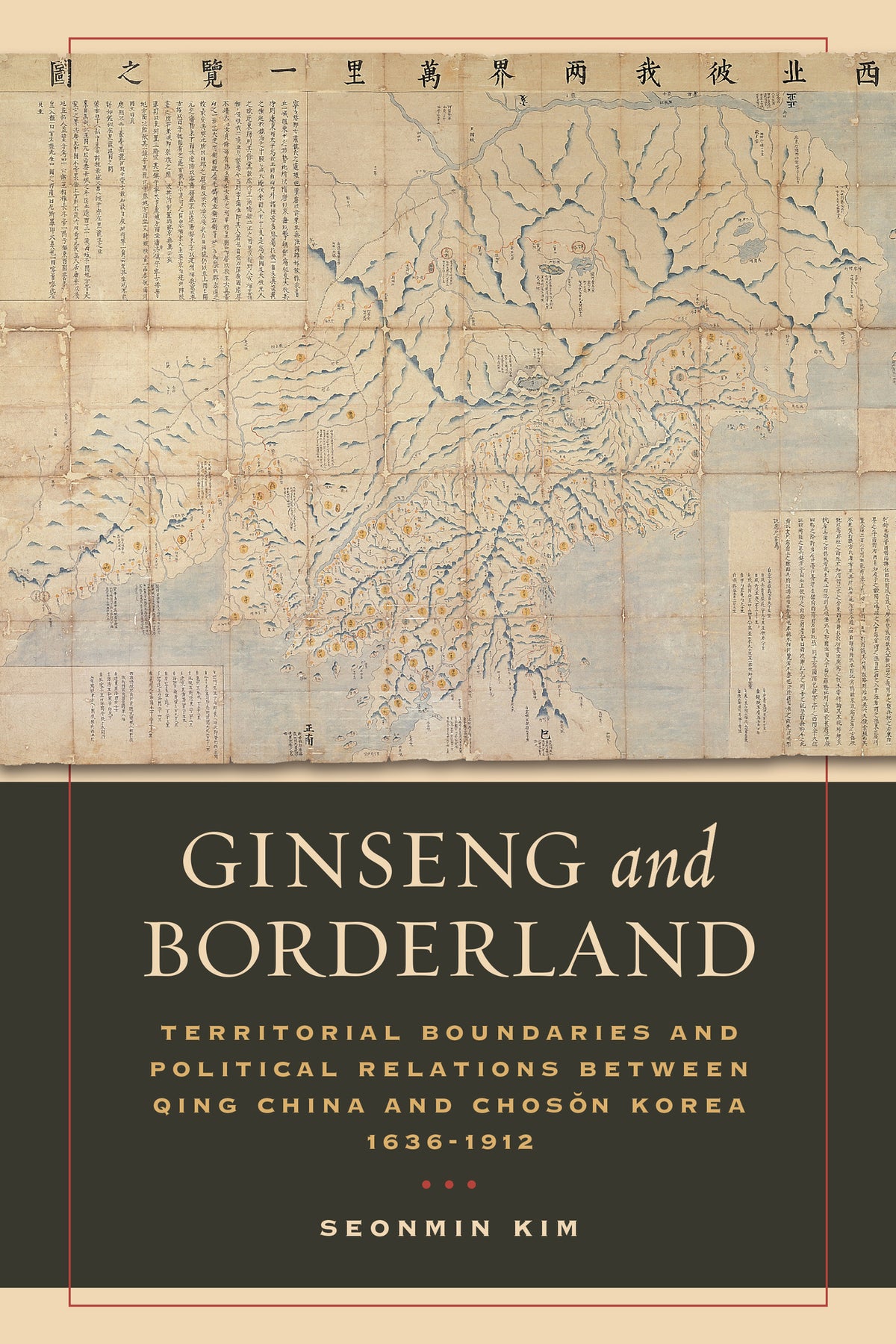
Ginseng and Borderland explores the territorial boundaries and political relations between Qing China and Choson Korea during the period from the early seventeenth to the late nineteenth centuries. By examining a unique body of materials written in Chinese, Manchu, and Korean, and building on recent studies in New Qing History, Seonmin Kim adds new perspectives to current understandings of the remarkable transformation of the Manchu Qing dynasty (1636–1912) from a tribal state to a universal empire. This book discusses early Manchu history and explores the Qing Empire’s policy of controlling Manchuria and Choson Korea. Kim also contributes to theKorean history of the Choson dynasty (1392–1910) by challenging conventional accounts that embrace a China-centered interpretation of the tributary relationship between the two polities, stressing instead the agency of Choson Korea in the formation of the Qing Empire. This study demonstrates how Koreans interpreted and employed this relationship in order to preserve the boundary—and peace—with the suzerain power. By focusing on the historical significance of the China-Korea boundary, this book defines the nature of the Qing Empire through the dynamics of contacts and conflicts under both the cultural and material frameworks of its tributary relationship with Choson Korea.
Ginseng and Borderland explores the territorial boundaries and political relations between Qing China and Choson Korea during the period from the early seventeenth to the late nineteenth centuries. By examining a unique body of materials written in Chinese, Manchu, and Korean, and building on recent studies in New Qing History, Seonmin Kim adds new perspectives to current understandings of the remarkable transformation of the Manchu Qing dynasty (1636–1912) from a tribal state to a universal empire. This book discusses early Manchu history and explores the Qing Empire’s policy of controlling Manchuria and Choson Korea. Kim also contributes to theKorean history of the Choson dynasty (1392–1910) by challenging conventional accounts that embrace a China-centered interpretation of the tributary relationship between the two polities, stressing instead the agency of Choson Korea in the formation of the Qing Empire. This study demonstrates how Koreans interpreted and employed this relationship in order to preserve the boundary—and peace—with the suzerain power. By focusing on the historical significance of the China-Korea boundary, this book defines the nature of the Qing Empire through the dynamics of contacts and conflicts under both the cultural and material frameworks of its tributary relationship with Choson Korea.

Price: $34.95
Pages: 242
Publisher: University of California Press
Imprint: University of California Press
Publication Date:
12 September 2017
Trim Size: 9.00 X 6.00 in
ISBN: 9780520295995
Format: Paperback
BISACs:
"Kim’s indispensable book nevertheless provides much of interest and opens up further avenues for research."
Seonmin Kim is Associate Professor at the Research Institute of Korean Studies at Korea University.
List of Illustrations and Tables
Acknowledgments
Note on Transcriptions and Conventions
Note on Weights and Measures
Introduction
1. From Frontier to Borderland
2. Making the Borderland
3. Managing the Borderland
4. Movement of People and Money
5. From Borderland to Border
Conclusion
Notes
Bibliography
Glossary
Index
Acknowledgments
Note on Transcriptions and Conventions
Note on Weights and Measures
Introduction
1. From Frontier to Borderland
2. Making the Borderland
3. Managing the Borderland
4. Movement of People and Money
5. From Borderland to Border
Conclusion
Notes
Bibliography
Glossary
Index