


Some error occured while loading the Quick View. Please close the Quick View and try reloading the page.
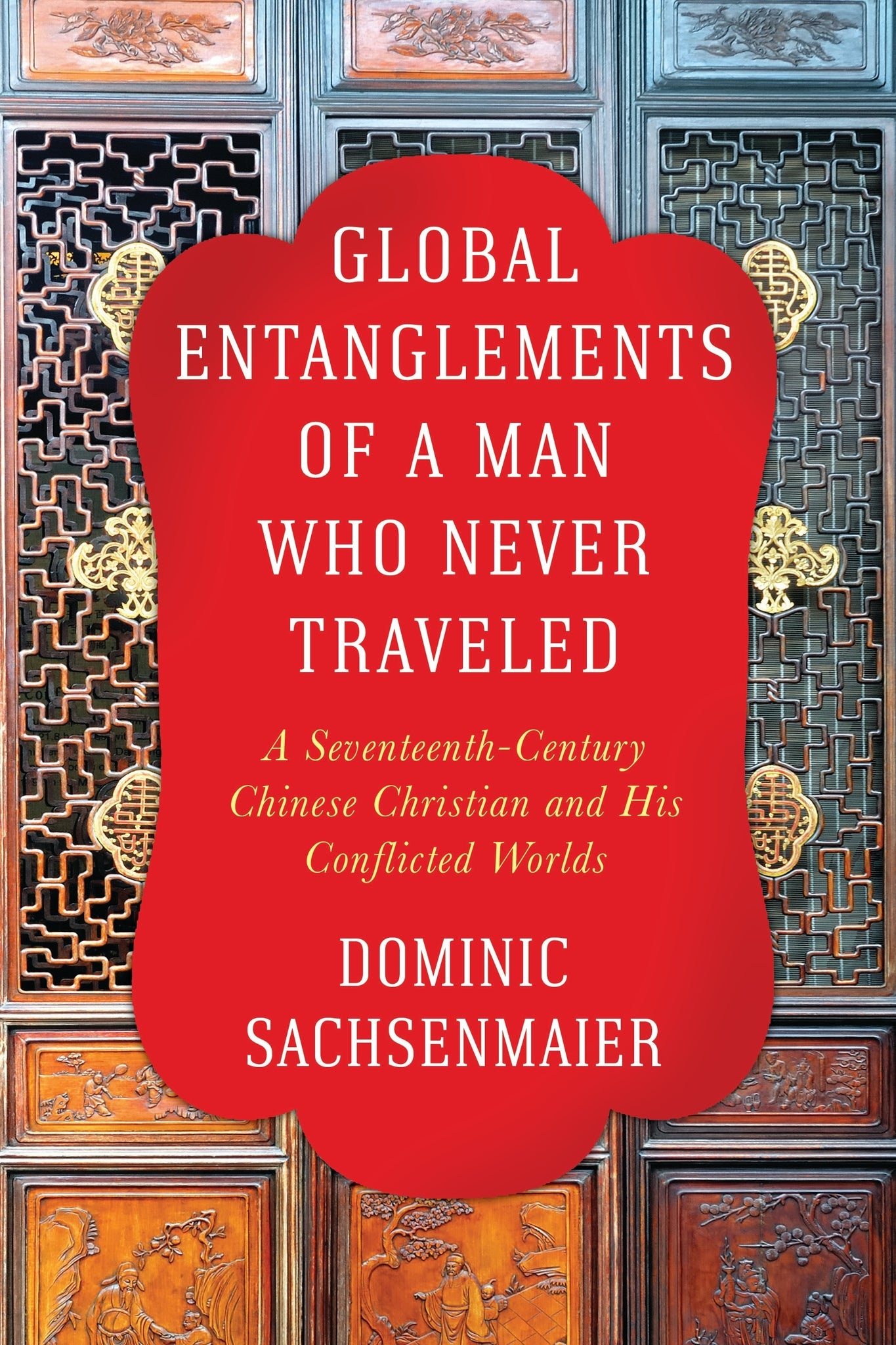
Born into a low-level literati family in the port city of Ningbo, the seventeenth-century Chinese Christian convert Zhu Zongyuan likely never left his home province. Yet Zhu nonetheless led a remarkably globally connected life. His relations with the outside world, ranging from scholarly activities to involvement with globalizing Catholicism, put him in contact with a complex and contradictory set of foreign and domestic forces.
In Global Entanglements of a Man Who Never Traveled, Dominic Sachsenmaier explores the mid-seventeenth-century world and the worldwide flows of ideas through the lens of Zhu‘s life, combining the local, regional, and global. Taking particular aspects of Zhu‘s multiple belongings as a starting point, Sachsenmaier analyzes the contexts that framed his worlds as he balanced a local life and his border-crossing faith. At the local level, the book pays attention to the intellectual, political, and social environments of late Ming and early Qing society, including Confucian learning and the Manchu conquest, questioning the role of ethnic and religious identities. At the global level, it considers how individuals like Zhu were situated within the history of organizations and power structures such as the Catholic Church and early modern empires amid larger transformations and encounters. A strikingly original work, this book is a major contribution to East Asian, transnational, and global history, with important implications for historical approaches and methodologies.

Global Entanglements of a Man Who Never Traveled is a mature work by a scholar who has reflected not only on the history of Christianity in China but also on the problem of cultural interactions in the early modern era. Sachsenmaier offers a significant departure from the tradition of Christian studies in China even while dealing with the question of Christianity as a faith. He explores the historical problem of self-formation and trans-formation—both individual and collective—and the organizational machinery of the Catholic Church during a period of momentous global encounters.
Acknowledgments
Introduction: Situating Zhu Zongyuan
1. A Local Life and Its Global Contexts
2. A Globalizing Organization and Chinese Christian Life
3. A Teaching Shaped by Constraints
4. Foreign Learnings and Confucian Ways
5. European Origins on Trial
Epilogue
Glossary
Notes
Bibliography
Index