


Some error occured while loading the Quick View. Please close the Quick View and try reloading the page.
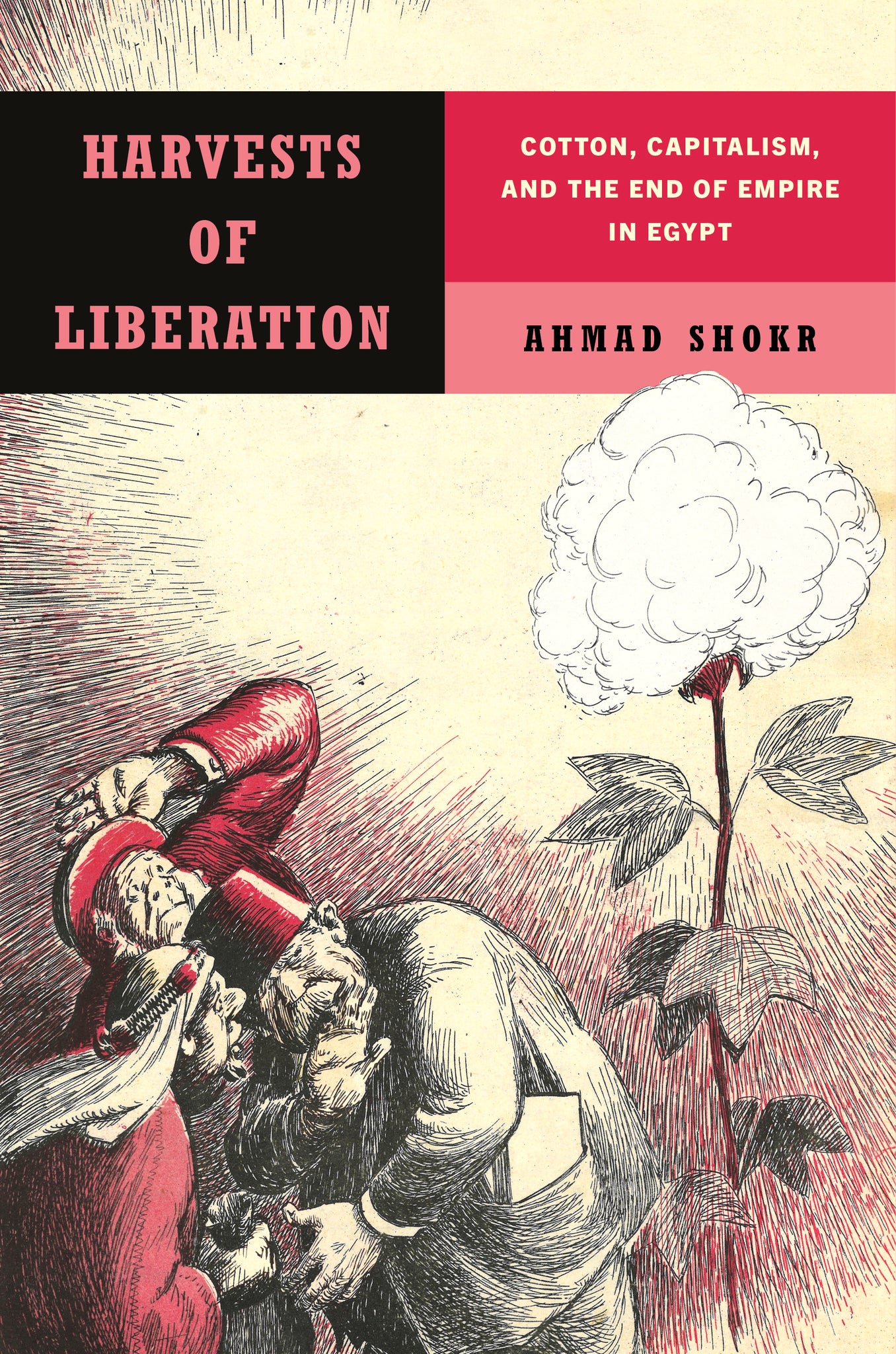
In the first half of the twentieth century, a major change occurred in Egyptian nationalist understandings of imperialism and economic sovereignty. Where once the volatilities of foreign markets and capital were seen as the main threat, over time large landowners and their imperial allies were targeted as the principal obstacles to the country's industrial progress. The perceived locus of imperial domination shifted from the realm of circulation to the realm of production. Harvests of Liberation situates this transformation in the midcentury dynamics of agrarian capitalism in Egypt.
Ahmad Shokr tells a story of decolonization through the lens of cotton, Egypt's prized export. He follows a range of actors—colonial advisors, nationalist leaders, agrarian reformers, merchant-financiers, landowners, and rural workers—whose interactions moved the levers of the cotton trade from institutions that facilitated accumulation on an imperial scale to new sites of control within the nation-state. Amidst depression and war, the transformation of Egypt's cotton economy prompted nationalists to embrace policies of land reform and industrialization and adopt a new conception of history. Ultimately, Shokr argues, these efforts set the stage for the construction of a postcolonial republic under Gamal Abdel Nasser, where national liberation became equated with national development.

Introduction
1. Anatomy of a Global Plantation
2. Cotton Nationalism and the Crisis of Empire
3. Global Depression in the Nile Valley
4. Rural Reconstruction and the New Peasant
5. Reimagining Development
6. Growth Politics and the Officers' Republic
Epilogue
Notes
Bibliography
Index