


Some error occured while loading the Quick View. Please close the Quick View and try reloading the page.
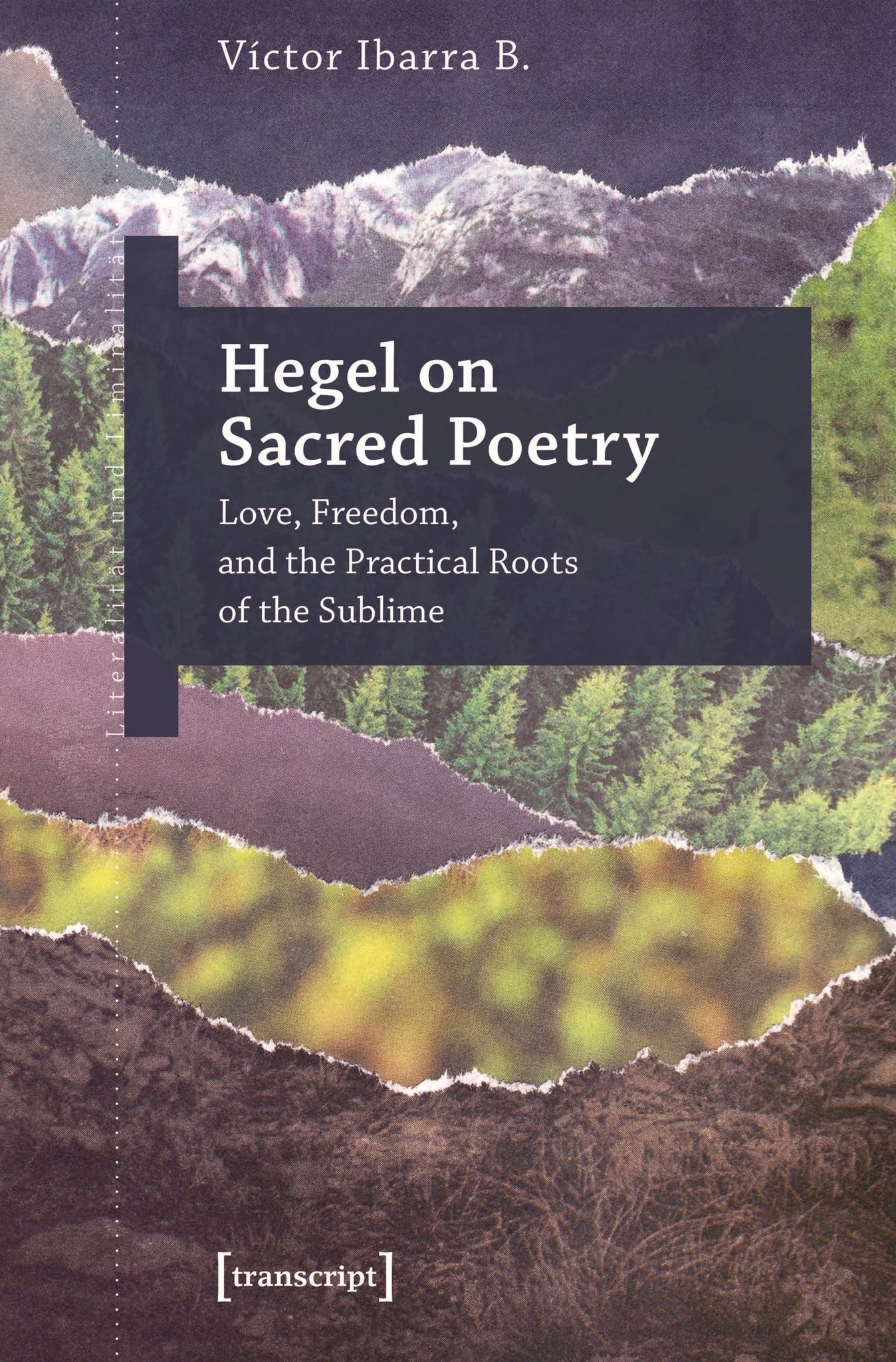
In his aesthetic reflections, Hegel identifies the Judaic Psalms, which he calls sacred poetry, as the core of the sublime. While it has often been suggested that Hegel showed little interest in the notion of sublimity, Ibarra B. contends that this interpretation is misleading and warrants further elucidation. Introducing a new perspective, he argues that a careful examination of Hegel's remarks on sacred poetry reveals a critique of the notion of agency as depicted in the Psalms. By revisiting Hegel's early works predating 1800 and his dispute with Kant's concept of freedom, this studyoffers a practical account of Hegel's view on sublime art within the framework of his philosophy of love.

Price: $55.00
Pages: 234
Publisher: transcript publishing
Imprint: transcript publishing
Publication Date:
28 January 2025
Trim Size: 8.86 X 5.83 in
ISBN: 9783837674149
Format: Paperback
Víctor Ibarra B., born in 1987, holds a B.A. degree in literature and an M.A. degree in contemporary thought, philosophy, and political thought. He completed his doctoral studies in philosophy through a joint PhD program at Leiden University and Universidad Diego Portales. In October 2019, he began writing his second doctoral dissertation at the Institute of General and Comparative Literature at Goethe-Universität Frankfurt. He has held the co-editorship of the Chilean publishing house Cuadro de Tiza Ediciones since 2013.
Frontmatter 1
Contents 7
Acknowledgments 11
Introduction 13
Chapter 1: The Reception of Hegel's Sublime 25
Chapter 2: Kant's Sublime 37
Chapter 3: Hegel's Erhabenes and die heilige Poesie 55
Introduction 69
Chapter 1: Judaism, Kant's Heteronomie, and Hegel's Early Fragments 73
Chapter 2: "Zur christlichen Religion" 123
Concluding Remarks 219
Literature 225