


Some error occured while loading the Quick View. Please close the Quick View and try reloading the page.
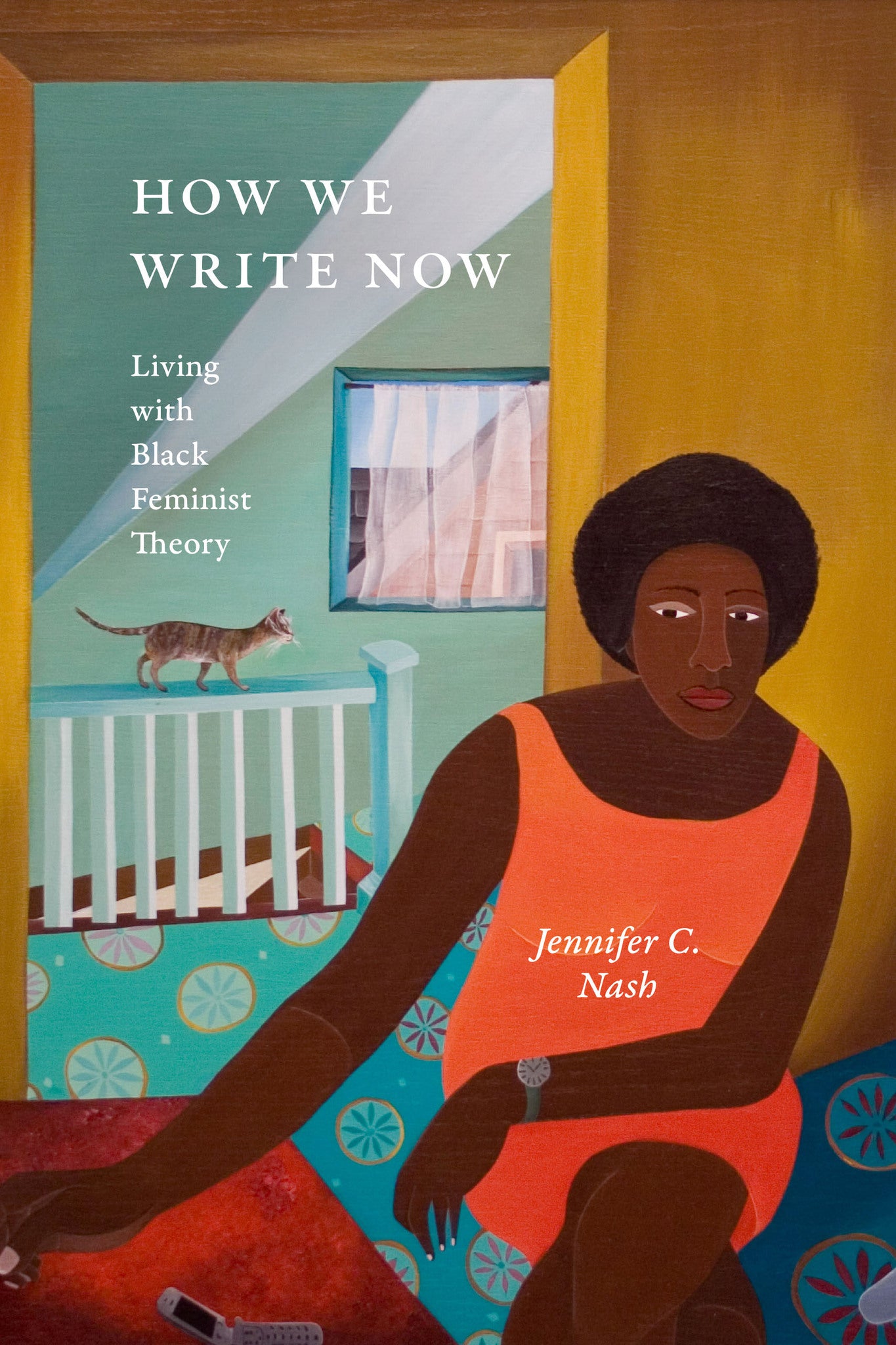
In How We Write Now Jennifer C. Nash examines how Black feminists use beautiful writing to allow writers and readers to stay close to the field’s central object and preoccupation: loss. She demonstrates how contemporary Black feminist writers and theorists such as Jesmyn Ward, Elizabeth Alexander, Christina Sharpe, and Natasha Trethewey mobilize their prose to ask readers to feel, undo, and reassemble themselves. These intimate invitations are more than a set of tools for decoding the social world; Black feminist prose becomes a mode of living and feeling, dreaming and being, and a distinctly affective project that treats loss as not only paradigmatic of Black life but also an aesthetic question. Through her own beautiful writing, Nash shows how Black feminism offers itself as a companion to readers to chart their own lives with and in loss, from devastating personal losses to organizing around the movement for Black lives. Charting her own losses, Nash reminds us that even as Black feminist writers get as close to loss as possible, it remains a slippery object that troubles memory and eludes capture.

Price: $24.95
Pages: 152
Publisher: Duke University Press
Imprint: Duke University Press
Series: Black Feminism on the Edge
Publication Date:
06 August 2024
Trim Size: 9.00 X 6.00 in
ISBN: 9781478030461
Format: Paperback
BISACs:
“Jennifer C. Nash's brilliant monograph embraces what Christina Sharpe described as ‘beauty as a method,’ through which she delivers with stunning erudition and heart-rending intimacy what it means to theorize Black life in the twenty-first century. Nash provides an essential Black feminist rejoinder to the orthodoxy of Afropessism by insisting that Black women refuse to be defined and dehumanized by Black death. Rather, their long history of cultivating beauty, intimacy, care, and affection is a fierce and rigorous practice of Black survival and enduring humanity.”—Tina M. Campt, author of, A Black Gaze: Artists Changing How We See
“Goodness, what a book: Jennifer C. Nash has managed to create work that is both urgent and also slow, ferocious, and quiet—which is to say that she has written a book that holds the world of ordinariness. Compellingly smart and beautifully written, How We Write Now is a transcendent read and an astonishing accomplishment that builds sublimely on Nash’s singular consideration of Black feminism’s affective work.”—Kevin Quashie, author of, Black Aliveness, or A Poetics of Being
"Nash not only examines the beauty of Black women’s feminist writing about loss but expertly demonstrates it with her loving, personal and poignant prose."—Karla Strand, Ms. Magazine
"Jennifer C. Nash presents a stimulating and personal examination of academic writing through Black feminist theory. . . . How We Write Now is a testament to the power of Black feminism."—Montez Jennings, E3W Review of Books
"I write in gratitude for the fundamental critique—and riches—that How We Write Now offers to us in the academy and beyond."—Foluke Taylor, Brief Encounters
"[The book's] ability to offer a new conceptual framework, conduct productive internal critique, and demonstrate an innovative and affectively potent mode of academic writing is its unique value. ... How We Write Now is not just a study of Black feminist theory; it is a theoretical artifact in itself—a contribution that redefines how we understand, write, and live with theory."—Reza Adeputra Tohis, Hypatia
“Goodness, what a book: Jennifer C. Nash has managed to create work that is both urgent and also slow, ferocious, and quiet—which is to say that she has written a book that holds the world of ordinariness. Compellingly smart and beautifully written, How We Write Now is a transcendent read and an astonishing accomplishment that builds sublimely on Nash’s singular consideration of Black feminism’s affective work.”—Kevin Quashie, author of, Black Aliveness, or A Poetics of Being
"Nash not only examines the beauty of Black women’s feminist writing about loss but expertly demonstrates it with her loving, personal and poignant prose."—Karla Strand, Ms. Magazine
"Jennifer C. Nash presents a stimulating and personal examination of academic writing through Black feminist theory. . . . How We Write Now is a testament to the power of Black feminism."—Montez Jennings, E3W Review of Books
"I write in gratitude for the fundamental critique—and riches—that How We Write Now offers to us in the academy and beyond."—Foluke Taylor, Brief Encounters
"[The book's] ability to offer a new conceptual framework, conduct productive internal critique, and demonstrate an innovative and affectively potent mode of academic writing is its unique value. ... How We Write Now is not just a study of Black feminist theory; it is a theoretical artifact in itself—a contribution that redefines how we understand, write, and live with theory."—Reza Adeputra Tohis, Hypatia
Jennifer C. Nash is Jean Fox O’Barr Professor of Gender, Sexuality, and Feminist Studies at Duke University and author of Birthing Black Mothers, Black Feminism Reimagined: After Intersectionality, and The Black Body in Ecstasy: Reading Race, Reading Pornography, all also published by Duke University Press.
Preface: Beauty, or All about My Mother ix
Acknowledgments xiii
1. Beauty, or All about Black Feminist Theory’s Mothers 1
2. Staying at the Bone 25
3. An Invitation to Listen 48
4. Picturing Loss 69
Conclusion: New Furniture, or All About Black Feminist Theory’s Fathers 91
Notes 99
Bibliography 117
Index 127
Acknowledgments xiii
1. Beauty, or All about Black Feminist Theory’s Mothers 1
2. Staying at the Bone 25
3. An Invitation to Listen 48
4. Picturing Loss 69
Conclusion: New Furniture, or All About Black Feminist Theory’s Fathers 91
Notes 99
Bibliography 117
Index 127