


Some error occured while loading the Quick View. Please close the Quick View and try reloading the page.
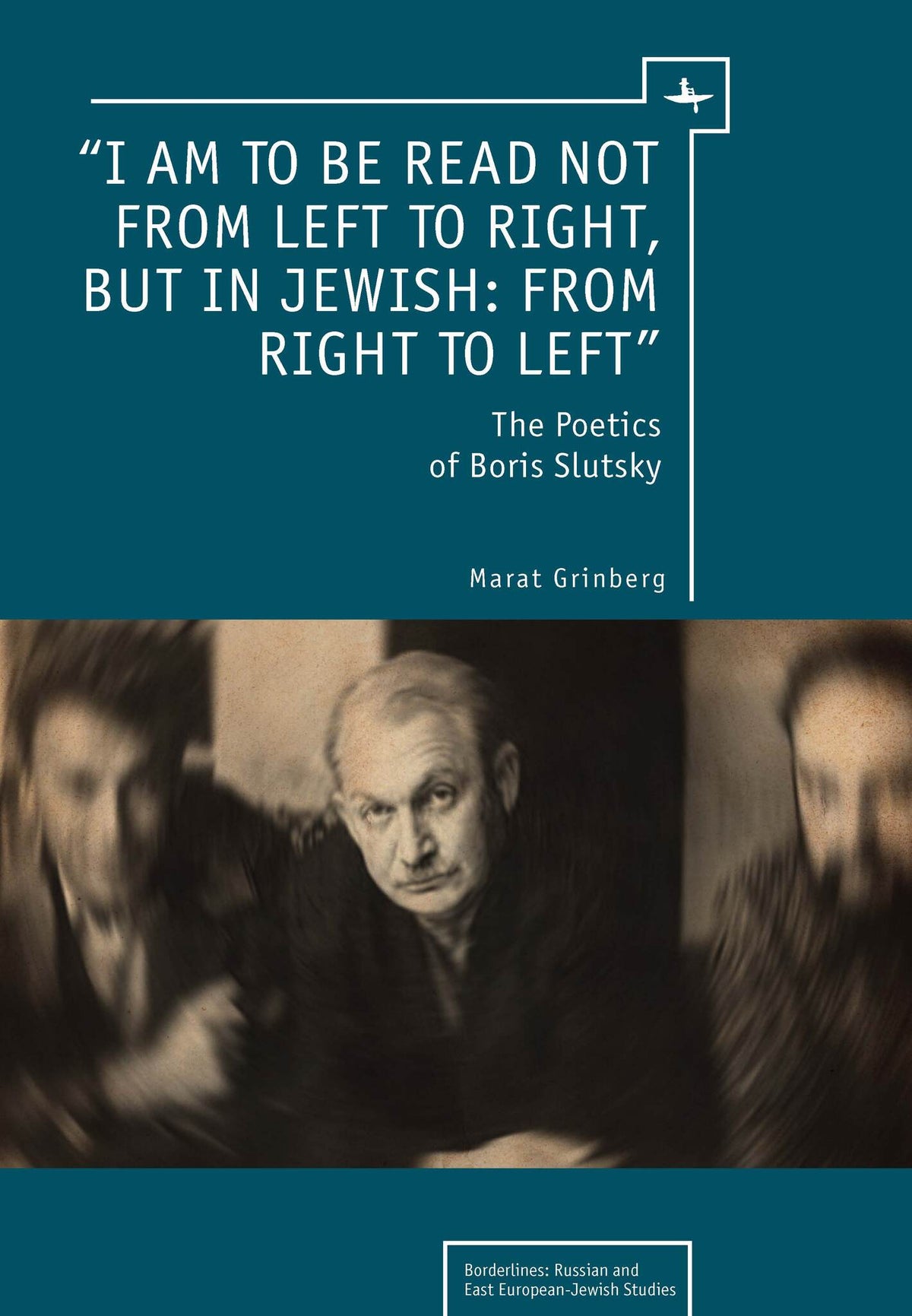
Boris Slutsky (1919-1986) is a major original figure of Russian poetry of the second half of the twentieth century, whose oeuvre has remained unexplored and unstudied. The first scholarly study of the poet, Marat Grinberg’s book substantially fills this critical lacuna in the current comprehension of Russian and Soviet literatures. Grinberg argues that Slutsky’s body of work amounts to a Holy Writ of his times, which daringly fuses biblical prooftexts and stylistics with the language of late Russian Modernism and Soviet newspeak. The book is directed toward readers of Russian poetry and pan-Jewish poetic traditions, scholars of Soviet culture and history and the burgeoning field of Russian Jewish studies. Finally, it contributes to the general field of poetics and Modernism.

Price: $139.00
Pages: 486
Publisher: Academic Studies Press
Imprint: Academic Studies Press
Series: Borderlines: Russian and East European-Jewish Studies
Publication Date:
01 January 2011
Trim Size: 9.21 X 6.14 in
ISBN: 9781934843734
Format: Hardcover
“Boris Slutsky, according to this brilliant book, accomplished the seemingly impossible: a poet of Soviet times, he reforged the totality of Russian literary culture, from Church Slavonic to Pushkin to Khlebnikov and beyond, within the crucible of Jewish self-understanding. Marat Grinberg, author of this impressive study, has also accomplished the seemingly impossible. He demonstrates how this supremely Russian poet can and must be read in his totality: “from right to left,” from beginning to end, and from his desk drawer to Red Square.”
— David G. Roskies, Sol and Evelyn Henkind Professor of Yiddish Literature, Jewish Theological Seminary. Director, Center for Yiddish Studies, Ben Gurion University of the Negev
— David G. Roskies, Sol and Evelyn Henkind Professor of Yiddish Literature, Jewish Theological Seminary. Director, Center for Yiddish Studies, Ben Gurion University of the Negev
Marat Grinberg (PhD) is an Associate Professor of Russian and Humanities at Reed College in Portland, Oregon and a co-editor of the forthcoming Woody on Rye: Reexamining Jewishness in Woody Allen’s Films and Plays after 1992 (Brandeis University Press). He has published numerous articles on literature, film and modern Jewish culture and politics.
Preface: Not Quite Platonov: toward a History of Misinterpreting the Poet. Poet-Interpreter/Translator-Scribe. Part One: Historiography. 1. The Ur-Suite of 1940/41: ‘Poems about Jews and Tatars”. 2. The Poet-Historian: Transplantation Added. 3. A Blessed Curse: The Midrash of 1947-53. 4. Looking at the Burned Planet: the Post-Holocaust Verse. 5. The Resurrected Remnant: of Horses and Metapoetics. Part Two: Polemics. 6. Writing the Jew: the Poetics of the Father. 7. On Account of the Elegy: within Cemetery Walls. 8. Conversing about God: the Judaic Poetics. Part Three: Intertexts. 9. Among the Objectivists: Charles Reaznikoff. 10. Blindness and no Insight: David Samoilov. 11. Leader of leaders and mentor of mentors”: Il’ia Sel’vinskii. 12. “Weighty proofs of the unprovable”: Ian Satunovskii. 13. The Final Myth: Pushkin. Conclusion: The Reader in Perpetuity.