


Some error occured while loading the Quick View. Please close the Quick View and try reloading the page.
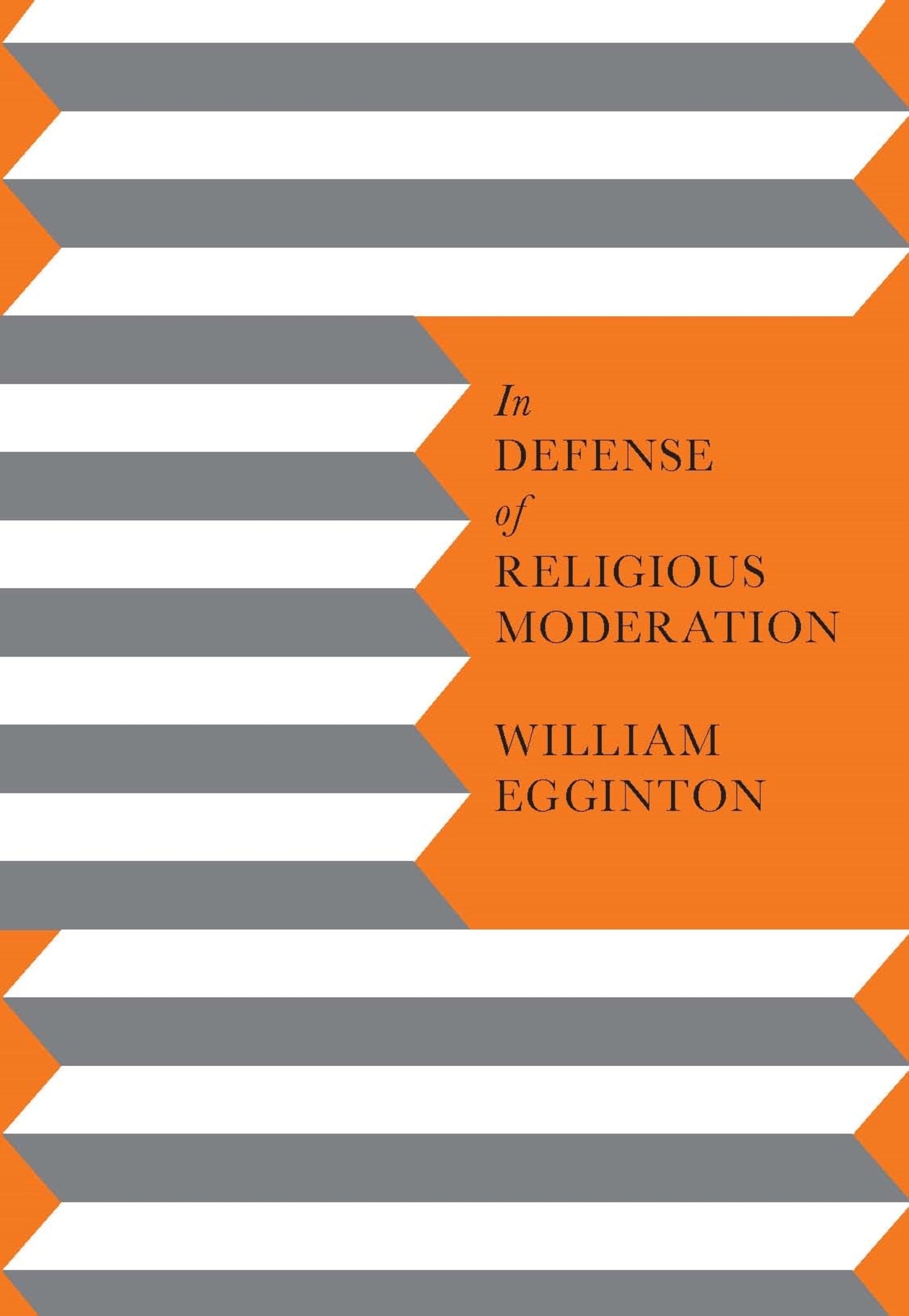
In his latest book, William Egginton laments the current debate over religion in America, in which religious fundamentalists have set the tone of political discourse—no one can get elected without advertising a personal relation to God, for example—and prominent atheists treat religious belief as the root of all evil. Neither of these positions, Egginton argues, adequately represents the attitudes of a majority of Americans who, while identifying as Christians, Jews, and Muslims, do not find fault with those who support different faiths and philosophies. In fact, Egginton goes so far as to question whether fundamentalists and atheists truly oppose each other, united as they are in their commitment to a "code of codes." In his view, being a religious fundamentalist does not require adhering to a particular religious creed. Fundamentalists—and stringent atheists—unconsciously believe that the methods we use to understand the world are all versions of an underlying master code. This code of codes represents an ultimate truth, explaining everything. Surprisingly, perhaps the most effective weapon against such thinking is religious moderation, a way of believing that questions the very possibility of a code of codes as the source of all human knowledge. The moderately religious, with their inherent skepticism toward a master code, are best suited to protect science, politics, and other diverse strains of knowledge from fundamentalist attack, and to promote a worldview based on the compatibility between religious faith and scientific method.

Price: $27.00
Pages: 176
Publisher: Columbia University Press
Imprint: Columbia University Press
Publication Date:
28 June 2016
Trim Size: 8.25 X 5.50 in
ISBN: 9780231148795
Format: Paperback
The argument made by William Egginton on behalf of religious moderation is a clear, nuanced, and important one. It shows how the critique of religion offered by well-known atheist authors is guilty of the same fundamentalist logic of which they are so critical. Egginton writes with great ease and clarity, and his many examples drawn from legal cases, popular culture, and his own personal experience will resonate with readers.
William Egginton is Andrew W. Mellon Professor in the Humanities and director of the Alexander Grass Humanities Center at the Johns Hopkins University. He is the author of The Man Who Invented Fiction: How Cervantes Ushered In the Modern World (2016); The Theater of Truth: The Ideology of (Neo)Baroque Aesthetics (2009); A Wrinkle in History (2007); The Philosopher's Desire: Psychoanalysis, Interpretation, and Truth (2007); Perversity and Ethics (2005); and How the World Became a Stage (2002).
Acknowledgments (and Apologies)
Introduction: An Uncertain Faith
1. Dogmatic Atheism
2. The Fundamentalism of Everyday Life
3. The Language of God
4. Faith in Science
5. In Defense of Religious Moderation
Selected Bibliography and Recommended Reading
Index