


Some error occured while loading the Quick View. Please close the Quick View and try reloading the page.
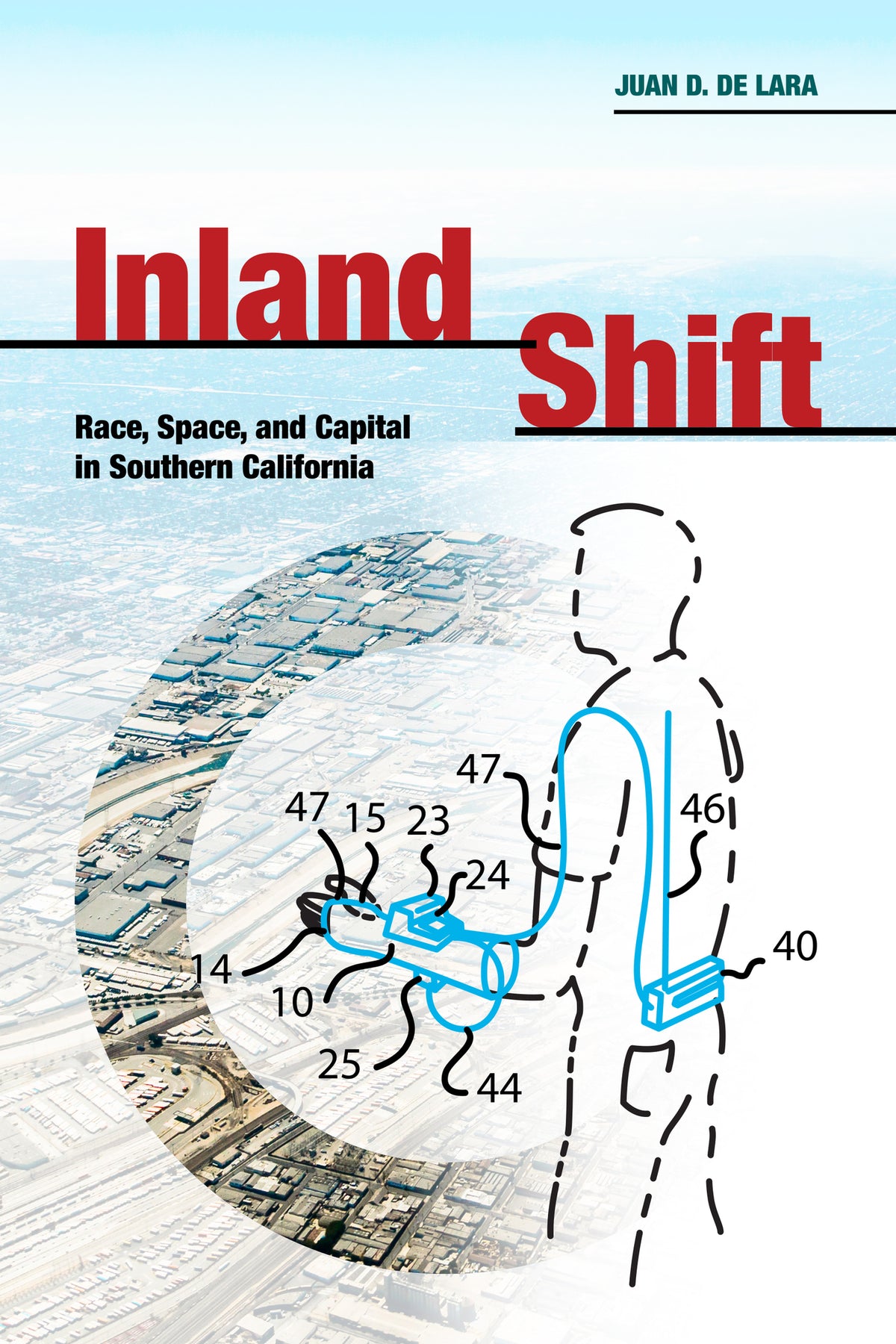
The subprime crash of 2008 revealed a fragile, unjust, and unsustainable economy built on retail consumption, low-wage jobs, and fictitious capital. Economic crisis, finance capital, and global commodity chains transformed Southern California just as Latinxs and immigrants were turning California into a majority-nonwhite state. In Inland Shift, Juan D. De Lara uses the growth of Southern California’s logistics economy, which controls the movement of goods, to examine how modern capitalism was shaped by and helped to transform the region’s geographies of race and class. While logistics provided a roadmap for capital and the state to transform Southern California, it also created pockets of resistance among labor, community, and environmental groups who argued that commodity distribution exposed them to economic and environmental precarity.

Price: $29.95
Pages: 240
Publisher: University of California Press
Imprint: University of California Press
Publication Date:
20 April 2018
Trim Size: 9.00 X 6.00 in
ISBN: 9780520297395
Format: Paperback
BISACs:
"Inland Shift provides much-needed context for future research on the Inland Empire."
Juan D. De Lara is Assistant Professor of American Studies and Ethnicity at the University of Southern California and an Affiliate Researcher at its Program for Environmental and Regional Equity. His research interests include the working poor, social movements, urbanization, and social justice.
List of Illustrations ix
Acknowledgments xi
Introduction 1
SCENE 1: A SPACE FOR LOGISTICS 9
1 • Space, Power, and Method 11
2 • Global Goods and the Infrastructure of Desire 25
3 • The Spatial Politics of Southern California’s Logistics Regime 37
SCENE 2: PRECARIOUS LABOR 61
4 • Th e Circuits of Capital 65
5 • Cyborg Labor in the Global Logistics Matrix 74
6 • Contesting Contingency 90
SCENE 3: THE RETERRITORIALIZATION OF RACE AND CLASS 111
7 • Mapping the American Dream 113
8 • Land, Capital, and Race 127
9 • Latinx Frontiers 147
Conclusion 162
Notes 169
References 193
Index 213
Acknowledgments xi
Introduction 1
SCENE 1: A SPACE FOR LOGISTICS 9
1 • Space, Power, and Method 11
2 • Global Goods and the Infrastructure of Desire 25
3 • The Spatial Politics of Southern California’s Logistics Regime 37
SCENE 2: PRECARIOUS LABOR 61
4 • Th e Circuits of Capital 65
5 • Cyborg Labor in the Global Logistics Matrix 74
6 • Contesting Contingency 90
SCENE 3: THE RETERRITORIALIZATION OF RACE AND CLASS 111
7 • Mapping the American Dream 113
8 • Land, Capital, and Race 127
9 • Latinx Frontiers 147
Conclusion 162
Notes 169
References 193
Index 213